
Find the right rechargeable head torch for camping, running, hiking, or work tasks. This guide highlights five top options, explaining who each model is best for and why. Whether you need long battery life, multiple light modes, or motion-sensor convenience, these headlamps balance brightness, comfort, and reliability for American outdoor enthusiasts and professionals.
The following comparison helps buyers decide quickly. Consider daily activity, weather tolerance, and the importance of hands-free control when choosing your head torch.
| Product | ||
|---|---|---|
| Long press off, motion sensor, 1500mAh USB-C, bright dual modes | ||
| Ultra-bright, USB rechargeable, red and green night vision | ||
| 5 modes, zoomable spotlight/floodlight, USB-C | ||
| 5 modes, up to 30 hours, lightweight | ||
| 230° wide beam, motion sensor, multiple modes |
Now explore detailed sections for each product to understand suitability, features, and potential limitations before making a decision.
LHKNL Headlamp Flashlight, 2-Pack

The LHKNL headlamp offers a long-press off function and a motion sensor for hands-free control. It uses bright LED chips and a built-in 1500mAh rechargeable battery that can operate on several modes for 4–10 hours when fully charged. The weight is light at about 1.87 ounces, and the headband is adjustable for comfort during activities like running or hiking. This model is best for buyers who want quick, touchless on/off and dual-pack redundancy for family use.
Best for: Weekend hikers and families who want backup headlamps without extra maintenance. The motion sensor is helpful when hands are dirty or gloved. A potential limitation is that battery life varies across modes and may require more frequent charging on high-brightness settings.
Energizer PRO-400 Headlamp (2-Pack)

This Energizer model emphasizes rugged outdoor performance with multiple light modes and red/green night vision options. The rechargeable design reduces the need for frequent battery changes, and the IPX4 rating provides protection against light rain. It’s a practical choice for campers, runners, and emergency preparedness kits. A caution is that the included battery life metrics depend on mode and brightness chosen.
Best for: Users who value reliable hands-free light across diverse scenarios, including night navigation and maps setup. It’s less ideal for users who require ultra-long runtime on a single charge at the highest brightness.
Blukar LED Rechargeable Headlamp
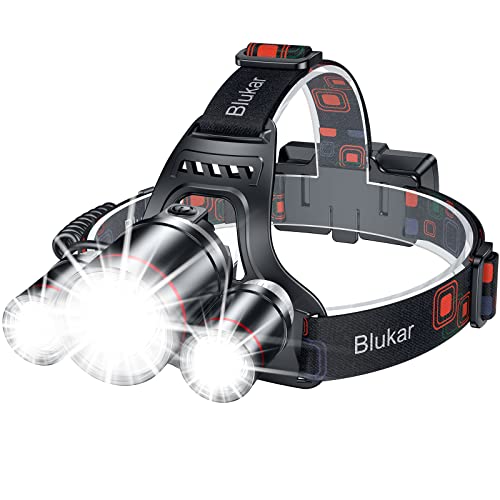
Blukar’s headlamp combines a bright main light with a secondary side light and red light, offering five modes and a zoomable lens to switch between flood and spotlight. USB-C rechargeability supports extended use and quick top-ups. The product reports a long runtime and a durable, IPX6 waterproof rating for outdoor use. A limitation is the integrated battery pack is non-removable, which can affect replacement options.
Best for: Runners and hikers who need a flexible beam and reliable charging. Choose this if you want multiple lighting configurations in a compact package; avoid if you prefer easily swappable batteries.
Lepro LED Headlamp Rechargeable

Lepro offers a five-mode system with three white levels and two red modes, delivering up to 300 lumen brightness and up to 500 feet of illumination in white mode. It uses USB charging and promises up to 30 hours of continuous use per charge. The headlamp is light at 2.86 ounces with an adjustable angle for comfort. A noted caveat is the adapter must be sourced separately for certain charging setups.
Best for: Everyday outdoor activities where a lightweight option with long run-time is beneficial. It may be less bright for extreme nighttime work or off-road navigation in dense darkness.
BIAT Headlamp Rechargeable

BIAT features a 230° wide beam combined with a distant spotlight and a motion sensor for quick on/off without contact. It provides multiple modes to suit different tasks, with a stated support for long numbers of lumens and broad light coverage. A caution is that some users may find the sensor response varies with ambient light and temperature, which could affect performance in certain environments.
Best for: DIY projects, repair work, and camping where wide-area visibility and easy sensor control matter. Choose this if you want broad coverage and convenient hands-free activation; consider alternatives if you require precise manual control and consistent sensor performance in bright sunlight.
Buying Guide: Key Purchase Considerations
What brightness level do you need? Higher lumens deliver more light at a distance, but consume battery faster. For casual camping or walking, 300–800 lumens often suffices. For nighttime pursuits that require distance visibility, look for 1000+ lumens.
How important are modes and beam patterns? A mix of white flood, white spot, and red light modes offers flexibility for night navigation, signaling, and preserving night vision. Zoom capability adds flexibility for focused tasks.
Is weight and comfort a priority? Lightweight headlamps reduce strain on the neck during long wear. An adjustable headband and a rotatable lamp head improve stability during movement.
What about battery and charging? USB-C rechargeability is common and convenient. Consider battery capacity (mAh) and estimated runtime per mode. If you frequently use high brightness, prioritize larger capacity or two-pack options for redundancy.
Water resistance and ruggedness? IPX ratings indicate weather tolerance. IPX4 and IPX5 are typical for rain or splashes; IPX6 is more robust for heavy rain or spray. For rugged outdoor use, higher protection is beneficial.
Maintenance and replacement parts? Some models use integrated packs that are not easily replaceable. Others offer removable batteries or simple USB charging cables. Decide if you want easy swapping or longer life with fixed packs.
Frequently Asked Questions
- What is a headlamp’s best use for motion sensor models? – Motion sensors enable hands-free on/off, which is useful when wearing gloves or handling gear.
- How long does a rechargeable headlamp typically last on a full charge? – Runtime varies by mode and brightness; some headlamps run 4–10 hours on high brightness, and longer on lower settings.
- Are two-pack headlamps worth it? – Yes, for families, couples, or backup lighting in emergencies or camping trips.
- Is red light useful at night? – Red light preserves night vision and is safer for signaling without blinding others.
- Do I need IPX7 waterproofing? – IPX7 is submersible; for most outdoor activities, IPX4–IPX5 is sufficient, but harsher or rainy conditions may benefit from higher ratings.
- Should I avoid headlamps with non-removable batteries? – Non-removable packs can reduce maintenance options; removable batteries offer easier replacements in the field.