
Answering the question “which attic rafter insulation products should I consider?” this guide highlights five reliable options designed to improve roof ventilation, reduce moisture buildup, and boost energy efficiency. Ideal buyers include homeowners planning new construction, remodelers doing retrofit work, and DIYers aiming to prevent insulation blockages in attic vents. The following picks balance durability, fit for common rafter bays, and practical installation considerations. A quick summary table follows to help you compare at-a-glance.
| Product | Main Benefit | Best For |
|---|---|---|
| Raft-R-Mate 22.5″ x 4 ft (70 Pack) — Owens Corning | High-coverage vent blocks for 280 ft of soffit ventilation | Homes with standard 24″ on-center rafters; bulk buyers |
| bimiti 36 Pack 14.5″ Rafter Baffles | Durable black polyethylene with 2″ air channel | Attics needing sturdy, long-lasting baffles |
| ADO UDV2248 Durovent Foam Attic Rafter Vent (70) | Lightweight, easy installation between rafters | Retrofits and new construction seeking simple install |
| Mindoub 30 Pack 24″ Attic Insulation Baffles | Rigid polypropylene design reduces foam crush and keeps airflow | Big projects; foam insulation scenarios |
| SmartBaffle 24 Insulation Baffle — 24″ Bays | Prevents insulation blockages; maintains 2″ airflow channel | Attics with 24″ on-center rafters; easy install |
Raft-R-Mate 22-1/2 in. x 4 ft. Attic Insulation Rafter Baffle (70-Pieces)

Best for bulk installations in standard rafter bays. This Owens Corning pack provides approximately 280 linear feet of soffit ventilation across 70 pieces, with a thickness near 1-1/2 inches and dimensions of 22-1/2 in. by 4 ft. The large quantity suits contractor-grade projects or large homes with many attic bays. Use this when you need consistent, uniform venting across multiple rafters and want to minimize reorders mid-project. A potential limitation is the bulk size, which can be unwieldy for small renovations or tight attic spaces.
Who it’s best for: Builders and DIYers tackling larger attic spaces or retrofits that require substantial venting coverage. Why selected: high coverage per pack and proven compatibility with standard rafter spacings help maintain consistent airflow.
Caution: Ensure the attic layout allows for the 4 ft length without interfering with existing joists or wiring; cutting or bending could affect performance.
bimiti 36 Pack 16 Attic Insulation Baffles

Designed for 14½” rafter bays, these black polyethylene baffles include a 2″ air channel and come in a 36-pack to cover typical attic footprints with fewer restocks. The material resists crushing, tearing, and heat damage, offering stable performance in variable attic conditions. They help prevent insulation from blocking airflow and support steady ventilation. A caveat is that they are sized for 14½” bays, so confirm your rafter dimension before ordering.
Who it’s best for: Homeowners or contractors working 14½” bays who want a durable, long-lasting baffle with a clear air channel. Why selected: robust construction and wide packaging reduce the need for frequent replacements during a retrofit.
Caution: If your rafters are outside the 14½” bay range, this product may not seal gaps optimally without adapters or additional trimming.
1000sqft Green Energy Reflective Radiant Barrier (51 in x 235.2 ft)
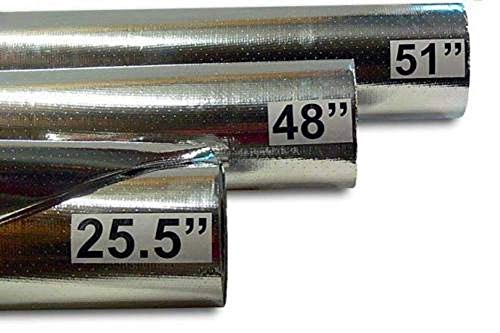
This 51-inch-wide radiant barrier roll covers up to 1,000 square feet and is designed to reflect radiant heat, reducing heat gain in attics with roof spacing that benefits from a reflective layer. It’s highly reflective with an 99.97% E-value, and is described as tear-resistant for commercial-grade use. It is non-toxic and can be applied in retrofit projects as a complement to standard insulation. Use this when radiant heat is a major concern and you want an economical reflective layer along with traditional insulation.
Who it’s best for: Builders seeking a reflective barrier to cut heat load in hot climates or retrofit projects. Why selected: strong reflectivity and easy handling for large attic areas.
Caution: This product is a radiant barrier, not a primary insulation; plan to pair with conventional insulation for complete thermal performance.
Mindoub 30 Pack 24″ Attic Insulation Baffle

These large 24″ baffles are constructed from durable polypropylene and designed to resist crushing and deformation, maintaining a sturdy 2″ air channel. The 30-pack is positioned as a contractor’s choice for bulk renovations, especially when foam insulation is used and rigidity matters. The design aims to prevent insulation from blocking airflow and supports easier installation in deep attic piles. A limitation is that the 24″ width may not fit narrower rafter bays without cutting.
Who it’s best for: Contractors and bulk-minded DIYers working with spray foam or heavy insulation. Why selected: rigid PP construction helps maintain airflow channels under dense insulation loads.
ADO Products UDV2248 Durovent Foam Attic Rafter Vent (Pack of 70)

Designed to improve attic airflow and minimize moisture buildup, this pack uses durable ABS material to resist cracking and warping. Quick and simple installation between rafters makes it suitable for both new-builds and retrofits. ADO’s rafter vent is positioned as a balanced option for those who want reliable performance with straightforward installation. A potential limitation is that it may be less rigid than high-density polypropylene options in very dense insulation scenarios.
Who it’s best for: Homeowners prioritizing easy install and durable venting in retrofit or new construction. Why selected: simple retrofit-friendly design with solid material choice for varied roofing conditions.
Buying Guide
What to consider when choosing attic rafter vents and baffles
- Rafter bay size: Confirm bay width (e.g., 14½” or 24″) to ensure a proper fit and unobstructed airflow.
- Material durability: Polypropylene and polyethylene offer different stiffness and tear resistance; consider foam insulation plans when selecting rigidity.
- Air channel integrity: Look for products that preserve a clear 2″ or similar air channel, especially when using dense insulation or spray foam.
- Installation method: Some items are easier for retrofits; consider weight, flexibility, and how they attach between rafters.
- Bulk quantity vs. project size: For large homes or contractor jobs, bulk packs reduce reorders; for smaller spaces, smaller packs may be more practical.
- Combination use: Reflective barriers complement baffles by reducing heat gain; pair with conventional insulation for full coverage.
FAQs
Q: Do attic rafter vents require sealing around the edges?
A: Sealing is generally not required around vent edges, but ensure a snug fit to prevent wind-washing and maintain airflow.
Q: Can I install vent baffles with existing insulation?
A: Yes, baffles are designed to be installed between rafters and the insulation to keep airflow clear and prevent blockage.
Q: Are metal or foam baffles better?
A: It depends on the project. Polypropylene and polyethylene baffles offer rigidity and cost efficiency; foam options are typically lighter but may compress under dense insulation.
Q: How many baffles do I need per attic?
A: Coverage varies by bay size and attic length. Check product specifications for the number of pieces per pack and multiply by your total bay count.
Q: Do radiant barriers replace insulation?
A: No. Radiant barriers reduce heat transfer via reflection, but they should be used in combination with traditional insulation for full thermal protection.