
Choosing the right solar panels for an RV can maximize freedom and reduce generator noise. This guide assembles top options based on efficiency, portability, durability, and ease of use for off-grid adventures. Each pick supports RV setups from backcountry camping to extended road trips, helping you charge power stations, batteries, and essential devices reliably under sunny skies.
Summary of Selected Products
| Product | Brand | Key Benefit | Approx. Weight | Foldability/Portability |
|---|---|---|---|---|
| Renogy 200W Portable Solar Panel | Renogy | 25% efficiency with flexible off-grid charging | ≈13.89 lb | Foldable, magnetic closure |
| EF ECOFLOW 220W Portable Solar Panel | EF ECOFLOW | 25% N-Type high efficiency, adjustable kickstand | ≈ | Adjustable bracket, IP68 |
| DOKIO 200W Portable Foldable Panel Kit | DOKIO | Standalone controller, long reach cable | ≈9.7 lb | Compact fold, 9.84 ft cable |
| SOKIOVOLA N-Type 200W Foldable Panel | SOKIOVOLA | High efficiency, durable IP68 | ≈16.31 lb | Magnetic handle, compact |
| SOLPERK 100W Mono Panel | SOLPERK | 30% efficiency for smaller setups | – | Standard portable panel |
Renogy 200W Portable Solar Panel

Renogy’s 200W portable panel emphasizes efficiency with 16BB N-Type cell technology, achieving up to 25% conversion. This higher output means more power from the same sunlight, making it ideal for RVs with limited roof space or during cloudy days. It’s designed to charge power stations or 12V batteries quickly, supporting devices from smartphones to laptops.
The panel weighs about 13.89 pounds and folds down to a compact size with a magnetic closure for simple setup and storage. Its streamlined design targets tight camper spaces such as SUVs and small RVs, while its MC4 output provides a straightforward path to portable power stations or DC battery systems. Charge up multiple devices and back up essential gear during trips or blackouts.
EF ECOFLOW 220W Portable Solar Panel

This 220W EF ECOFLOW panel uses N-Type cells to deliver up to 25% efficiency, enabling faster charging and more compact power solutions for RV users. The design includes an adjustable kickstand with a 30–60° range and an integrated solar angle guide, helping you optimize sun exposure as the day progresses. It’s suited for campers who want quick, reliable top-ups to power stations or batteries on the move.
Durability is a focus, with an ETFE coating that protects the panel from weather and wear. The robust construction supports extended outdoor use, giving RV travelers confidence in rainy or windy conditions while maintaining dependable performance for off-grid needs.
DOKIO 200W Portable Foldable Panel Kit

The DOKIO 200W foldable kit focuses on travel-friendly design with a 9.7-pound frame and a compact fold. A standalone controller enables safe charging for 12V systems, including protection features such as reverse polarity, overcharge, and short-circuit safeguards. Its 3-meter cable lets you position the panel in direct sun while keeping the controller shaded for cooler operation.
Its separate controller setup is an important safety feature for RV users who want easy upgrades or replacements as technology evolves. The kit is suitable for charging 12V batteries and power stations, providing a dependable option for RVers who require flexibility and safety in remote locations.
SOKIOVOLA N-Type 200W Foldable Panel
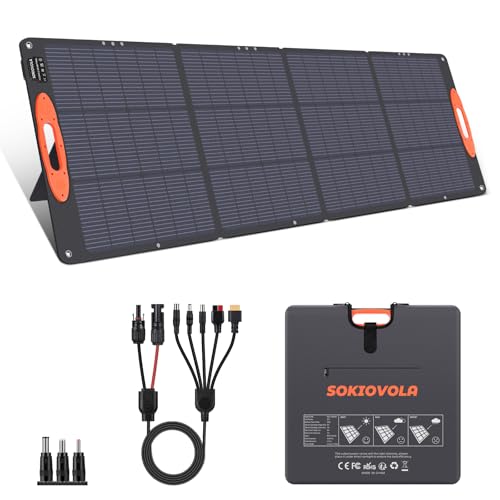
The SOKIOVOLA 200W folding panel utilizes N-Type cells and a foldable design that weighs about 16.31 pounds. It folds to a compact 21 by 23 inches, with a magnetic handle for easy transport and four mounting holes for RV installation. It’s described as highly efficient, designed to maximize solar energy capture even when the sun is not perfectly aligned with your RV roof.
Built for durability, it uses IP68 waterproofing and ETFE coating, supporting long-term outdoor use in varied weather. The combination of high efficiency and rugged construction makes it a strong candidate for off-grid trips where consistency and resilience matter on the road.
SOLPERK 100W Mono Panel

SOLPERK’s 100W panel delivers high efficiency with 30% conversion using premium Grade A+ monocrystalline cells. It’s well suited for smaller RV setups, off-grid cabins, or boat installations where space is premium. The panel provides a steady daily output once sunlight is available, and it’s compatible with a variety of charge controllers and 12V battery chemistries.
Durability features include a sturdy aluminum frame and tempered glass, along with IP67 protection for weather resistance. This panel is an effective choice for travelers who need reliable, compact solar power without sacrificing efficiency or build quality.
Buying Guide: Key Purchase Considerations
- Power needs and system compatibility: Assess your RV battery bank, inverter, and power stations to ensure the panel’s wattage fits your daily energy goals.
- Efficiency and cell technology: N-Type and high-efficiency monocrystalline cells offer more output per sun hour, which matters on overcast days or when roof space is limited.
- Portability vs. permanence: Foldable panels excel for travel and easy storage, while rigid panels may offer greater long-term durability. Consider mounting options and weight.
- Durability for outdoor use: IP ratings, ETFE coatings, and frame robustness protect panels from weather, dust, and impacts during road trips.
- Connectivity and safety: Independent controllers, MC4 outputs, and protective features (overcharge, reverse polarity) help ensure safe, reliable charging for RV systems.
- Maintenance and warranties: Look for solid warranties and readily available replacement parts to minimize downtime on the road.
- Set-up and angle optimization: Panels with adjustable stands or guides can maximize sun exposure throughout the day, improving overall daily energy yield.
- Climate suitability: Some panels are designed for extreme temperatures or humidity; verify operation ranges align with your travel destinations.
These considerations help balance weight, cost, and performance. For RV users, choosing a mix of higher-efficiency panels and reliable safety features often yields the best long-term off-grid experience, with options available across different budgets and space constraints.