
Answering a buyer’s search: when painting a garage interior, you want a durable coating that resists abrasion, chemicals, moisture, and tire traffic while providing a clean, finished look. This guide highlights five top options for concrete floors and adjacent walls, each chosen for specific needs like high wear resistance, moisture protection, or easy application. The products below are best suited for homeowners, rental properties, small workshops, and DIY enthusiasts seeking practical, long-lasting results.
| Product | Best For | Key Benefit |
|---|---|---|
| KILZ 1-Part Epoxy Acrylic Concrete & Garage Floor Paint (Slate Gray) | Garage floors with medium traffic | Durable epoxy acrylic formula with satin finish |
| YOA Professional Concrete Garage Floor Paint (Medium Gray) | Basements and garages needing scratch resistance | Ready-to-use, single-component, low VOC |
| Rust-Oleum EPOXYSHIELD Garage Floor Coating Kit (1 Car) | Single-car garage projects requiring glossy, hard surface | 2-part epoxy, high durability |
| KILZ Basement and Masonry Waterproofing Paint (White) | Basement walls and masonry | Waterproofing protection with nanotechnology |
| Rust-Oleum Painter’s Touch Latex Paint (Gloss White) | Garage walls and interior trim | Low-odor, versatile interior/exterior acrylic |
KILZ 1-Part Epoxy Acrylic Concrete & Garage Floor Paint, Slate Gray

Features: Durable epoxy acrylic formula resists hot tire pickup, scuffing, cracking, peeling, and fading, delivering long-lasting protection with a satin finish. Suitable for indoor and outdoor horizontal concrete surfaces such as garage floors, basements, porches, driveways, and pool decks. Works on properly prepared porous concrete, masonry, stone, and brick. Not recommended for vertical surfaces or areas with hydrostatic pressure or forklift traffic. Residential use only.
Best for: Garage floors and other horizontal concrete surfaces that endure moderate traffic and occasional exposure to weather. This product balances durability with a satin look that hides minor imperfections.
Why chosen: It provides a durable, easy-to-clean surface suitable for spaces that see vehicle traffic and environmental exposure, making it a solid all-around choice for many garages.
Caution/limitation: Not designed for vertical surfaces or high-hydrostatic areas; ensure proper surface preparation for best adhesion.
YOA Professional Concrete Garage Floor Paint, 1-Gallon
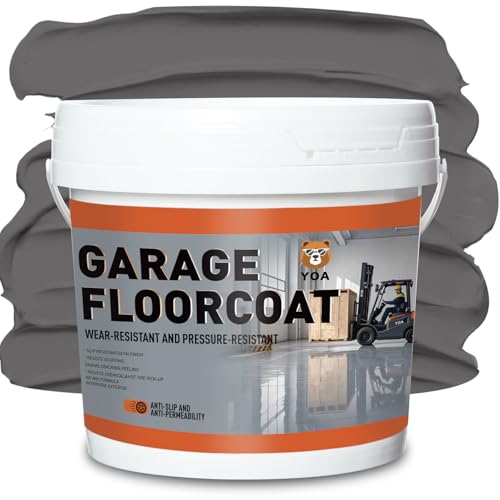
Features: Covers up to 120 square feet per gallon with excellent durability and scratch resistance. Ready-to-use, single-component formula in Medium Gray, suitable for multiple indoor surfaces including wood, metal, brick, plastic, and concrete in garages, basements, and interiors. Varies with surface condition; rough or porous floors may require patching or leveling, and additional coating material may be needed for larger areas.
Best for: DIYers who want a straightforward, ready-to-use coating for multi-surface indoor spaces, especially garages and basements where a mid-gray finish is preferred.
Why chosen: The ease of application and broad surface compatibility make this a practical option for quick upgrades without a lot of prep for minor imperfections.
Caution/limitation: Actual coverage depends on surface condition; porous or uneven floors may demand more material or prep work.
Rust-Oleum EPOXYSHIELD Garage Floor Coating Kit (1 Car)
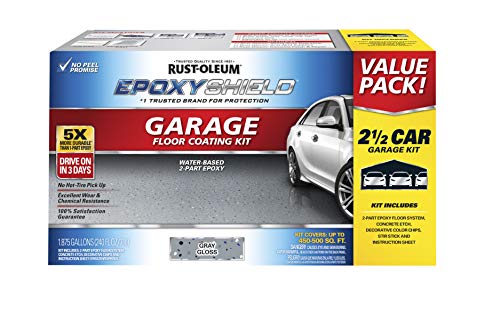
Features: A durable 2-part epoxy formula designed for interior concrete surfaces like garage floors, workshops, and basements. Provides a professional glossy finish that is easy to clean and offers long-lasting protection, reportedly stronger than many 1-part coatings. Walk-on readiness in 24 hours; vehicle/drive-on readiness in 3 days.
Best for: Garages needing a high-strength, chemical-resistant surface that looks glossy and cleans easily, especially where motor vehicles are stored.
Why chosen: The two-part system generally yields a tougher, more abrasion-resistant finish ideal for harsher garage environments.
Caution/limitation: Requires proper mixing and a slightly longer cure time to achieve full strength, with a longer overall project time than 1-part systems.
KILZ Basement and Masonry Waterproofing Paint (White)
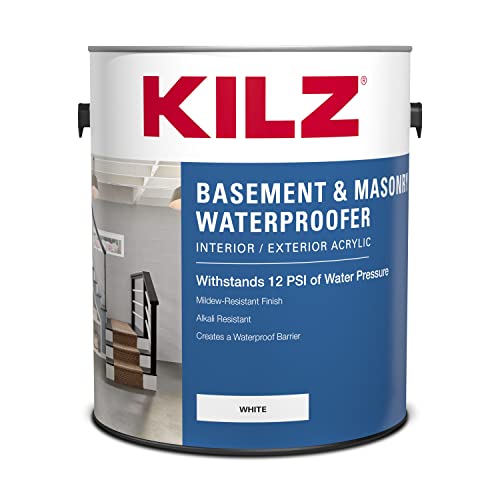
Features: Waterproofing protection with nanotechnology to form a powerful water barrier, blocking up to 12 PSI of water pressure on concrete and masonry surfaces. Suitable for interior and exterior use, ideal for basement walls, masonry walls, stucco, brick, concrete blocks, and retaining walls. Not recommended for floors or walls with active leaks; surface prep should include filling holes or cracks with hydraulic cement prior to painting. Alkali-resistant finish ensures durability in high moisture areas.
Best for: Basement and garage walls where moisture intrusion is a primary concern, or for masonry surfaces that require a water barrier.
Why chosen: Provides a moisture-blocking capability that can help protect interior garage walls from dampness and water seepage over time.
Caution/limitation: Not intended for active leaks without addressing the source first; not a floor coating.
Zinsser PERMA-WHITE Mold & Mildew Proof Interior Paint (Quart)

Features: Self-priming formula that requires no sanding. Mold and mildew-proof paint film is guaranteed for five years and resists dirt and moisture on the coating. Suitable for interior walls and ceilings, including basement and garage spaces where humidity is a concern.
Best for: Interior garage walls and other spaces where moisture resistance and mold control are priorities, especially in humid climates.
Why chosen: A low-maintenance option with built-in mold and mildew resistance, helpful for garages adjacent to living spaces or in damp environments.
Caution/limitation: This product is primarily a wall coating; use an appropriate floor coating for concrete floors.
Buying Guide: Key Purchase Considerations
- Surface type and location: Determine if you’re coating a concrete floor, walls, or both. Floors require abrasion resistance and tire-resistance; walls need moisture protection or mold resistance.
- Two-part vs. one-part: Two-part epoxy systems generally offer greater durability and chemical resistance but require mixing and longer curing times. One-part formulas are easier to apply for DIY projects.
- Moisture and humidity: If the garage is prone to dampness or basement walls are susceptible to water, consider waterproofing or moisture-resistant paints designed for masonry and concrete.
- Gloss level and appearance: Higher gloss finishes are easier to clean but show imperfections more; satin or eggshell finishes can hide minor flaws while still being easy to wipe down.
- Application environment: Ensure adequate ventilation and follow surface preparation guidelines. Porous or rough surfaces may need patching or additional coats to achieve a uniform finish.
- Cure time and traffic: Plan project timing so the floor has enough time to cure before vehicle use. Some products are walk-on ready within 24 hours but may require longer before driving on them.
- Health and safety: Look for low-VOC or water-based formulas if indoor air quality is a concern, especially in attached garages or living spaces nearby.
Frequently Asked Questions
- What is the best garage interior paint for heavy traffic?
– A 2-part epoxy coating typically offers the strongest durability, especially for garages that see frequent vehicle movement and chemical exposure. - Can I paint basement walls in a garage with waterproofing paint?
– Yes, waterproofing paints are designed for masonry and concrete walls and can help block moisture, though they are not intended for floors. - Is it necessary to seal concrete floors before painting?
– Proper surface preparation, including cleaning and sealing minor cracks or pores, improves adhesion and longevity of the coating. - Are low-VOC paints suitable for a garage?
– Yes, many low-VOC formulas exist for both floors and walls, balancing indoor air quality with performance. - How long should I wait before moving a car onto a newly painted floor?
– Expect walk-on readiness within 24 hours for some products, but full cure can take several days depending on the product and environmental conditions. - Can I paint garage walls and floors with the same product?
– Some products are designed for both surfaces, but many are specialized for either floors or walls. Check label guidance for best results.