
When choosing a track saw blade, most buyers seek accuracy, durability, and smooth finishes for projects like cabinetry, plywood installation, and crosscuts. This guide highlights five top blades well-suited for typical American workshop needs. Each product is chosen for compatibility with common 165 mm or 6-1/2 inch track saws, including cordless and corded models. Read on to find which blade fits your work style, then compare options side by side in the summary table below.
| Product | Best For | Key Feature |
|---|---|---|
| WEN BL6556 | General shop blades for ATAFR cuts | PTFE coating, 56T carbide-tipped, 6.5″ diameter |
| Milwaukee 48 Teeth Fine Finish | Fine finishing cuts on demanding applications | 165 mm, high-performance, fast cuts |
| CMT ORANGE TOOLS 273.160.56H ITK PLUS | Crosscuts and finish cuts with minimal waste | 56T, 1.8 mm kerf, thin-kerf design |
| FOXBC 6-1/2″ 56T | Multi-brand compatibility for track saw tasks | 20 mm arbor, 56T, up to 140% more cuts per charge |
| Makita B-57342 | Cordless plunge saw projects with long life | 56T, 20 mm arbor, high-durability carbide |
WEN 6.5-Inch Track Saw Blade with PTFE Coating

Best for general purpose ATAFR cutting in hobbyist and professional shops. The 6.5-inch blade uses a 20 mm arbor and a high RPM rating up to 9000, supporting fast, smooth cuts. The non-abrasive PTFE coating helps prevent heat buildup on the workpiece, reducing burn marks for cleaner finishes. The Alternate Top Alternate Face with Raker (ATAFR) tooth design improves smoothness and speed.
Who this is best for: woodworkers who need a reliable, all-around blade for straight cuts on plywood and soft hardwoods, with minimal scorching on delicate faces. Why chosen: strong balance of heat resistance, cutting speed, and compatibility with standard 165 mm track saw setups. Caution: PTFE coating can wear with heavy grit or certain metals, so avoid contaminated cut substrates to preserve coating performance.
Milwaukee 48-Tooth Fine Finish Blade

Designed for tough finish work, this 165 mm blade emphasizes clean, precise cuts with a fine tooth count. It is built to perform in demanding applications and is marketed for faster-than-average cutting performance compared to standard blades. Best for: finish carpentry, cabinet edges, and trim where smoothness matters. Why chosen: durability and specialization for high-quality finishes. Caution: higher tooth counts may slightly slow aggressive ripping versus dedicated ripping blades, so pair with appropriate project types.
CMT ORANGE TOOLS ITK Plus 56T Fine Finish

Best for crosscuts and finish cuts with minimal material waste thanks to the thin-kerf design. The 160 mm diameter, 56 teeth, and 20 mm bore suit miter saws, table saws, and cordless/plunge configurations. It is particularly suitable for precious woods where splinter-free edges are important. Why chosen: efficient kerf reduces waste and improves tracking for clean results. Caution: availability of compatible saws with the 20 (+16) bore should be confirmed before purchasing.
FOXBC 6-1/2″ 56T Track Saw Blade
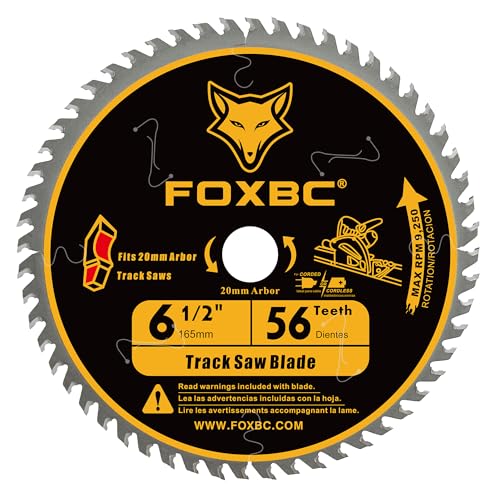
Best for versatile, multi-brand compatibility, including Makita and DeWalt plunge saws, with a 20 mm arbor and 56 teeth. The blade is intended for wood, MDF, and laminate, offering more cuts per charge compared to standard blades on some systems. Choosing this blade is advantageous when you use multiple tool brands in the same shop. Caution: confirm exact compatibility with your specific plunge saw model to ensure proper mounting and performance.
Makita B-57342 56T Cordless Plunge Saw Blade

Best for cordless plunge saw projects where long life and consistent performance matter. The 56-tooth carbide-tipped blade offers durability and better cuts on wood, MDF, and laminate. It’s marketed as delivering up to 140% more cuts per charge than some standard setup on cordless configurations. Why chosen: strong durability and compatibility with Makita cordless systems. Caution: best used with Makita plunge saws to maximize efficiency and edge quality.
Diablo Track Blade For Fine Finish
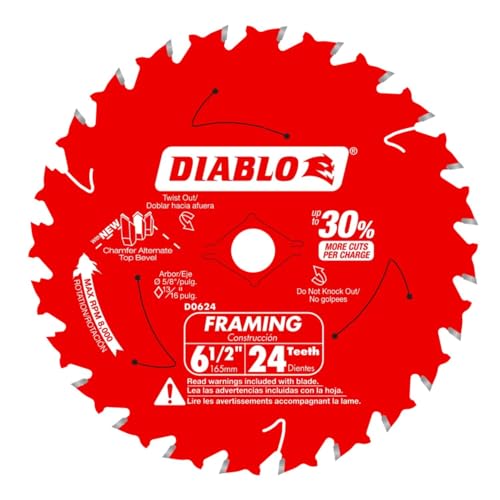
Best for precision work where controlled tracking and clean finishes are essential. Diablo’s TiCo Hi-Density carbide blade is designed for ripping, cross-cutting, and plunge cutting with accuracy. The 1.8 mm laser-cut kerf adds rigidity for straight cuts, making it ideal for trim and cabinet work. Caution: users should ensure their track saw supports a 6-1/2″ blade with the corresponding kerf width for optimal performance.
Freud LU79R006M20 160mm Plywood & Melamine Blade

Best for premium plywood and melamine with minimal chipping on edges. This blade features a 20 mm arbor, 160 mm diameter, and a Hi-ATB tooth design for splinter-free cuts. It is tailored for high-density carbide performance on crosscuts and face work in cabinetry and panel installations. Caution: the Hi-ATB design, while excellent for finishes, may not be the fastest option for aggressive ripping tasks.
CMT ORANGE TOOLS ITK Plus 56H 6-1/2″ Blade

Best for crosscuts and finish cuts with a thin kerf designed to minimize waste on valuable wood. Fits miter saws, table saws, portable and cordless saws. The blade handles soft and hardwood, exotic wood, plywood, and laminates, making it a flexible choice for mixed materials. Caution: verify kerf and bore compatibility with your particular saw model to avoid misfit.
Buying Guide: Track Saw Blade Essentials
How do you pick the right track saw blade for your project? Consider these practical questions and answers to guide your decision.
- What is the kerf and how does it affect material waste? Thin-kerf blades (around 1.8 mm) reduce waste and require less power, beneficial for finish work and delicate panels.
- Is the blade compatible with your track saw’s bore and arbor size? Most blades shown use a 20 mm arbor; confirm compatibility with your tool’s arbor before buying.
- Which tooth count suits the task? Higher tooth counts (e.g., 48-56T) yield smoother finishes suitable for plywood, trim, and melamine; lower tooth counts cut faster in rough ripping.
- Are there coatings or materials that affect cut quality? PTFE coatings can stay cooler but may wear with heavy grit; TiCo carbide blades offer durability for long life in tough cuts.
- What materials will you cut most? For plywood, melamine, and fine finishes, choose blades designed for clean edges; for softwood and big panels, look for blades engineered for fast, straight cuts.
- Is multi-brand compatibility important? Some blades advertise compatibility with different brands; verify exact saw compatibility with your model.
Frequently Asked Questions
- What blade is best for fine finish cuts? A blade with 48-56 teeth and a thin kerf designed for finishing work is typically best for clean edges and minimal tear-out.
- Can I use a 20 mm arbor blade on a standard 5/8″ saw? Many track saw blades use a 20 mm arbor. If your saw uses a different arbor, you may need an adapter or a different blade.
- Do these blades work with cordless track saws? Yes, several blades are designed for cordless 6-1/2″ and 165 mm track saws; ensure your tool’s RPM and horsepower match the blade’s design.
- Are thin-kerf blades weaker? Thin-kerf blades reduce waste and require less power, but can be more prone to deflection on very hard materials if not properly supported.
- Should I use different blades for plywood and hardwood? Yes. For plywood and melamine, choose a blade designed for clean cuts with minimal chipping; for hardwood, select a blade with durable carbide and appropriate tooth geometry for solid cuts.
- Is coating important? PTFE coatings help keep the blade cool and reduce burning on the workpiece, but the coating’s durability under heavy use varies by brand and cutting conditions.