
As an Amazon Associate I earn from qualifying purchases.
A good utility blade purchase starts with the knife that will hold it and the material you intend to cut. Steel labels and large pack counts are secondary if the replacement does not seat correctly, suit the task or come in packaging you can handle responsibly. Compare those practical requirements before paying extra for a coating or an advertised lifetime multiplier.
This guide compares five existing straight utility-blade packs, with their selected quantity and identity checked. It is a buying comparison, not a cutting trial: we have not measured edge life, sharpness or corrosion resistance. Compatibility described as most standard knives should remain a claim to confirm against your knife’s instructions, not a promise that every blade fits every handle.
Choose the pack around your actual workflow
- Dispenser features to investigate: Goldblatt’s one-or-five-blade access and remaining-blade indicator.
- A standard SK5 refill candidate: WORKPRO’s selected hundred-pack with dispenser.
- Another SK5 storage-box option: JETMORE’s selected hundred-pack.
- A named general-purpose model: CRAFTSMAN CMHT11921A, hundred-pack.
- A coated option to evaluate separately: Berkling’s selected fifty-pack of titanium-plated SK2H blades.
These categories identify differences to compare. They do not declare a cutting-performance winner. Keep the knife model, required blade type and planned work in view as you read the individual descriptions.
Goldblatt tempered SK2M utility blades — 100 pack

Check the selected blade pack on Amazon
The selected Goldblatt pack contains straight utility blades described as tempered SK2M steel. The listing specifies a thickness of 0.6 millimeters and describes dispenser access for either one or five blades, a remaining-blade indicator and a separate used-blade storage area.
Why consider it: the packaging features may be useful if you want a clearly organized refill supply and a way to see what remains. Compare the actual dispenser instructions and size with the storage space in your kit, rather than deciding from steel wording alone.
The listing promotes a multiple of conventional carbon-blade lifetime. That comparison is not established by a cutting test in this guide, and it should not be turned into a prediction of how many boxes or sheets you can cut. The material and technique in your own task can differ from an unspecified marketing comparison.
Check before buying: verify the blade type and stated thickness against the knife manufacturer’s requirements. Confirm how the fresh-blade outlet and used-blade area are intended to operate. A feature described for collecting blades does not automatically establish that the filled package meets a local disposal or recycling requirement.
Best fit to assess: a compatible straight-blade knife and an owner who values dispenser organization. Avoid treating the listed application examples as permission to cut every pipe, metal or other material with a utility knife.
WORKPRO SK5 utility knife blades — 100 pack
Check the selected blade pack on Amazon
This selected WORKPRO pack is a hundred replacement utility blades described as SK5 steel, supplied with a dispenser. The seller directs buyers to its how-to video for dispensing. That instruction is useful to obtain before handling the package, particularly if its opening mechanism is unfamiliar.
Why consider it: it is a standard refill candidate for an owner comparing quantity, package organization and the cost of a verified compatible blade. Its usefulness depends on whether it fits the actual knife and whether the dispenser works for your routine.
The listing says it fits most standard and fixed utility knives. Confirm that with the knife’s required blade shape, locating features and dimensions. Do not extend a statement about most knives to a specialty cutter or a handle with a proprietary blade requirement.
Check before buying: obtain the package instructions and verify the selected hundred-pack. Compare its storage and dispensing arrangement with how you carry or store replacements. A compact case is convenient only when it keeps the supply organized and can be used as directed.
Main limitation: SK5 material and seller sharpness language do not establish superior edge life over the other packs here. Compare delivered cost and observed results within an appropriate, controlled task instead of assuming that the steel name predicts performance.
JETMORE SK5 utility blades — 100 pack

Check the selected blade pack on Amazon
The selected JETMORE pack contains a hundred straight utility blades described as SK5 high-carbon steel. The listing describes a compact storage box and slide-out, one-at-a-time access. It also lists use with many retractable knives, folding utility knives and box cutters.
Why consider it: it gives you another standard-blade candidate to compare by verified fit, dispenser arrangement and delivered price. The case may suit a toolbox refill supply, provided its operation and storage instructions match how you intend to use it.
The seller makes strong claims about edge retention, wear resistance and effortless cutting. Those claims are not independently verified here. A long list of materials should not replace a task-specific decision about whether a straight utility blade is the appropriate tool.
Check before buying: confirm that the blade specification matches your knife and that the selected pack is the described hundred-count version. Obtain instructions for the outlet and storage arrangement rather than trying to force a blade out of an unfamiliar box.
Main limitation: standard-size wording alone leaves knife-specific compatibility unresolved. Assess this pack as a candidate with a storage-box design, not as a guarantee of fewer blade changes or a safer workplace.
CRAFTSMAN CMHT11921A utility blades — 100 pack
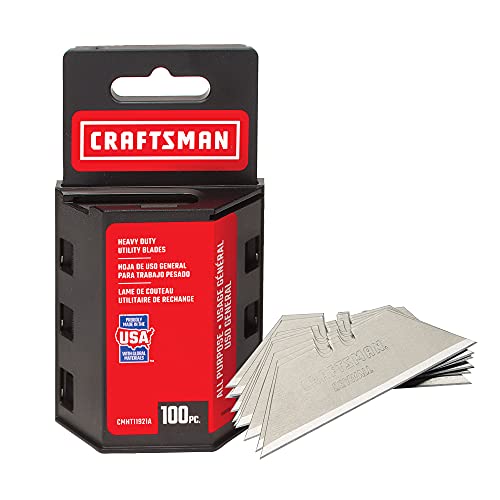
Check the selected blade pack on Amazon
The exact CRAFTSMAN model is CMHT11921A. The manufacturer’s product page identifies a hundred-pack of heavy-duty utility blades, a precision-honed edge and fit with most standard utility knives. The model number helps distinguish this pack from other blade shapes or quantities in the same brand.
Why consider it: a buyer who wants a specifically identified general-purpose refill can compare this model with the required blade for an existing knife. Keep the exact model on the order record so a related hook or specialty blade is not mistaken for the same purchase.
The manufacturer’s application list includes several common finishing and remodeling materials. Suitability still depends on the tool and the particular task. For example, a blade being described for general cutting does not justify using the knife as an improvised scraper or pry tool.
Check before buying: verify the knife’s instructions, selected count and storage arrangements. Decide how unused and spent blades will be handled in your kit. Familiarity with a brand is useful for identification, but it does not establish universal fit or a measured lifetime advantage.
Main limitation: a hundred-pack is a quantity, not an estimate of completed work. Evaluate it using the actual cost and the appropriate change routine rather than assuming a large refill eliminates the need to monitor blade condition.
Berkling titanium-plated SK2H blades — 50 pack
Check the selected blade pack on Amazon
The selected Berkling version is a fifty-pack, with SK2H steel, titanium plating and a dispenser described in the listing. The seller gives dimensions of 61 by 18.8 millimeters. This is a coated steel blade, not evidence that the whole blade is solid titanium.
Why consider it: an owner comparing a coated option with the uncoated refill candidates may want to examine the specific blade dimensions, dispenser and delivered cost. Keep the selected fifty-count quantity in the comparison so its price is not compared directly with a hundred-pack as if the quantities were equal.
The listing makes sharpness, durability and rust-resistance promises, including numerical multipliers. No test method establishing those promises for your workload was verified here. Do not translate them into a guaranteed service interval or permission to store the blades carelessly.
Check before buying: confirm the blade’s full fit requirements with the knife manufacturer. A stated length and width are useful details but do not settle every locating-notch or locking requirement. Ask for missing information before assuming that universal wording resolves the question.
Main limitation: the coating alone cannot demonstrate better value for every buyer. If a premium matters to your decision, compare a limited appropriate purchase within your ordinary routine before committing to a large supply.
Buying guide: resolve blade and knife compatibility first
Start with the knife’s required replacement
Find the knife model and its replacement-blade instructions. Note the blade shape, dimensions, thickness and any specific locating or retention requirement stated by the manufacturer. If the instructions identify an approved replacement type, use that information as the first filter.
Straight utility blades, segmented snap-off blades, hook blades and single-edge scraper blades are different categories. A listing that calls them all razor blades can hide that distinction. Compare the actual type rather than buying from a broad search term.
If your knife’s requirements are unclear, ask its manufacturer or supplier. Provide the exact model and the candidate blade information. Do not modify a replacement, remove a locating feature or force the holder to make an uncertain blade fit.
Consider the required task separately
Write down what you actually need to cut and what a satisfactory result looks like. Opening tape, trimming a covering and preparing a craft piece can involve different requirements. Check the material and tool instructions instead of relying on a package’s longest application list.
A change in the task can be a reason to reconsider the tool, not merely to buy a harder blade. If the work is beyond the intended use of the knife, select an appropriate method with reliable guidance. Steel grade does not expand a knife’s approved function.
Steel and coatings: useful descriptions, incomplete predictions
SK5, SK2M and SK2H identify the materials as described by these listings. They do not provide a complete account of the finished blade’s heat treatment, geometry or performance. Avoid declaring one grade the winner without comparable evidence for the intended workload.
Likewise, a coating is a product feature rather than a substitute for instructions, fit and proper storage. Separate what is physically described from a claim about how many times longer a blade will last. The latter needs a clear comparison and test conditions to be meaningful.
Ask what a numerical claim measures: initial cutting force, total cuts, edge wear or something else. A statement without those details cannot be used to calculate a reliable cost per job. You can still compare the pack’s documented quantity and price.
Dispenser design and replenishment
Read how a dispenser releases blades and how it is intended to close or store them. Check whether the packaging offers separate fresh and used compartments, and confirm their purpose. A photograph of a box does not establish all of its handling features.
Think about where replacements will be kept: a workshop drawer, a portable kit or a controlled workplace supply area. Choose a package that can be stored securely and used according to its instructions. Avoid loose blades scattered among other small tools.
For a workplace, follow the site’s blade handling and disposal arrangements. A supplied collection slot does not override those procedures. Keep fresh supplies separate from spent blades and resolve how the collected blades will be handled before the pack is full.
Match the quantity to the keeper
An occasional home user and a shared workshop can have different supply needs even when they use the same blade type. List how many compatible knives are actually in service and where the refill pack will be stored. That is a better starting point than choosing the largest available count simply because it looks professional.
For a shared supply, identify who orders replacements and where the current pack information is kept. Label the storage location with the blade type and any knife-specific restriction. This helps prevent a similar-looking refill from being introduced into the wrong handle when someone restocks the drawer.
For a personal kit, keep the package manageable and the remaining quantity visible. Record the exact product when it works for your compatible knife so the next order can be checked accurately. A successful purchase does not make every similarly named pack from the same brand interchangeable.
Check the refill when it arrives. Compare the model, selected quantity and package condition with the order. If the supplied item differs, resolve the discrepancy with the seller before treating it as an acceptable substitute. Keep its instructions with the pack rather than relying on memory of a different dispenser.
Compare cost without guessing blade life
Use the actual delivered price divided by the selected count. A hypothetical ten-dollar hundred-pack costs ten cents per blade; a hypothetical ten-dollar fifty-pack costs twenty cents per blade. These examples explain the comparison and are not current prices for the products above.
Then consider your actual replenishment pattern. A lower unit price can be useful, but a large quantity is less attractive if compatibility is uncertain or the packaging does not suit the kit. Resolve those questions before ordering several packs.
If you want to compare candidates in use, keep the task, compatible knife and desired result consistent. Record the material and why a blade was changed. Do not count unlike projects together and present the total as proof that one product lasts a fixed multiple longer.
Assess the quality of the finished work as well as the supply cost. A cheap blade that is unsuitable for the knife is not a saving. A costly coated blade should likewise earn its place through an appropriate fit and useful results, not an unverified multiplier.
Handling and disposal belong in the purchase decision
The Canadian Centre for Occupational Health and Safety guidance on sharp blades emphasizes using the right tool, keeping hands and body out of the cutting path, retracting a retractable blade after use and placing damaged or spent blades in a puncture-resistant container. It also warns against excessive cutting pressure and catching a falling tool.
Read the knife’s instructions for blade changes and storage. Use the protective equipment and workplace procedures appropriate to the task. A blade pack’s safety wording does not replace training or establish that any cutting arrangement is safe.
The CCOHS general hand-tool guidance also stresses inspection, proper tool use and secure storage. Inspect the knife and replacement according to their instructions, and take defective equipment out of use rather than trying to compensate with a new edge.
Check disposal requirements for your location or workplace. Do not assume loose blades can be put into ordinary recycling, or that a dispenser’s collection compartment is accepted by a recycler. Keep the planned collection and final disposal method with your tool-storage routine.
A short order and arrival checklist
- Record the knife model and required blade type.
- Resolve shape, thickness and retention compatibility.
- Confirm the selected pack quantity and exact model.
- Read dispensing and storage instructions.
- Compare delivered unit cost without invented lifetime estimates.
- Plan secure storage and spent-blade collection.
- Check the delivered package against the order before use.
Quick answers for refill buyers
Does standard or universal guarantee a fit? No. Compare the candidate with the exact knife’s requirements.
Is a plated blade solid titanium? Do not infer that from plating. The Berkling listing describes an SK2H steel blade with titanium plating.
Is a hundred-pack always better value? Compare unit cost, confirmed fit, packaging and your actual need.
Can I rely on lifetime multipliers? Not as a prediction for your work without relevant, comparable evidence.
What should be checked first? The knife’s required replacement type and the task for which it is intended.