
Protecting roofs from leaks, heat, and weathering is essential for longevity and energy efficiency. This guide compares top-rated waterproof roof coatings suitable for RVs, campers, and various home roof surfaces. Each option offers durability, flexibility, and strong adhesion to a range of substrates.
The following table highlights five standout products to help you pick the right coating for your roof type and climate. All selections are designed to deliver reliable waterproofing, UV resistance, and easy application across common roof materials.
| Product | Surface Compatibility | Key Benefit | Volume |
|---|---|---|---|
| Liquid Rubber RV Roof Sealant | EPDM, TPO, Fiberglass, Aluminum | Flexible, solar-reflective membrane for RV roofs | 5 Gallon |
| Rust-Oleum Elastomeric Roof Coating | Flat/low-slope roofs | High reflectivity and weather resistance | 4.75 Gallon |
| Liquid Rubber Waterproof Sealant (Black) | Flat, metal, low-slope roofs; foundations | Industrial-strength, highly flexible membrane | 1 Gallon |
| AMES MSS1 Maximum Stretch Roof Coating | Metal, tar, rolled roofs | 650% elongation for cracking resistance | 1 Gallon |
| Xmntdo RV Roof Coating White | EPDM, TPO, fiberglass, aluminum | Heat-reflective, durable RV roof sealant | 5 Gallon |
Liquid Rubber RV Roof Sealant For RVs

The Liquid Rubber RV Roof Sealant provides a flexible waterproof membrane designed for travel trailers, campers, and RVs. It is formulated to maintain flexibility across temperature changes, helping prevent leaks and water damage. The coating is described as a complete roof protection system with heat-reflective properties that reduce interior temperatures and extend roof lifespan. It is designed to work with EPDM, TPO, fiberglass, and aluminum roofs and pairs with Liquid Rubber EPDM Primer to improve adhesion on EPDM and TPO surfaces. This product is suitable for sealing skylights, vent covers, and awning components as part of a comprehensive RV roof sealing approach.
Application considerations include the need for proper surface preparation and weather conditions to maximize adhesion and longevity. While it offers excellent flexibility and solar reflectivity, users should follow manufacturer guidelines for coating thickness and recoat intervals to ensure lasting protection across seasons.
Rust-Oleum Elastomeric Roof Coating, 4.75 Gallon

Rust-Oleum Elastomeric Roof Coating is designed for flat and low-slope roofs, offering high reflectivity to help reduce heat absorption and interior cooling costs. The product emphasizes weather resistance and rapid rain resistance, claiming significant reflectivity figures that translate to energy savings and a cooler roof surface. This coating is suitable for various substrates commonly found on roofs, making it a versatile option for homeowners and RV owners alike who want a durable, long-lasting seal against moisture and UV exposure.
When applying, ensure even coverage and adequate curing time between coats. The coating’s reflective properties contribute to energy efficiency, but proper surface preparation is key to achieving optimal adhesion and performance over time.
Liquid Rubber Waterproof Sealant (Black)

This 1-gallon Liquid Rubber product uses an industrial-strength bitumen formula to form a seamless waterproof membrane on flat roofs, metal roofs, and other surfaces. It delivers superior flexibility and durability, resisting cracking, peeling, and UV damage even with building movement and temperature fluctuations. Its versatility suits roofs, foundations, gutters, and other high-moisture areas, making it a practical option for preventive maintenance and leak repair projects. Coverage is dependent on surface type and coat thickness, with recommendations for multiple coats on flat surfaces to achieve a robust membrane.
Key considerations include the product’s heavy-duty bonding characteristics and its suitability for long-term exposure. Proper surface preparation and ventilation during application will help maximize its protective properties and longevity.
AMES Maximum Stretch Roof Coating, White
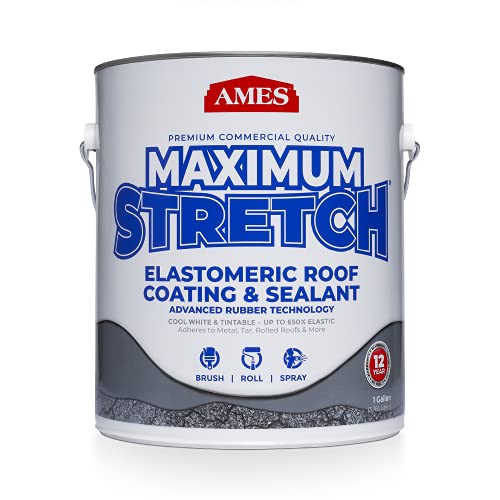
AMES MSS1 Maximum Stretch Roof Coating is a white, elastomeric option offering 650% elongation to resist cracking and peeling. Its high reflectivity (about 88%) helps lower surface temperatures, supporting cooler roof surfaces and reduced cooling costs. The coating adheres to metal roofs, tar, rolled roofs, and similar substrates, making it suitable for RV roofs and other low-slope applications. It can be applied as a roof sealant and waterproof coating, with brushing, rolling, or spraying methods supported. Consider its elongation properties when choosing for roofs subject to movement or thermal expansion.
As with any elastomeric coating, surface preparation, proper substrate compatibility, and correct film thickness are critical. The product is designed for long-term flexibility, reducing the likelihood of cracking over time and offering a practical solution for seasonal usage and maintenance cycles.
Countryman Coatings 100% Silicone Roof Coating

Countryman Coatings Silicone Roof Coating is a versatile silicone top coat designed to restore and protect a wide range of roof surfaces, including metal, modified-bitumen, EPDM, PVC, TPO, and more. The product emphasizes no-primer adhesion in many situations, simplifying the coating process. With a near-90% reflectivity rating, it aims to reduce energy usage by keeping roofs cooler. The silicone coating is suitable for RV roofs as well as other structures in need of durable waterproofing and UV resistance. This option can act as a long-term protective layer, resisting ponding water and environmental exposure.
Important considerations include ensuring compatibility with the underlying roof material and understanding the need (or lack) for primers in your specific application. While silicone coatings offer excellent UV resistance and durability, surface cleanliness and dryness are essential for optimal adhesion and performance.
Xmntdo RV Roof Coating White

Xmntdo RV Roof Coating is a white polyurethane coating designed for RVs, campers, and travel trailers. It emphasizes waterproofing, heat reflectivity, and a durable flexible seal to prevent leaks and damage. This coating aims to reduce interior temperatures and extend roof life by forming a protective barrier on various RV roof surfaces. It is compatible with common RV roof materials and can pair with primers to enhance adhesion where needed. The coating’s white color helps reflect sunlight and maintain interior comfort.
For RV owners, consider the product’s application guidelines, required cure times, and maintenance intervals to ensure lasting performance in different climates and seasons.
Buying Guide: Key Purchase Considerations
- Roof substrate compatibility: Confirm that the coating works with EPDM, TPO, fiberglass, metal, or concrete as applicable to your roof.
- Reflectivity and energy impact: Higher reflectivity lowers heat buildup and cooling costs but verify proven performance figures on the product page.
- Elongation and flexibility: For roofs subject to movement or temperature cycling, elastomeric formulas with high elongation (e.g., 650% or more) provide better crack resistance.
- Application method: Check whether a product is best brushed, rolled, or sprayed, and ensure you have the proper equipment and surface preparation steps.
- Primer requirements: Some coatings require primers for optimal adhesion on specific substrates; others are formulated to minimize priming needs.
- UV resistance and durability: Long-term exposure to sun requires UV-stable coatings to prevent chalking, cracking, and degradation.
- Ponding water tolerance: Consider coatings designed to form robust membranes on flat or low-slope roofs that experience standing water.
- Maintenance and recoat frequency: Look for coatings with clear guidance on recoating intervals to maintain protection.
- Environmental and safety considerations: Review ventilation needs, odor, and any volatile organic compound (VOC) information relevant to your project.
- Warranty and manufacturer guidance: Prefer products with documented warranties and clear DIY or professional-use guidelines.