
Answer: When mounting on tile or solid walls, choose anchors that deliver strong load transfer, safe expansion, and easy installation. This guide compares five top options to help you pick the right anchor for tiled surfaces, drywall, plaster, and masonry. Best for tile: specialty systems that work behind ceramic surfaces; best for hollow walls: dual-component nylon anchors; best all-around: universal anchors with automatic substrate adaptation. The following table highlights core strengths and ideal use cases for quick reference.
| Product | Best For | Why Selected |
|---|---|---|
| Hillman DuoPower 18 Pcs | Multiple Materials, including Tile | Universal material compatibility with improved hold via dual components. |
| CondoMounts MSK9002 | Tiled Surfaces (Ceramic/Porcelain/Granite) | No studs required; includes diamond drill bit for tiles. |
| fischer DuoPower Universal Anchors | Solid, Perforated, and Panel Materials | Automatic substrate adaptation for various building materials. |
| TOGGLER ALLIGATOR AF8 | Hollow and Solid Substrates | Flanged design helps distribute load in hollow substrates. |
| Wensilon Plastic Anchors Kit | Drywall, Brick, Concrete Surfaces | Multi-pack with varied sizes for flexibility and quick projects. |
Hillman 18 Pcs DuoPower Nylon Anchors

Features: DUOPOWER CONTRACTOR-STRENGTH anchors for drywall, plaster, tile, concrete, brick, and masonry. Dual-material nylon design expands to grip hollow or solid walls. Includes screws suitable for 6 to 10 sizes and a 1/4 in drill bit alignment.
Best for: DIY and pro projects that involve mounting brackets, shelves, or fixtures on mixed-material walls. Why selected: The twin-material design delivers reliable holding power across tile and other substrates, with included screws simplifying installation. Limitation: Performance may vary on very brittle tile if drilling is not precise.
CondoMounts MSK9002 Tiled Wall Kit

Features: Unmatched versatility on ceramic, porcelain, marble, and granite walls. Includes a 1/2″ diamond drill bit and 4 toggle anchors for tiled and other surfaces. Fast installation claims and reusable anchors in the same hole enhance efficiency.
Best for: Mounting TVs, grab bars, or heavy fixtures on tiled walls without studs. Why selected: Designed specifically for tile applications, offering a drill bit and anchors that minimize wall damage. Limitation: The kit emphasizes tile surfaces; performance on very uneven walls may require additional support checks.
fischer DuoPower Universal Wall Anchors
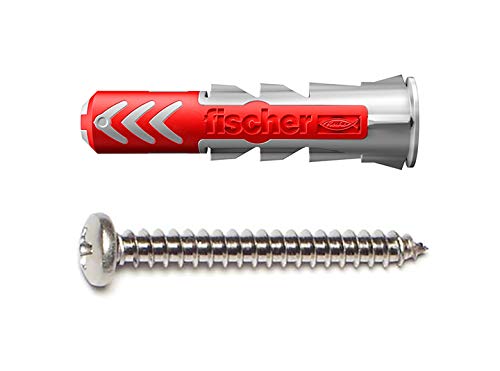
Features: Self-adjusting plug that optimizes depending on substrate. Three functions—folding, expanding, and knotting—enable high load transfer across solid, perforated, and panel materials. All-in-one solution compatible with screws Ø0.12 – 0.16 in. Compact length reduces drilling effort; anti-rotation feature prevents twisting during installation.
Best for: Mixed-material installations where tile is one of several substrates. Why selected: Its automatic substrate adaptation covers tile to concrete without changing anchors. Limitation: Some tiles or very dense substrates may require pilot hole checks to ensure optimal expansion.
TOGGLER ALLIGATOR AF8 Flanged Anchor

Features: Flanged polypropylene body expands and locks within hollow and solid substrates. Designed to distribute force and prevent pull-out, with included #12 x 1-3/4″ screws. Made in the USA. Suitable for a range of materials including drywall and brick.
Best for: Hollow-wall mounting and lightweight fixtures on tile-adjacent installations. Why selected: The flanged design improves stability, especially in hollow substrates commonly found behind tile installations. Limitation: May not reach the same load ratings as larger, purpose-built anchors on thick solid walls.
Wensilon 274 Pcs Plastic Anchors Kit

Features: Large multi-pack with assorted drywall anchors, wood screws, and concrete components. Designed for wood, hollow walls, drywall, iron sheet, and cement walls, making it a versatile kit for many projects.
Best for: Budget-conscious projects requiring multiple anchor sizes and screw options. Why selected: The broad assortment reduces the need for extra trips to the hardware store. Limitation: Mixed quality across a large kit; verify suitability for tile-specific loads before heavy mounting.
KURUI Heavy Duty Hollow Wall Anchors Kit

Features: 28 pieces of metal hollow-wall anchors with 3 sizes (1/8″, 3/16″, 1/4″). Includes butterfly wing nuts with corrosion-resistant galvanized screws. Suitable for drywall and hollow walls when installed correctly.
Best for: Quick mounting of art, frames, or light fixtures on hollow walls. Why selected: Multiple sizes cover common hanging needs. Limitation: Performance depends on wall condition and proper installation behind tile or plaster.
Buying Guide
What should I consider when choosing wall anchors for tile?
- Substrate compatibility: Tile, ceramic, drywall, plaster, and concrete each respond differently to anchors. Look for anchors explicitly designed for tile or universal use with tile compatibility.
- load requirements: For heavy fixtures, prioritize anchors with higher load transfer and anti-rotation features to reduce risk of pull-out.
- Drill bit and installation ease: Some kits include a drill bit tailored for tile; consider the total install time and the risk of tile cracking.
- Anchor material and corrosion resistance: Stainless steel or treated nylon/shells perform better in humid or outdoor environments and in cementitious walls.
- Reusability and hole repair: Some systems allow reuse in the same hole or require minimal hole damage, which can save time on remodels.
Installation tips for tile mounting
- Use a masonry or carbide-tipped drill bit suitable for tile and masonry. Apply steady, light pressure and avoid overheating the drill.
- Align anchors perpendicular to the mounting surface to maximize load distribution and minimize wobble.
- Start with a pilot hole to reduce tile cracking risk; ensure the hole width matches the anchor’s expansion range.
- Check surface flatness; tile surfaces can be uneven, which may require shims or additional supports for even load transfer.
FAQ
- Q: Are universal wall anchors suitable for tile? A: Yes, if they specify tile compatibility or offer a broad range of substrates, including tile and masonry.
- Q: Can I mount a TV on tile walls with these anchors? A: Use anchors rated for heavier loads and a tile-friendly mounting kit; follow the manufacturer’s guidance and add stud or reinforcing support when possible.
- Q: Do these anchors rust in humid bathrooms? A: Choose corrosion-resistant designs; some kits include galvanized steel or coated nylon for moisture resistance.
- Q: Do tile mounting kits include the drill bit for tiles? A: Several kits provide a diamond or carbide bit optimized for tile; verify inclusion before purchase.
- Q: Can I reuse anchors after removing a fixture? A: Some systems allow a re-use in the same hole, others may need new anchors for reliable hold.
- Q: Which anchor is best for mixed-material walls? A: Look for a universal or dual-component anchor designed to adapt to multiple substrates, including tile, drywall, and masonry.