
When electricians need accurate voltage testing and reliable measurement, choosing the right meter kit matters. This guide highlights five clear options built for field use, compact storage, and quick diagnostics. Each pick suits different job roles—from residential wiring checks to commercial panel work. Below, you’ll find who each product is best for, what it measures, and practical trade-offs to consider.
| Product | Best For | Key Voltage Range | Notes |
|---|---|---|---|
| Klein Tools 69149P Electrical Test Kit | General electricians needing a versatile set | Up to 600V AC/DC | Includes non-contact tester and outlet tester |
| KAIWEETS KIT01 | Professionals who want all-in-one accuracy | AC/DC 600V | Carrying case; LCD readouts |
| Klein Tools CL120 | Clamp meter users | Voltage up to 600V | Clamp testing plus NCVT |
| Klein Tools MM325 | Manual-ranging testers needing battery test | 600V | Battery testing built-in |
| AstroAI Digital Clamp Meter | Compact, budget-friendly clamp testing | AC/DC voltage; clamp current | Includes backlit display |
Klein Tools 69149P Electrical Test Kit

The 69149P combines a digital multimeter (MM320), a non-contact voltage tester (NCVT1XT), and an electrical outlet tester in one kit. It measures up to 600V AC/DC, 10A DC current, and 2 MΩ resistance. The NCVT offers bright LEDs and audible cues when voltage is present, while the MM320 provides both visual and audible continuity testing. This kit is best for electricians who need a compact, all-in-one solution for evaluating circuits, outlets, and basic continuity without switching tools constantly.
Best for: Field technicians who want quick, integrated testing with minimal tool switching. Better for jobs where both voltage presence and circuit integrity must be verified in a single session. Avoid it if you need higher current ranges or specialized electrical safety features beyond standard residential or light commercial work.
KAIWEETS KIT01 Electrical Test Kit

The KIT01 consolidates a digital multimeter, a smart non-contact voltage tester, and a GFCI outlet tester in one complete kit with a carrying case. It supports AC/DC voltage up to 600V, DC current up to 10A, and resistance testing, with features such as a backlit LCD, data hold, auto-off, and CAT III 600V safety. The smart NCVT provides live voltage readings, color indicators, and audible signals, making it a strong choice for electricians who value efficiency and fast diagnostics.
Best for: Electricians who want an all-in-one solution that reduces trips to the truck and speeds up fault finding in panels and outlets. Better for beginners or DIYers who need clear LCD readings and robust safety ratings. Choose this if you frequently switch between voltage checks and continuity testing during a single job.
Klein Tools CL120 Digital Clamp Meter
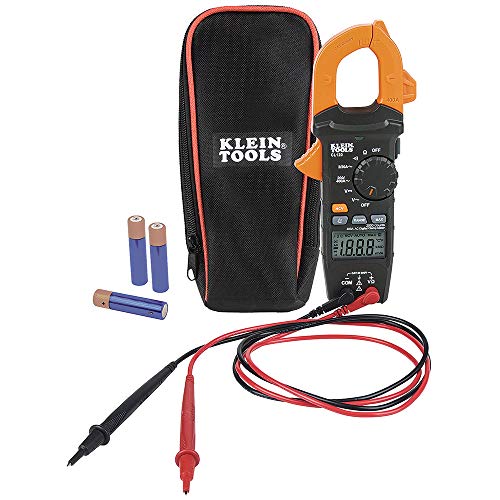
The CL120 combines a clamp meter with a standalone non-contact voltage tester and traditional test-lead measurements for voltage, resistance, and continuity. It supports AC current in the clamp and provides a backlit display for readability in dim environments. This model is ideal for electricians who frequently measure current without breaking the circuit, as well as those who need precise voltage readings in a single, portable tool.
Best for: Electricians who do repetitive current measurements and need convenient NCVT integration. Better for working in low-light sites. Limitations: The included clamp is designed for general use; for high-precision high-current environments, a higher-range meter may be preferable.
Klein Tools CL120VP Electrical Voltage Kit

The CL120VP kit extends the CL120’s capabilities with added testers and test leads plus a pouch and batteries for field readiness. Auto-ranging technology helps ensure accurate results by selecting the correct measurement range automatically, while a built-in test lead holder and optional magnetic hanger support hands-free operation. This kit is best for professionals who need a ready-to-use setup on day one and value quick, reliable measurements on diverse jobsites.
Best for: Electricians who want a plug-and-play tester with flexible mounting options. Better for shop-to-field transitions where immediate usability and organization matter. Caution: Depending on the job, you might still want a more robust high-voltage meter for industrial settings.
AstroAI Digital Multimeter Tester
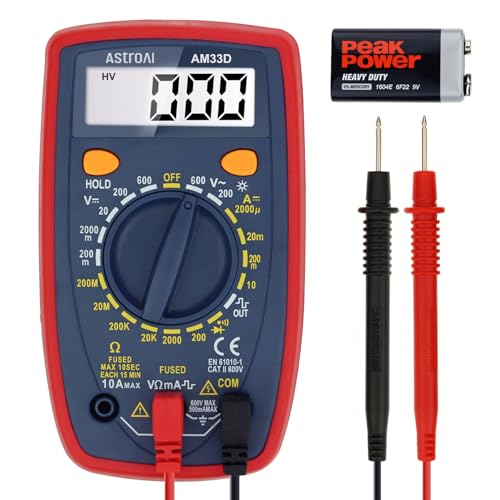
The AstroAI meter offers a versatile set of measurements: AC/DC voltage, DC current, resistance, continuity, and diode testing. It is a practical option for automotive work and residential troubleshooting, featuring a backlit LCD and a 3½-digit display. A caution note is included in the product description about measurement technique to avoid inaccurate readings, especially for low-voltage signals.
Best for: Budget-conscious professionals and DIYers who need a broad feature set at a lower price point. Better for quick troubleshooting and basic diagnostics on small electrical projects.
Buying Guide: How to Choose The Right Voltage Meter
- What range do you need? For most residential work, meters that handle up to 600V AC/DC cover the majority of circuits. For industrial environments, seek CAT IV ratings at higher voltages.
- Do you need a clamp function? Clamp meters excel at measuring current without breaking circuits, which is ideal for panel work and live wires.
- Is all-in-one convenience important? Kits that combine a multimeter, non-contact tester, and outlet tester save time and space on the truck.
- How important is readability? Backlit displays and clear indicators help in dim work areas. Look for dual LEDs, audible alerts, and data hold features.
- What safety features matter? Look for CAT ratings, proper insulation, and lead management options like test lead holders or magnetic hangers.
FAQ
- What is a non-contact voltage tester good for? It detects the presence of voltage without touching conductors, helping identify live circuits quickly.
- Should I choose a digital or analog meter? Digital meters provide clearer readings and additional features like data hold and backlighting, which are usually more practical for electricians.
- Can a clamp meter measure voltage as well as current? Many clamp meters measure voltage with test leads; some integrate voltage measurement directly in the clamp. Check the product specs.
- What is the importance of CAT rating? CAT ratings indicate safety levels for different environments. For general residential work, CAT III 600V or CAT IV 600V is common; higher ratings are used in commercial/industrial settings.
- Do I need a built-in battery test function? If battery testing is frequent, a meter with a dedicated battery test feature can save troubleshooting time.
- How should I store test leads and accessories? Use a sturdy carrying case or organizer to protect probes, reduce wear, and improve on-site efficiency.