
When working on roll cages, selecting the best tubing bender is vital to achieve precise, strong bends without compromising structural integrity. This guide highlights top-rated tubing benders suitable for roll cage manufacturing, featuring hydraulic, manual, and roll benders compatible with various tubing types and sizes. Below is a summary table showcasing essential details of each product for quick comparison:
| Product Name | Brand | Bending Capacity & Tube Types | Key Feature | Link |
|---|---|---|---|---|
| 3rd Generation Hydraulic Tubing Bender for Round Tubing | Speedway Motors | Up to 1.75″ round tubing, .110″ mild steel, .096″ chromoly | Hydraulic bending up to 90°, incremental die marks | View Product |
| ECOTRIC Tube and Pipe Bender Black Oxide Coating Steel Manual Hand Bender | ECOTRIC | Up to 2″ round, 1.5″ square tubing, .125″ wall thickness | Ratcheting handle for leverage, impact-resistant coating | View Product |
| TR-60 Tube Roll Bender, 1 1/2″ Round Tube Rollers Manual Roller | GOSHET | 1.5″-2″ round pipe, bends large radius | Heavy-duty 3-roll system, manual crank for efficiency | View Product |
| Speedway Motors Speedy Notcher Roll Cage Tube Joint Tubing Notcher | Speedway Motors | 9/16″ to 2″ O.D. tubing | Built-in protractor gauge for precise joint notching | View Product |
| Eastwood Tubing Tube Bender Plumbing High Capacity Pipe Bender | Eastwood | Up to 0.120” wall tubing, 3/4” to 2” diameter | Rotary draw design, works with aluminum, steel, copper | View Product |
3rd Generation Hydraulic Tubing Bender for Round Tubing by Speedway Motors

This hydraulic pipe bender specializes in bending round tubing up to 1.75 inches in diameter, making it ideal for roll cages, frame crossmembers, and chassis components. It handles mild steel tubing up to .110″ wall thickness and chromoly tubing up to .096″. The tool offers up to 90 degrees of bending with incremental marks cast directly into the dies, ensuring accuracy and repeatability.
The hydraulic system reduces user effort, providing reliable bends without deforming tubing walls. Its design is tailored for heavy-duty fabrication and is well suited for professional and advanced home builders needing precise bends in roll cage tubing.
ECOTRIC Tube and Pipe Bender with Black Oxide Coating

This manual hand bender features a ratcheting handle to increase leverage, making it easier to bend tubing while maintaining control. It can bend round tubing up to 2 inches in diameter and 1.5 inches for square tubing, supporting tubing wall thicknesses up to .125″.
Constructed from high-quality steel with a durable black oxide coating, it resists impact and corrosion over time. The bender is suitable for roll cages, awnings, furniture, and other framed structures. Its portability and solid steel frame make it a versatile and durable option for manual tube bending.
TR-60 Manual Tube Roll Bender by GOSHET

The TR-60 tube roller is designed for bending larger radius pipes — 1.5-inch schedule 40 pipe down to a 20-inch radius and 2-inch pipe down to 60-inch radius. It operates manually with a hand crank to roll tubing slowly and consistently into bends without flattening or creasing.
This three-roll bender is excellent for fabricators working with mild steel, aluminum, or copper tubing that requires smooth, gradual bends, like in roll cages or architectural metalwork. Please note that the specific roller needed to function with this unit must be purchased separately, as detailed in the product listing.
Speedway Motors Speedy Notcher Roll Cage Tube Joint Tubing Notcher
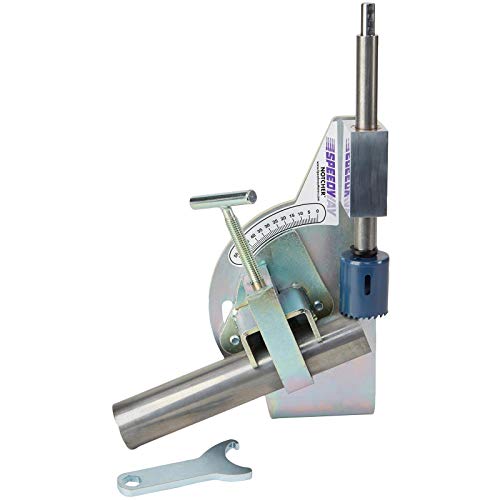
While not a bender, this tubing notcher is an essential complementary tool for roll cage fabrication. It provides precise tube joint notching for tubing from 9/16″ to 2″ outer diameter, enabling tight-fitting corners and clean weld joints.
The built-in protractor gauge allows accurate angle adjustments, ensuring perfect notches for both round and square tubing. Ideal for custom projects, this tool improves frame assembly and fitment in roll cage construction.
Eastwood Plumbing High Capacity Rotary Draw Tube Bender

The Eastwood rotary draw bender supports bending up to 0.120” wall thickness tubing from 3/4” to 2” diameters. With a variety of 11 dies available, offering 120° and 240° bends, it can handle mild steel, stainless steel, aluminum, and copper tubing with precision.
This hand-operated pipe bender is suitable for fabricators who need versatility in tubing materials and sizes, offering smooth bends with minimal deformation. It is a reliable choice for plumbing, automotive roll cages, and general metal fabrication projects.
Buying Guide for Tubing Benders for Roll Cages
Choosing the best tubing bender for roll cage applications requires consideration of several factors to ensure the right fit for your project needs:
1. Type of Tubing Bender
- Hydraulic Benders: Provide powerful bending with less manual effort. Ideal for thicker wall tubing and larger diameters commonly used in roll cages.
- Manual Hand Benders: More affordable and portable; best for smaller diameter tubing and thinner walls but require physical effort.
- Roll Benders: Create smooth, large-radius bends suitable for gradual curves rather than sharp angles.
- Notchers: Though not benders, tube notchers are critical for prepping tubing ends for precise joints and welds.
2. Bending Capacity and Tube Compatibility
- Check maximum tubing diameter the bender can handle and the maximum wall thickness supported.
- Confirm compatibility with your tubing material: mild steel, chromoly, aluminum, or stainless steel.
- Some benders have different dies available for varying sizes and shapes; ensure dies cover your requirements.
3. Bending Angle and Precision
- Devices offering clear angle markings or built-in protractors improve accuracy and repeatability critical in safety equipment like roll cages.
- Consider incremental or ratcheting features that provide controlled bending steps.
4. Construction and Durability
- High-quality steel construction prolongs tool life under heavy use.
- Features like black oxide coatings enhance corrosion and impact resistance.
- Hydraulic units should have strong cylinders and molds for consistent and safe bending pressure.
5. Portability and Ease of Use
- Manual benders are generally lighter and portable but may require more effort.
- Hydraulic benders may be bulkier but reduce physical strain.
- Consider workshop space and mobility needs before selecting.
6. Additional Features
- Accessories such as extra dies, rollers, or notching tools can expand functionality.
- Look for included instructions or user guides to reduce learning curve time.
By evaluating these factors, you can select a tubing bender that fits your specific roll cage fabrication tasks, ensuring safe and precise bends with durable construction.