
Finding the right traditional pocket knife means balancing blade versatility, build quality, and portability. This guide highlights five reliable options suited for everyday carry, camping, and outdoor tasks. Each knife is chosen for simplicity, durability, and practical features like nail pulls, multiple blades, and textured handles. Whether you’re new to traditional folding knives or expanding your collection, these picks cover a range of uses—from light daily tasks to more rugged outdoor work.
Buyer snapshot: The top picks here skew toward classic pocket knives with multiple blades or sturdy drop-point designs. The Imperial and Buck models are strong all-rounders for users who want reliable daily carry with easy access. Old Timer options emphasize traditional wood handles and sawcut textures for grip. Rtek and Buck’s more compact models focus on portability without sacrificing edge retention. The table below offers a quick reference to each product’s core strengths.
| Product | Best For | Key Benefit |
|---|---|---|
| Schrade Imperial IMP13L | Everyday carry | Two blades, easy access |
| Buck Knives 389 Canoe | Outdoor tasks | Two blades, corrosion resistance |
| Old Timer 194OT Gunstock Trapper | Everyday carry & hunting | Clip point and sawcut handle |
| Buck Knives 371 Stockman | Light tasks & pocket carry | Three blades, compact |
| Old Timer 8OTW Senior | EDC & outdoor use | Three blades, larger size |
Schrade Imperial IMP13L Stainless Steel Large 2 Blade Pocket Knife

The Imperial IMP13L uses two distinct blades—a clip point and a spey—made from 3Cr13 stainless steel. Its 7-inch overall length and 3-ounce weight keep it comfortable for all-day carry. Best for: collectors or users who want a classic two-blade setup with straightforward operation. Caution: blade options are limited to two, which may restrict some tasks if you need a dedicated whittling or detail blade.
Buck Knives 389 Canoe 2-Blade Folding Pocket Knife

This Buck Canoe model features two blades—the 2-1/2″ spear point and a 1-7/8″ pen blade—crafted from 420J2 stainless steel for corrosion resistance and easy sharpening. It weighs 2.7 oz and closes to 3-5/8″, making it highly portable. Best for: everyday tasks and light outdoor use where a compact dual-blade tool is ideal. Consider: the smaller blades may limit heavy scraping or batoning tasks.
Old Timer 194OT Gunstock Trapper

The 194OT Gunstock Trapper offers a 3.1-inch clip point blade with a sawcut handle for a traditional grip. Its seven-inch overall length and 2.4-ounce weight provide a balanced option for everyday carry and light outdoor tasks. Best for: those who value a classic look and quick access. Limitation: fewer blades than some three-blade models.
Buck Knives 371 Stockman

The 371 Stockman is a three-blade folding knife with a woodgrain inlay handle and 420J2 steel blades: clip, spey, and sheepsfoot. Weighing about 3.1 oz and closing to 3-7/8″, it is a compact multi-blade option. Best for: users who want a traditional aesthetic with a variety of blade choices for detail work. Caution: blade set may feel lightweight for heavy-duty tasks.
Old Timer 8OTW Senior 6.9in Traditional
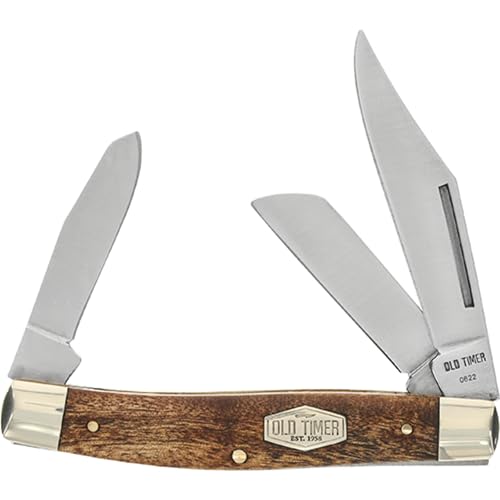
The 8OTW Senior is a larger, 6.9-inch traditional folding knife with three high-carbon stainless blades. Its desert iron wood handle and size make it practical for more demanding outdoor tasks and whittling. Best for: experienced users who need extended blade options in a robust, outdoors-ready package. Limitation: larger size may be bulky for shallow-pocket carry.
Old Timer 44OT Workmate

The 44OT Workmate supplies four high-carbon stainless blades in a compact, everyday carry footprint. Its sawcut handle design and quick-access nail pulls support quick task execution. Best for: users who want a versatile, multi-blade setup for diverse daily chores. Caution: more blades can add weight and complexity for very lightweight tasks.
Buck Knives 110 Folding Hunter

The 110 Folding Hunter is a classic lockback with a 3-3/4″ 420HC clip blade and an iconic ebony handle with brass bolsters. Its design emphasizes safety, reliability, and field performance. Best for: serious knife users who want a proven hunting and outdoor companion. Limitation: heavier and larger than some compact models, not ideal for very small pockets.
Rtek 3.75″ Spanish Brown Wood Handle

The Rtek 3.75″ lockback features a 3-inch stainless steel clip point blade. It pairs a classic wood handle with quick-access nail pull and durable construction for outdoor and everyday carry. Best for: budget-conscious buyers who want a traditional look without sacrificing reliability. Caution: data notes only one blade type, limiting some tasks that require multiple specialized blades.
Buying Guide: Traditional Pocket Knife Essentials
What size should you choose? Consider your daily carry needs. Smaller models excel in pocket comfort and quick access, while larger knives provide more blade length for outdoor tasks and heavy-duty work. Look for blades in high-carbon stainless steel for edge retention and corrosion resistance. A lockback mechanism adds security by keeping the blade firmly in place during use. Handle material and texture influence grip, especially in wet or cold conditions.
Blade configuration matters. If you perform precision tasks, a three-blade Stockman or a two-blade Canoe can cover a broad range. If you need a dedicated detail blade, a single-point clip blade or a slim spear point may serve better. For everyday tasks like opening packages or light carving, two blades are often sufficient and lighter to carry.
Durability vs. portability. Heavier knives tend to feel sturdy and are less prone to flex under force. Lighter designs are more comfortable for all-day carry but may require gentler use to avoid chipping or bending. Material choice (stainless vs. high-carbon stainless) balances corrosion resistance with edge retention and ease of sharpening.
Choosing By Use Case
- Everyday carry (EDC): Look for a compact two- or three-blade knife with a secure lockback and a comfortable grip.
- Outdoor or camping: Prefer larger blades or triple-blade options with robust steel and a textured handle.
- Hunting and wood tasks: Select a clip point or spey blade combination with good edge retention.
- Budget-conscious shoppers: Stainless or 420J2 steel models offer reliable performance at a lower price point.
Maintenance Tips
- Keep blades clean and dry after use to prevent corrosion.
- Sharpen blades according to the steel type and use appropriate sharpening tools.
- Oil the pivot and lock mechanism periodically to ensure smooth operation.
FAQ
- What is a traditional pocket knife best for? – Everyday tasks, light outdoor work, and collecting classic designs.
- Should I choose a two-blade or three-blade model? – Two blades are lighter and simpler; three blades offer more versatility for varied tasks.
- Is stainless steel better than high-carbon for a pocket knife? – Stainless resists corrosion well; high-carbon stainless balances edge retention with durability.
- What should I consider for grip and handle design? – Texture, contour, and material influence comfort and control, especially in wet conditions.
- Are traditional knives safe for everyday carry? – Yes, when used with proper handling and the blade is locked during use.
- Do these knives require special maintenance? – Regular cleaning, drying, oiling folding joints, and occasional sharpening are enough for most models.