
Anyone tackling concrete cutting needs blades and blades-on-tools that perform reliably under heavy material. This guide highlights five top options designed for cutting concrete, masonry, brick, and similar hard substrates. Each pick is suited to different buyers—professional contractors, DIY renovators, and hobbyists—depending on whether you’re using angle grinders, oscillating multitools, or reciprocating saws. The table below helps you compare core strengths at a glance.
| Product | Best For | Key Benefit |
|---|---|---|
| INWELL 4-1/2″ Diamond Blade (2-Pack) | Professional masonry work | Fast, cool cutting with durable segments |
| DEWALT Masonry Diamond Blade | Dry cutting on stone and masonry | Long life, thin kerf for faster cuts |
| PayA Tools Demolition Masonry Recip Saw Blade | Straight cuts in brick and aerated concrete | Carbide edge for tough materials |
| EZARC Diamond Oscillating Blade (3-pack) | Grout removal and precise cuts | Diamond edge for durability in tight spaces |
| EXKRAEFT Diamond Oscillating Blades (5-pack) | Tile and grout work, small surface cuts | Long-lasting, versatile multitool blades |
INWELL 4-1/2 Inch Diamond Blade 2-Pack

Brand: Inwell
Arbor: 7/8″ (20mm)
Features: Premium diamond grit with advanced pressing technology; segmented design for improved airflow, heat dissipation, and debris removal; 7mm diamond segments on a hardened steel body for reduced vibration and durability.
Best for: Contractors and DIYers who need fast, smooth cuts in concrete, granite, masonry, brick, and related materials. This blade’s segmentation helps keep the cut steady and the workspace cooler, which is valuable for long sessions.
Limitations: It’s a two-pack; if you need very small or very large diameter blades, you’ll need other options. Also, performance depends on proper alignment and feed rate to maximize life.
DEWALT Diamond Blade for Masonry, 4-1/2″

Brand: DEWALT
Arbor: 7/8″
Features: Diamond matrix rated for extended life, delivering up to 200x the life of conventional abrasives; thinner kerf for faster cuts and reduced dust.
Best for: Pros who need reliable dry-cutting performance on masonry and stone with minimal blade changes. The advanced diamond matrix helps maximize material removal and blade longevity.
Limitations: Thinner kerfs can demand careful feed pressure to prevent blade deflection or overheating on very hard materials.
PAYA TOOLS Demolition Masonry Reciprocating Saw Blade
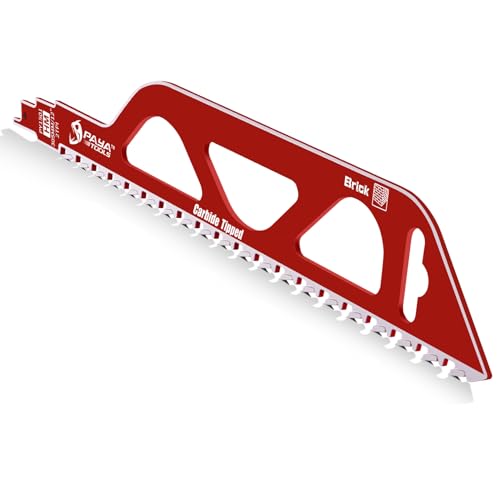
Brand: PAYA TOOLS
Size/Type: 305mm / 12-Inch, 2TPI
Features: Carbide tooth strip for extra durability in aerated concrete and hollow brick; optimized for straight cuts with reduced dust and vibration.
Best for: Those who frequently cut brick, aerated concrete, and similar masonry materials with a reciprocating saw. The carbide teeth excel in tough, straight cuts where standard blades wear quickly.
Limitation: Not suitable for wood or plastic cutting; use only on appropriate masonry substrates to avoid blade wear.
EZARC Diamond Oscillating Blade (3-Pack)

Brand: EZARC
Pack: 3 blades
Features: Diamond cutting edge with extended life; precise kerf around 1/16 inch (1.6 mm); designed for grout removal, mortar cleaning, and cut-ins into tight spaces.
Best for: DIYers performing grout removal and close-quarters cuts where accuracy matters and blade longevity is important. These are particularly useful for tile projects and renovation work.
Limitation: Optimized for grout and mortar work; not intended for large bulk cutting of concrete blocks.
EXKRAEFT Diamond Oscillating Blades (5-Pack)

Brand: EXKRAEFT
Pack: 5 blades
Features: Long-lasting industrial-grade diamond grit; includes multiple blade types for grout removal, tile cutting, and plaster/concrete work; designed for durability in tough jobs.
Best for: Remodelers and pros who need a versatile set of blades for grout removal, tile cutting, and light surface grinding without frequent blade changes.
Limitation: As a multi-pack, some blades may be optimized for different tasks; ensure you pick the blade type that matches the job to maximize efficiency.
Buying Guide
What should you consider when choosing a concrete-cutting tool?
- Material and blade type: For heavy cutting, diamond blades (continuous or segmented) excel. For grout removal or edge work, oscillating blades with diamond grit perform best.
- Tool compatibility: Check arbor size and compatibility with your grinder, reciprocating saw, or multitool. Common sizes include 7/8″ and 1 inch adapters.
- Cutting environment: Dry-cutting blades reduce dust but may heat faster. Segmented blades improve cooling and debris removal; continuous rims offer clean cuts in stone and tile.
- Durability vs. cost: Carbide blades may cost less but can wear faster on hard concrete; diamond blades often yield longer life and smoother cuts in exchange for higher upfront cost.
- Ventilation and safety: Ensure proper ventilation and use eye and hearing protection. Use clamps and guides to improve accuracy and reduce kickback.
Practical Buyer Considerations
- Choosing the right blade for your tool: If you own an angle grinder, a segmented or continuous diamond blade is typically preferred for concrete and stone. For multitools and reciprocating saws, choose blades designed specifically for oscillating or reciprocating cuts.
- Durability needs: For frequent, demanding cuts in hard materials, prioritize blades with high diamond segment counts and hardened steel bodies.
- Work scope: Narrow grout or tile work benefits from precision-dedicated blades, while bulk cutting of concrete blocks favors high-speed, durable blades with efficient debris removal.
Frequently Asked Questions
- What blade is best for cutting concrete with a grinder? — A segmented or continuous diamond blade designed for dry or wet cutting, depending on your setup and dust control needs.
- Can I use decorative blades for masonry work? — Use blades explicitly rated for masonry or concrete; inappropriate blades can wear quickly or fail during use.
- Are oscillating blades suitable for grout removal? — Yes, diamond-coated oscillating blades provide durable, precise cuts in grout and mortar.
- Is a thinner kerf blade always better? — A thinner kerf cuts faster and with less material removal but can be more prone to deflection if not supported properly.
- Do I need special safety equipment? — Yes. Wear eye protection, hearing protection, and a dust mask if cutting dusty materials; secure the workpiece and use proper clamps.
- How do I choose the right arbor size? — Match the blade arbor to your tool’s arbor; common sizes include 7/8″ (22.2 mm) and 1″ (25.4 mm).