
Radiant heating relies on precise control to deliver steady warmth without wasting energy. The following thermostats are specifically designed for radiant and underfloor heating systems, offering features like dual sensing, built-in GFCI, and hard-wired line voltage compatibility. This guide covers five top options, highlighting how each model meets different installation needs, safety standards, and user preferences. Use the buying guide below to compare features such as voltage compatibility, sensor types, and safety protections to find the best fit for your radiant heat setup.
Summary of Chosen Products
- Honeywell TH115-AF-GA/U Radiant Heating 120/240V Programmable Thermostat with Floor Sensor and GFCI
- OJ Microline UTN4 Radiant Floor Heat Thermostat with Class A GFCI, 120/240V
- OJ Microline UDG4-4999 Touchscreen Programmable Radiant Floor Thermostat, 120/240V
- BOWSEN Programmable Thermostat for Underfloor Heating, 120/240V, Dual Sensing
- ThermaCord 120V Heat Cable Controller with Weatherproof Outdoor Reset
Honeywell TH115-AF-GA/U Radiant Heating Thermostat

The Honeywell TH115-AF-GA/U is a 7-day programmable line-voltage thermostat designed for radiant heating systems. It supports 120/240V and includes a floor sensor for consistent warmth near the floor surface. A built-in GFCI adds a layer of safety when used with underfloor wiring. This model is well-suited for retrofit installs where a reliable, simple-to-operate control is required. Given its line-voltage design, it’s a practical choice for systems that don’t rely on low-voltage wiring.
Key points:
- 7-day programmable scheduling for tailored comfort
- Line-voltage operation with floor sensor
- Built-in GFCI for enhanced electrical safety
OJ Microline UTN4 Radiant Floor Heat Thermostat

The UTN4 is equipped with a built-in Class A GFCI and dual-sensing capabilities, supporting 120/240V circuits for radiant floor heating. It emphasizes safety and simplicity: a non-programmable interface provides a straightforward plug-and-play experience, ideal for users who want reliable warmth without setup complexities. This thermostat is UL-listed for USA and Canada, ensuring compliance with standard electrical safety requirements for underfloor systems.
Highlights include:
- Built-in Class A GFCI for floor heating safety
- Dual voltage compatibility (120V/240V)
- Simple, non-programmable operation
OJ Microline UDG4-4999 Touchscreen Radiant Floor Thermostat

The UDG4-4999 model features a responsive touchscreen and dual-sensing (air and floor) with built-in Class A GFCI. The 3-year warranty and dedicated USA support provide added assurance for installations that demand long-term reliability. While its emphasis is on user-friendly control, it is built for professional-grade radiant floor systems requiring precise temperature management.
Notable attributes:
- Touchscreen interface with a modern design
- Air and floor sensing for accurate heat management
- Integrated Class A GFCI with country-specific support
BOWSEN Programmable Thermostat For Underfloor Heating
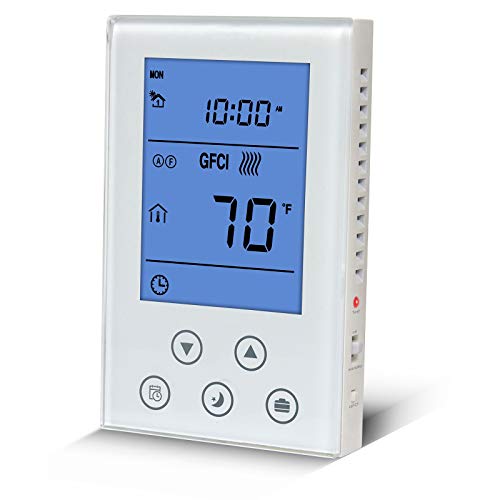
The BOWSEN thermostat supports both 120V and 240V systems and provides dual sensing (air and floor). It’s designed to meet GFCI safety requirements and supplies up to 3600W in 240V setups, making it suitable for larger radiant floor installations. The included floor sensor and robust protection features aim to maintain comfortable temperatures while preventing electrical issues.
Key considerations:
- Dual sensing (air + floor) for stable comfort
- GFCI protection built-in for safety
- High wattage support for larger floor areas
ThermaCord 120V Heat Cable Controller
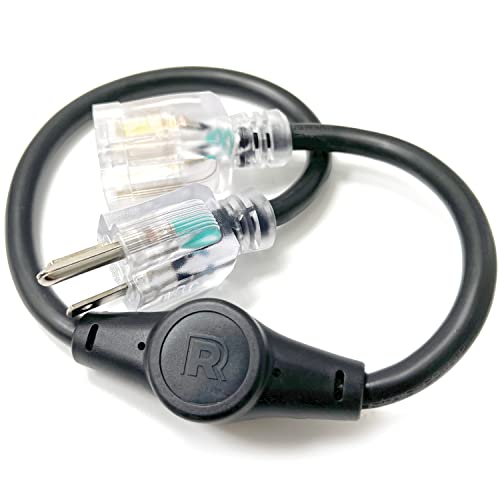
The ThermaCord heat cable controller is a weatherproof outdoor thermostat designed to manage heat cables and other devices. It turns heat cables on at 37ºF and off at 50ºF using a rugged, UL-listed, 120V, 15A bi-metal thermostat. The device is compatible with a broad range of heat cables and tapes, and its outdoor-ready construction makes it suitable for exterior radiant setups such as driveways or walkways. This model emphasizes simplicity and rugged reliability for outdoor applications.
Considerations include:
- Outdoor weatherproof design for heat cables
- Simple on/off action based on outdoor temperatures
- UL-listed and broadly compatible with heat cable brands
Buying Guide: Key Purchase Considerations
When choosing a thermostat for radiant heating, several criteria determine suitability and long-term value. Consider the following perspectives to balance safety, performance, and ease of use:
- Voltage and compatibility: Ensure the thermostat’s voltage (120V or 240V) matches your system. For underfloor or radiant floor heating, line-voltage devices often pair best with dual-sensing options for stable room-temperature control.
- Sensor type: Floor sensing provides targeted control near the heat source, while air sensing captures overall room temperature. Dual-sensing models balance both, reducing hotspots or cold spots.
- Safety features: A built-in GFCI (Ground Fault Circuit Interrupter) protects occupants in a wet environment or near floors. Outdoor or wet-area installations especially benefit from this.
- Programming and control: Programmable thermostats help reduce energy use by scheduling setpoints. Non-programmable options offer quick, predictable heat with less setup.
- Installation considerations: Some thermostats are designed for retrofit, while others require professional wiring. Check for compatibility with existing wiring and whether a floor sensor is included or needs to be added separately.
- Warranty and support: A longer warranty and accessible customer support provide assurance for critical heating components in winter.
- Outdoor readiness: For exterior heat cable applications, weatherproof enclosures and durable construction are essential to withstand temperature swings and moisture.
For radiant heating projects, safety and reliability are as important as comfort. The devices listed here cover a spectrum from simple, manual control to advanced, touchscreen interfaces with dual sensing and GFCI protection. In choosing, align the device’s features with your installation (underfloor vs. wall-mounted baseboard), voltage, and whether you value programmable scheduling or straightforward on/off operation.