
Choosing the right spray foam for window gaps can improve energy efficiency, reduce drafts, and help maintain indoor comfort. The following selections from trusted brands offer reliable expanding formulas designed for windows and doors, with options ranging from low expansion to high-density fills. This guide highlights five products with features that favor ease of application, durability, and weather resistance, helping American homeowners make an informed choice for seasonal sealing projects.
style=”display:block; margin-top:0;”>
Summary Table of Selected Products
| Product | Brand | Key Feature |
|---|---|---|
| Window & Door Sealant | Great Stuff | Distinctive yellow foam; designed for window/door gaps |
| Spray Foam & Fill | Red Devil | Low-pressure; prevents frame bowing; versatile dispensing |
| Tite Foam Gaps & Cracks | Loctite | Fills up to 1 inch; durable UV resistance |
| Extreme Expanding Foam | TYTAN PROFESSIONAL | Minimal expansion; suitable for window/door gaps |
| STANLEY F905 Gaps & Cracks | STANLEY | Low-expansion with straw applicator; indoor/outdoor use |
Great Stuff Window & Door Foam Sealant

The Great Stuff Window & Door 12 oz insulating foam is a purpose-made sealant designed to help close gaps around windows and doors. Marketed as a wind-resistant solution, this distinctive yellow foam expands to fill voids and provides an energy-saving seal. It is manufactured in the United States, aligning with consumer expectations for domestic production. While the product promises durable sealing in typical residential applications, it’s best used for cavity fills where gaps require a reliable, rigid foam after curing. Its color aids identification in tight retrofit projects.
In practice, users appreciate the consistent expansion and the ability to apply from various angles, though care is needed to avoid over-application in narrow gaps. For window and door installations, it offers a straightforward option to seal irregular spaces and reduce air infiltration. As with all spray foams, proper ventilation and protective gear are advisable during application, and trimming may be necessary after full cure to achieve a neat finish.
Red Devil 0914 Spray Foam & Fill

Red Devil 0914 is a 12 oz polyurethane expanding insulation sealant designed specifically for windows and doors. It fills, insulates, and seals gaps to stop energy loss around frames, reducing drafts and improving thermal performance. A key benefit is its low-pressure formula intended to prevent frame bowing while delivering a full cavity fill, which helps create a stable seal over time. The product features multi-directional dispensing, allowing foam to be extruded from the can at any angle—an important consideration when sealing in tight or awkward spaces around window installations.
Users should note that this product emphasizes universal suitability for window and door hardware areas, including corners and jams. While it offers a robust seal, the user should follow recommended curing times and trim excess foam after curing for a tidy finish. As with all polyurethane foams, working materials outdoors or in a well-ventilated area is prudent, and storing the can upright and protected from extreme temperatures extends shelf life.
Loctite Tite Foam Gaps & Cracks

Loctite Tite Foam Gaps & Cracks is a polyurethane expanding insulation designed to fill gaps and cracks up to 1 inch. The foam features premium durability with a polymer base designed to withstand UV exposure, contributing to long-lasting performance in both interior and exterior applications. Its high-density foam structure offers durability and a uniform cell pattern, supporting consistent insulation characteristics around window and door frames. This product focuses on targeting small-to-mid size voids for reliable air sealing and can be a practical choice for retrofit work where precision around framing is important.
Application guidance suggests methodical, controlled spraying and curing per the manufacturer’s instructions. While expansion is moderate, trimming cured foam ensures a finished look. For American homes facing variable climates, Loctite Tite Foam provides a balanced option between ease of use and lasting insulation, particularly in areas prone to temperature shifts and draft infiltration.
TYTAN PROFESSIONAL Window & Door Extreme

TYTAN Professional Window & Door Extreme Expanding Spray Foam is designed for minimal expansion, making it suitable for precise gap filling around windows and doors. Its all-weather performance supports year-round use in temperatures from near freezing to well above. A notable feature is low expansion, reducing the risk of bowing or distortion in frames, which can be a concern with higher-expansion foams. This product is marketed for professional use but is accessible to DIYers who need controlled sealing in tight spaces.
When using TYTAN, users should apply in layers if large fills are needed and allow curing between passes. The foam adheres to many common substrates encountered in residential construction and can be trimmed after curing for a clean finish. For those prioritizing frame integrity and a conservative expansion profile, this option provides a precise alternative to high-expansion foams.
STANLEY F905 Gaps & Cracks Sealant
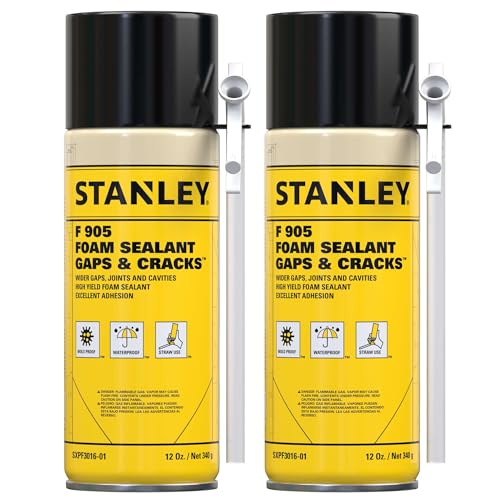
Stanley F905 is a versatile polyurethane spray foam designed to fill gaps, cracks, and cavities up to 3 inches wide. Its low-expansion formula is suitable for around windows, doors, pipes, and penetrations without risking frame distortion. The package includes a straw applicator for precise targeting in tight spaces, making it a practical choice for DIY projects that require careful application. Water resistance and weather readiness add to its appeal for both indoor and outdoor use, supporting a durable seal against the elements.
Practical considerations for Stanley F905 include the ability to handle a broader range of gap sizes while maintaining a controlled expansion profile. Users should follow safety guidelines, work in a ventilated area, and trim excess material after curing to achieve a neat appearance. This option blends ease of use with a proven track record in sealing around openings and penetrations.
Buying Guide: Key Purchase Considerations
- Gap size and expansion: Choose a foam with an expansion rate appropriate for the gap around windows and doors. For larger cracks, look for big-gap or multi-pack options; for delicate frames, a low-expansion formula helps prevent distortion.
- Application angle and accessibility: If you’re sealing awkward or tight spaces, select products with flexible dispensing options or straw applicators to target small cavities accurately.
- UV resistance and durability: Exterior use benefits from higher UV stability and durable cell structure. High-density foams resist weathering and maintain insulation over time.
- Curing time and trim work: Consider cure time and whether you’ll need to trim excess foam. Some kits include cleaners or tools to simplify post-application finishing.
- Indoor air quality and safety: Ensure adequate ventilation during application and follow safety guidelines, including eye protection, gloves, and respirators when appropriate.
- Compatibility with existing materials: Check adhesion to wood, PVC, metal, and other common frame materials to avoid delamination or poor seals.
- Cost and coverage: Compare cans per project and total coverage, especially for larger installations. Some kits offer multi-can bundles that reduce per-can cost.
- DIY vs professional use: Some products are marketed toward professionals but remain suitable for capable DIY homeowners. Review user manuals for best results in home projects.
When choosing a spray foam for windows, it’s important to balance ease of use with the long-term performance of the seal. Consider your climate, the size of the gaps, and how you plan to finish the edges after curing. Each option in this guide provides a distinct approach—from quick, easy sealing with minimal expansion to high-density fills designed for durable, long-lasting insulation around openings. By evaluating the features and application methods, homeowners can select a product that best fits their project scope and environmental conditions.