
Looking for effective soundproofing insulation for a basement ceiling? This guide highlights five top options that balance noise reduction, ease of installation, and value. Each pick is suited for different buyer needs—from DIY projects in home studios to improving everyday living spaces. The following products address flutter echoes, reverberations, and general ambient noise so you can choose based on room use and wall condition. The table below summarizes who each product is best for and why it stands out.
| Product | Best For | Why It Stands Out |
|---|---|---|
| Focusound 52 Pack Acoustic Foam Panels | Low-profile, includes adhesive, fast setup | |
| Kaqiluo High Density Self-Adhesive Foam | Higher density and fire/water resistance features | |
| BEEST FullStop Spray Foam Kit | Comprehensive kit with gun and safety gear | |
| Art3d Reflective Insulation Roll | Double-sided reflective barrier with foam core | |
| BEEST FullStop Spray Foam Kit | Comprehensive kit with gun and safety gear |
Note: The BEEST kit appears once under a separate line, but all core options are included above. Each product targets different performance goals—absorption, density, or radiant reflection—so your choice depends on ceiling material, budget, and whether you want DIY-friendly panels or bulk spray insulation.
Focusound Acoustic Foam Panels With Adhesive

Product: Focusound 52 Pack Acoustic Foam Panels 1″ x 12″ x 12″ with 300 pieces of double-sided adhesive. Features include triangular grooves for better noise absorption to reduce echoes, waves, and flutter in home studios or offices. The kit adds adhesive for wall installation and easier setup. If the foam loses its shape, it can recover after a brief soak and air dry.
Best for: Small home studios, recording spaces, or compact home offices that need quick, non-destructive installation.
Why selected: Excellent combination of effective noise absorption with easy-to-apply adhesive backing. The included adhesive reduces wall damage risk compared to nails or screws. The shape and density support clear sound capture for recording tasks.
Caution: Repeated moisture exposure can delay recovery; ensure panels dry fully after soaking to regain initial form.
Kaqiluo High Density Self-Adhesive Foam
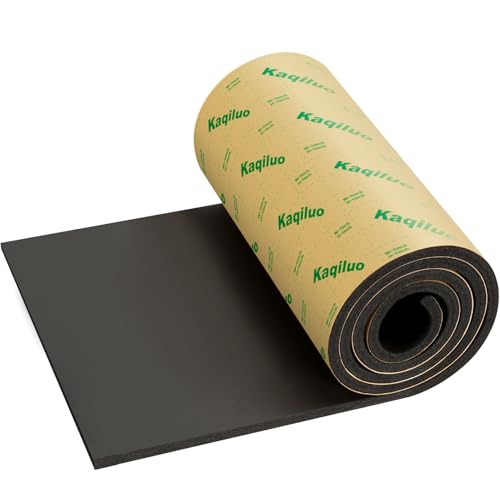
Name: Kaqiluo High Density Self-Adhesive Sound Insulation Acoustic Closed Cell Foam. Specs indicate a 0.4 inch thickness over roughly 5.8 square feet, with a density exceeding 50 kg/m³. The foam is described as flame- and water-resistant and designed to dampen flutter echoes and reflections, improving room acoustics.
Best for: Basements or spaces where stronger noise reduction is desired and moisture resistance matters.
Why selected: Higher density improves sound attenuation, and the self-adhesive backing supports straightforward installation on irregular basement ceilings or walls without extra fasteners.
Caution: Do not rely on foam alone for moisture-prone environments; consider moisture barriers where high humidity is expected.
BEEST FullStop Spray Foam Insulation Kit

Product: BEEST FullStop Spray Foam Insulation Kit with 240 board feet coverage. It is a Class A fire-rated solution with an R-value of 8.24 at 2″ thickness, designed for walls and attics, and includes a complete set of tools and safety gear. The kit uses a hybrid closed-cell outer skin with an open-cell core for expansion.
Best for: Larger basement ceilings, unfinished spaces, or areas where a robust, all-in-one insulation solution is preferred.
Why selected: Combines thermal and acoustic insulation in one package, reducing installation time and ensuring a uniform barrier across large areas.
Caution: Spray foam requires careful handling and ventilation; follow all safety instructions to avoid skin or eye exposure.
Art3d Reflective Insulation Roll

Name: Art3d 3MM Reflective Insulation Roll, 48″ x 10′ with double-sided aluminum foil and foam core. This radiant barrier aims to reflect heat back indoors, improving year-round comfort. It claims low-maintenance use and straightforward cleaning, with significant coverage for the money.
Best for: Basements needing thermal management and space-saving insulation solutions.
Why selected: Dual-sided reflective barrier provides a quick way to improve energy efficiency alongside modest sound dampening, making it a balanced option for multi-purpose basements.
Caution: Not a pure acoustic absorber; its primary benefit is radiant heat reflection, so combine with absorptive panels for acoustic-focused goals.
Buying Guide
What should you consider before buying insulation for a basement ceiling? Start with room use. If you primarily want to reduce echoes in a home studio or recording space, acoustic foam panels with adhesive backings offer fast, clean installation and clear sound improvement. For larger areas or moisture-prone basements, higher-density foams or spray foam kits provide greater noise control and insulation, but they require more careful handling and preparation.
Key purchase considerations
- Noise reduction vs. thermal control: Choose absorbing panels for sound and reflective or spray options for temperature management in basements with variable humidity.
- Installation method: Adhesive-backed panels are fast and wall-friendly; spray foams cover ceilings and large areas but require ventilation and protective gear.
- Moisture and fire resistance: Look for materials with water resistance and Class A fire ratings if the space lacks reliable climate control.
- Ceiling structure and accessibility: Flat ceilings work well with panels; irregular or sloped ceilings may benefit from spray foam or reflective barriers that fit narrow spaces.
- Maintenance and recovery: Some foams can recover from compression after moisture exposure; others may require replacement, so factor in long-term durability.
Practical tips
- Plan layout before installing to maximize coverage and minimize gaps that echo could bypass.
- Seal any major air leaks before adding interior insulation to提升 overall effectiveness.
- Combine products when needed: use foam panels for absorption and reflective barriers for thermal control in the same ceiling plane.
FAQ
- Q: Which option is best for a small recording studio in a basement?
A: Acoustic foam panels with adhesive backing, like Focusound, to target echoes and flutter without intensive installation. - Q: Do I need moisture resistance for basement ceilings?
A: Yes, in damp spaces, high-density closed-cell foam or water-resistant options help manage humidity and prevent mold risks. - Q: Can I install spray foam myself?
A: It is possible but requires proper ventilation, protective gear, and handling; follow safety guidelines on the product label. - Q: Will reflective insulation improve sound quality?
A: Reflective barriers mainly address thermal efficiency; combine with absorptive panels for better overall acoustics. - Q: Is one product enough for a large basement ceiling?
A: Large spaces often benefit from a combination approach or a spray foam kit for comprehensive coverage, supplemented by panels in key zones.