
For travelers, campers, and outdoor enthusiasts, having reliable solar power can transform trips—reducing the need for adapters, outlets, or frequent generator runs. The following five portable solar panels and kits are selected for travel friendliness, including foldable designs, lightweight builds, and multiple output options. Each option is evaluated for portability, charging versatility, and durability to help you find a practical energy companion on the road.
Summary Table of Chosen Products
| Product | Brand | Key Strengths | Output |
|---|---|---|---|
| DOKIO 150W Portable Foldable Solar Panel Kit | DOKIO | Standalone controller, long cable, compact fold | 150W |
| SOKIOVOLA 60W N-Type Foldable Panel | SOKIOVOLA | Lightweight, multiple outputs, IP68/ETFE | 60W |
| FlexSolar 40W Foldable Solar Panel Charger | FlexSolar | Dual fast-charge ports, smart IC, ultra-light | 40W |
| MARBERO 60W Foldable Panel | MARBERO | High efficiency, adjustable stand, portable | 60W |
| RENOGY REGO 400W Portable Solar Panel | RENOGY REGO | Compact 16-foil design, versatile setup | 400W |
DOKIO 150W Portable Foldable Solar Panel Kit

The DOKIO 150W kit is built for travel with a compact fold-down size and a light 7.3-pound weight. Its design emphasizes solo setup, allowing users to deploy the panel quickly for RVs, vans, or campouts. A notable feature is the long 9.8-foot cable, enabling the solar array to sit in full sun while the controller stays shaded—cooling benefits and safer operation. The included standalone PWM controller provides protections against reverse polarity, overcharge, overload, and short circuits, making field maintenance straightforward. This configuration suits travelers who want a ready-to-use system that minimizes extra gear.
Key features at a glance: compact folding to 19.3 x 20.9 x 1.1 inches, 7.3 pounds, 9.8-foot cable, standalone PWM controller with essential protections. For users prioritizing plug-and-play functionality and a balance of portability and output, this kit stays competitive in the travel-ready solar category.
SOKIOVOLA N-Type 60W Foldable Panel

The SOKIOVOLA 60W panel is designed for hikers, campers, and travelers who value portability and versatility. It weighs about 3.09 pounds and folds to a compact size around 8.78 x 15.6 x 1.19 inches, making it easy to stash in a backpack or vehicle storage. It offers three output ports: QC 3.0 USB-A, USB-C, and a DC output (18V/3.33A max), enabling charging of phones, tablets, cameras, GPS devices, and small power banks directly from solar. ETFE lamination and a waterproof outer layer contribute to durability in outdoor settings, ensuring resistance to rain and rough handling. The panel’s design supports a broad range of devices without requiring an external battery pack.
Important considerations include its lightweight nature, foldable form, and multi-port outputs. Travelers should note that it does not include a built-in energy storage unit; you’ll need a power bank or compatible battery to store energy for use during low-light periods. This panel is well-suited for day trips, camping stays, and off-grid adventures where quick recharging of small devices is a priority.
TORIBIO Solar Panel Travel Bag
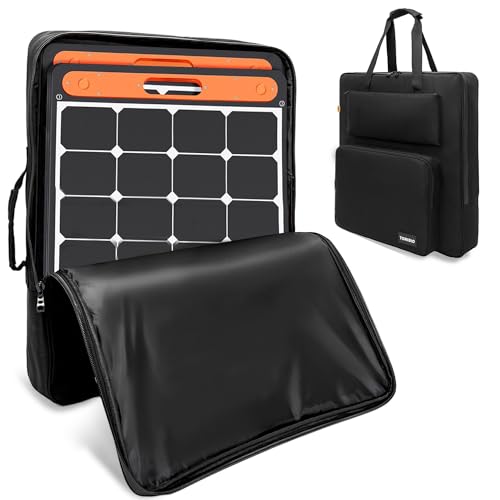
This travel bag is designed to protect and organize portable solar panels, particularly when you’re moving between campsites or hopping between vehicles. The bag dimensions (21.7″ x 4″ x 24.8″) fit Jackery 100W panels and similar sizes, with two zippered pockets and ample space for cords and adapters. A 600D Oxford cloth exterior and reinforced stitching provide waterproof protection and robust load-bearing capacity. Thick padding guards panels from scratches and minor impacts during transit. While this is not a panel itself, its protective design helps travelers keep their solar equipment organized, dry, and ready for quick deployment at camp or on the road.
Choosing this bag is about protecting your investment and ensuring quick, clutter-free access to solar gear in variable weather. Travel-friendly protection plus organization can reduce setup time and potential gear damage on bumpy roads or during outdoor excursions.
FlexSolar 40W Foldable Solar Panel Charger

The FlexSolar 40W solar panel delivers compact, on-the-go charging with multiple outputs—two ports for fast charging (USB-C PD and USB-A QC3.0) and a DC 19V port for direct power to small stations. It includes an LED indicator and smart IC technology that optimizes charging while protecting connected devices from overcurrent, overheating, and short circuits. The ultra-lightweight design (about 1.76 pounds) and foldable dimensions (8.0 x 11.1 x 1.8 inches) make it a practical add-on for backpacks, day packs, or emergency kits. This panel is best for travelers who want rapid device charging in sunny conditions without carrying a larger, heavier system.
Pros include high portability, direct charging to multiple devices, and smart safety features. A limitation is that it does not store energy; users rely on charged devices or separate storage batteries for use in shade or night hours. It remains a solid option for day trips and quick energy boosts on the trail.
RENOGY REGO 400W Portable Solar Panel

The Renogy REGO 400W solar blanket represents a compact, high-output solution for travelers who need substantial energy in off-grid settings. The 16-foil, foldable design compresses to a size more manageable than many traditional 400W systems, facilitating easier transport and storage. It uses N-type solar cells for high efficiency and a robust, weather-resistant build. The panel is versatile: unfold it for use on a vehicle, ground, or a tent roof, and pair with energy storage systems for extended off-grid energy. It is particularly attractive for RV trips, marine use, and scenarios requiring a significant energy reserve without compromising pack space, albeit at a higher initial footprint and weight.
Key considerations include compactness relative to capacity, the flexibility of layout, and the potential need for compatible energy storage and mounting options. This option suits travelers who demand higher energy capacity and are prepared to manage a larger, albeit still portable, solar solution.
BigBlue 28W Portable Solar Charger

The BigBlue 28W charger provides a compact option for travelers needing a quick energy boost to small devices. Its panel design emphasizes shadow-free performance and enhanced low-light efficiency with a rugged IP44-rated waterproof surface. The triple-port setup—two USB-C and one USB-A—enables charging of multiple devices simultaneously. It’s most effective in direct sunlight and not designed to store energy. Users should factor in the need for a separate power bank or battery to extend use beyond bright conditions. The successor models continue to focus on durability and multi-device compatibility for weekend trips and light-usage scenarios.
Buying Guide: Key Purchase Considerations and Comparisons
Portability vs. power: Decide whether you prioritize ultra-lightweight travel panels or higher-wattage systems. Foldable designs typically excel for backpacks and small vehicle spaces, while higher wattage options are better for RVs and longer excursions when weight is less critical.
Output options and compatibility: Look for multiple outputs (USB-A, USB-C, DC) and ensure compatibility with your devices or power stations. Panels without built-in storage will require an external battery or power bank for nighttime or cloudy-day use.
Durability and weather resistance: ETFE or similar laminations, IP ratings, and robust housings matter for outdoor use. Panels should tolerate rain, dust, plants, and occasional impacts during travel and camping.
Protection and safety: Standalone controllers with safeguards (short-circuit, overcharge, reverse polarity) add reliability when a user is away from home. Assess whether the kit includes a controller or relies on a separate battery system.
Setup flexibility: Panels with adjustable stands, multiple mounting options, and a compact folded form offer more placement versatility. Consider vehicle mounting compatibility or stand accessories for rooftop or ground use.
Storage and organization: For frequent travelers, protective bags or packing solutions help protect panels during transit and reduce setup time at each stop. Look for padded cases and reinforced corners for longer trips.
Price and total cost of ownership: Higher-wattage systems and premium materials offer long-term benefits but require greater upfront investment. Balance your travel style, typical trip length, and emergency preparedness needs when selecting a kit.
Real-world use: If you’re mostly on day trips or weekend getaways, a smaller panel with USB outputs may be sufficient. For extended road trips, an integrated system with a dedicated battery or power station and higher wattage can dramatically improve energy reliability.
In summary, the best choice depends on trip type: for lightweight backpacking, a compact 20–60W foldable panel with USB outputs; for RVing or longer excursions, a larger, more capable option like the Renogy REGO or a multi-panel setup paired with a storage unit. Always verify compatibility with your devices and ensure you have a plan for energy storage and docking or mounting, depending on your travel style.