
Power outages can disrupt daily life, from keeping perishable foods safe to staying connected during storms. This guide highlights five top solar generators that are well-suited for home use, offering dependable backup power, scalable capacity, and practical features. Each model supports safe, efficient charging with solar panels and grid connections, helping households stay comfortable and secure when the lights go out.
| Product | Capacity | Output | Best For |
|---|---|---|---|
| Jackery HomePower 3000 | 3072Wh | 3600W (7200W surge) | Whole-home essentials backup |
| EF ECOFLOW DELTA Pro 3 | 4096Wh (expandable to 48kWh) | 4000W (6000W with X-Boost) | Whole-home backup with expandability |
| Jackery Solar Generator 2000 v2 | 2042Wh | 2200W | High-output backup, portable |
| Anker SOLIX F2000 (PowerHouse 767) | 767Wh | 2400W | Compact power for many devices |
| Jackery Explorer 1000 v2 | 1070Wh | 1500W | Outdoor use and smaller homes |
Jackery HomePower 3000 Portable Power Station

The Jackery HomePower 3000 delivers robust backup power with a 3600W rated output and a 3072Wh LiFePO4 battery, supporting essential home devices during outages. It can power refrigerators, fans, WiFi routers, lights, and more, typically providing 1–2 days of fridge stability and up to about 15 hours for common loads. The system uses a UL-certified UPS that transitions within ≤20 milliseconds to keep critical devices uninterrupted. It also aligns with residential clean energy credits, making it a practical option for emergency planning and energy resilience.
Jackery Solar Generator 1000 V2 With 200W Panel

Combining a 1070Wh LiFePO4 battery with up to 1500W continuous output (and 100W USB-C), the Solar Generator 1000 V2 is designed for portability and reliability in outdoor and emergency scenarios. It supports fast charging through the Jackery app, with a claimed one-hour top-up to full under emergency conditions and a long lifespan thanks to the durable LFP chemistry. Its compact form makes it suitable for apartments, RVs, or auxiliary power in a small home setup.
Jackery Solar Generator 2000 v2

The 2000 v2 model combines a 2042Wh LiFePO4 battery with a 2200W AC output. It emphasizes high power delivery and reliability for home backups, RV use, and camping, with quick recharging options and a compact footprint for its capacity. The unit uses CTB technology for safety and space efficiency, supporting emergency charging and off-grid operation for longer events or outages.
EF ECOFLOW Portable Power Station DELTA 2

The DELTA 2 adds 1024Wh of LiFePO4 capacity with 1800W sustained output (plus flexible 15 outlets). It supports rapid charging (0-80% in about 50 minutes), expansion up to 3kWh with additional batteries, and multiple charging methods. This makes it a strong option for homes that need a dependable back-up power source with scalable capacity and broad compatibility with appliances in case of outages or off-grid living.
Anker SOLIX F2000 Portable Power Station (PowerHouse 767)
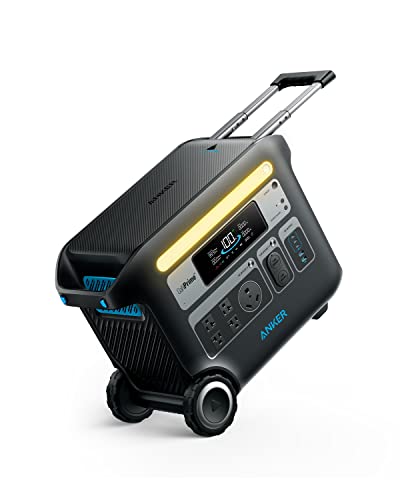
The Anker SOLIX F2000, aka PowerHouse 767, emphasizes longevity and versatility. With a stated 10-year lifespan and HyperFlash rapid recharge (0–80% in about 1.4 hours), it supports powering up to 12 devices concurrently thanks to multiple ports and SurgePad technology. Its modular design and efficient charging profiles make it suitable for frequent use in homes that value reliability and convenience in a compact form factor.
Buying Guide: Key Purchase Considerations
- Power needs and surge capability: Assess the critical devices you want to support during an outage (refrigerator, heating, medical devices, communications). Look for devices with high continuous output and sufficient surge capacity to handle startup requirements.
- Battery chemistry and lifespan: LiFePO4 cells offer longer cycle life and better thermal stability than some alternatives. Consider models rated for thousands of cycles with retained capacity.
- Expandability and modularity: Some systems allow adding batteries or extra power sources (solar panels, generator input). If you anticipate longer outages or expanding needs, plan for future growth.
- Charging methods and speed: Evaluate whether the unit supports solar charging, AC wall charging, car adapters, and app-assisted fast charging. Faster charging reduces downtime between outages.
- Port variety and accessibility: Ensure the power station provides the required outlets (AC, USB-C, USB-A, DC) and sufficient ports to run multiple devices simultaneously without overloads.
- Portability versus capacity: Larger capacities provide longer runtimes but are heavier. Balance home backup needs with the ability to move or store the unit if needed.
- Safety features: Look for UPS switching within milliseconds, battery protection, over-discharge protection, and safe handling of high-power appliances.
- Warranty and service: Consider brands with solid warranties and readily available customer support, especially for home-critical equipment.
When selecting a solar generator for home use, consider the typical outage duration, climate, roof exposure for solar panels, and whether you want a fully scalable system. The options above provide both compact portability and high-capacity builds, enabling resilient, sustainable power during emergencies without noise, fumes, or fuel dependency.