
Answering the common question, the best sealants for pressure treated wood are plant-based or low-VOC sealants that penetrate and protect without leaching chemicals. This guide highlights five top options suited for decks, raised beds, fences, and outdoor structures. Each product is evaluated for durability, safety, and suitability for pressure treated wood. Ideal buyers include DIY homeowners protecting outdoor wood, gardeners seeking safe soil interactions, and pet owners wanting pet-safe sealants.
Buyer needs vary: some work best as deep-penetrating sealants for long-lasting protection, others prioritize non-toxicity for edible gardens or pet areas. The following table compares key features to help you decide quickly.
| Product | Best For | Main Benefit | |
|---|---|---|---|
| Garden Box Sealer (Seal It Green) | Raised beds, planters, pet houses | Deep penetrating, plant-based protection | FDA food contact safe |
| Seal-Once Nano Clear Penetrating Wood Sealer | Exterior wood, high-traffic areas | Below-surface protection, water resistance | Low odor, ultra-low VOC |
| Outlast Log Oil | Decks, log homes, exposed end cuts | Weather resistance and durability | Oil-based, for exterior wood |
| ProCare Masonry & Wood Sealant | Concrete, stone, exterior wood | Weatherproof silicone protection | Made in USA, clear finish |
| Flood Easy Seal | Exterior wood finishes | One-coat application, Penetrol-enhanced | Oil-based, deep penetration |
Garden Box Sealer — Plant-Based, Food-Safe Wood Barrier

The Garden Box Sealer is a plant-based wood sealer designed for cedar and other woods used in raised beds, planters, and pethouses. It penetrates deeply with natural oils, forming a bond with wood fibers for long-lasting protection. It is non-toxic and FDA food contact safe, making it suitable for edible gardens and areas where kids or pets roam. It warns against acrylics, polymers, silanes, siloxanes, and silicons due to toxicity concerns. Best for buyers prioritizing plant safety and soil compatibility.
Who this is for: Gardeners wanting a 100% plant-based option that won’t leach chemicals into soil. Pet owners and home gardeners seeking a safety-first option for animal habitats. Caution: Do not mix with petroleum-based sealants; avoid if you need a glossy, film-forming finish.
Seal-Once Nano Clear Penetrating Wood Sealer

This clear, water-based sealer protects exterior wood by penetrating below the surface to form a durable, water-resistant shield. It’s odorless with ultra-low VOCs, making it ideal for projects near living spaces, such as decks, siding, and outdoor furniture. It’s best for customers who want deep protection with minimal odor and environmental impact. A potential limitation is that color options are limited since it’s a clear sealer, which may not suit all aesthetic goals.
Who this is for: Homeowners seeking robust water resistance without strong odors or solvents. Projects where a clear, natural wood look is preferred. Choose this if you prioritize indoor-appropriate formulas for outdoor wood living spaces.
Outlast Log Oil Wood Preservative

Outlast Log Oil is formulated to increase wood durability and resistance to weathering. It supports extending the life and beauty of wooden decks, log homes, and fences with exposed end cuts. It is best for traditional oil-based protection where richer color and deeper penetration are desired. Limitation: as an oil-based product, it may require longer cure times and ventilation during application.
Who this is for: Property owners with weather-exposed wood seeking enhanced longevity and an enhanced natural appearance. Choose this if you want a classic oil-based finish with strong weather resistance.
ProCare Premium Masonry and Wood Sealer

ProCare’s masonry and wood sealer uses weatherproof silicone technology to shield concrete, stone, exterior wood, brick, and stucco. It dries clear and penetrates to form a long-lasting protective layer against moisture. This option is well-suited for mixed-material surfaces around exterior spaces or structures. Limitation: silicone-based sealers can be less forgiving on certain wood finishes and may require proper surface prep.
Who this is for: Exterior projects combining wood with masonry materials, such as steps, borders, and garden walls. Choose this for a durable, universal protectant across multiple substrate types.
Flood Easy Seal — Exterior Wood Finish
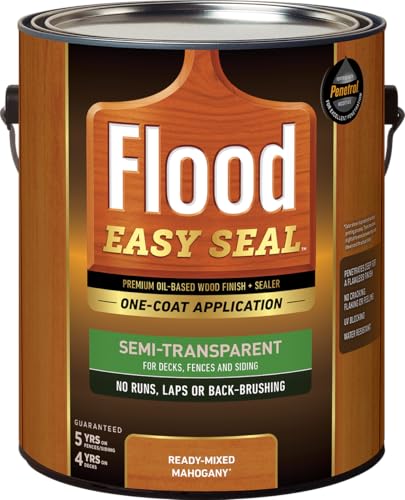
Flood Easy Seal is an oil-based exterior wood finish with Penetrol additives for deep penetration and a smooth, one-coat application. It aims to deliver a flawless finish with minimal runs or laps. Best for projects requiring a quick, uniform finish with strong penetration. Limitation: oil-based formulas typically require good ventilation and longer cure times in humid conditions.
Who this is for: DIYers seeking a fast, single-coat solution for exterior wood like decks or fences. Choose this if you want efficient, even coverage with a durable outdoor finish.
Buying Guide: Key Purchase Considerations
What to look for when selecting a sealant for pressure treated wood:
- Penetration vs. film-forming: Penetrating sealers absorb into wood for long-term protection, while film-formers create a surface layer. Penetration is often better for pressure treated wood with loose fibers.
- Safety and toxins: For edible gardens or pet areas, prioritize plant-based or non-toxic formulations. Check FDA safety claims and ingredients lists.
- UV and moisture protection: Look for products that resist UV degradation and water penetration to minimize warping and color fading.
- Color and appearance: Decide between clear finishes for a natural look or tinted finishes to enhance wood color and hide imperfections.
- Maintenance and reapplication: Assess how often re-application is needed and whether maintenance coats are compatible with existing finishes.
- Material compatibility: Ensure the sealer is suitable for pressure treated wood and any adjacent materials (stone, concrete, masonry).
- Application conditions: Temperature, humidity, and ventilation influence application quality and cure time.
Frequently Asked Questions
- Q: Are plant-based sealants safe for vegetable gardens?
- Q: Should I choose a penetrating sealer or a surface sealant for pressure treated wood?
- Q: Do oil-based sealants require more ventilation?
- Q: Can I use these sealants on outdoor furniture and fences?
- Q: How often should sealants be reapplied?
- Q: Do these products prevent mold or mildew growth?
A: Yes, plant-based sealants with FDA food contact safety are designed to minimize chemical leaching into soil and plants.
A: Penetrating sealers are usually better for pressure treated wood, as they bond with fibers and reduce surface peeling while protecting from moisture.
A: Yes, oil-based products typically need better ventilation and longer cure times, especially in humid locations.
A: Most options pictured are suitable for exterior wood like decks, fences, and furniture; verify the product label for each material type.
A: Reapplication intervals depend on product type, exposure, and wear; most penetrating sealers last several years under typical outdoor conditions.
A: Sealer choices primarily protect against water damage; some formulations may contribute to mold resistance when combined with proper drainage and ventilation.