
Choosing the right primer for bare drywall ensures a uniform base, better paint adhesion, and a flawless final look. This guide evaluates five popular primers designed for new drywall, plaster, and skim-coated walls. It highlights who each product is best for, common limitations, and why you might choose one over another. Whether you’re tackling a quick patch or prepping an entire room, this selection helps you balance speed, odor, and finish quality.
| Product | Best For | Notes |
|---|---|---|
| EVOLVE Drywall Primer & Sealer (1 gal) | Professional spaces requiring fast-dry, low odor | Prime + seal in one, high solids, excellent hide |
| Valspar 91112 White Pro-Hide Interior Latex Primer & Sealer (1 gal) | New bare drywall projects needing uniform topcoat | Fast drying, good topcoat uniformity |
| Valspar 11288 Interior PVA Wall Primer (1 gal) | Unpainted drywall or plaster | Seals and provides uniform surface |
| ROMAN PRO-999 Rx-35 Primer/Sealer (5 gal) | Laminate-ready and wallpaper prep on bare drywall | Clear, low odor, easy cleanup |
| GORILLA Heavy Duty Wall Repair Spackling + Primer (16 oz) | Repair then prime in one step for small to medium holes | Spackling plus primer; quick, convenient |
EVOLVE Drywall Primer & Sealer – 1 Gallon
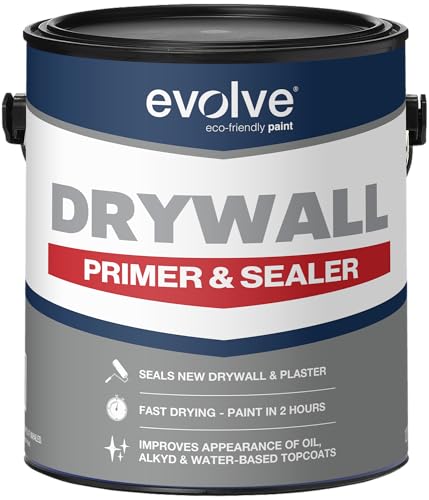
Best for professionals and DIYers seeking a fast-drying, single-coat solution. The high-solids formula acts as both primer and sealer, locking down porous surfaces for a smoother topcoat. It’s engineered for new drywall and plaster, with excellent hide to reduce blotchy spots in the final finish. Choose this if you need a reliable base that minimizes paint usage and speeds up project timelines.
Key points: prime and seal in one step; low odor; excellent adhesion and hiding power. Limitation: still requires proper surface cleaning and ventilation; larger rooms may benefit from a second coat in certain conditions.
Valspar 91112 White Pro-Hide Primer & Sealer – 1 Gallon
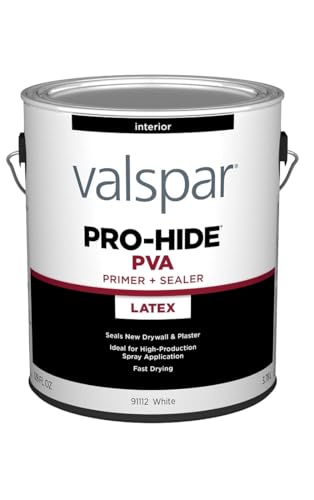
This primer is well suited for new bare drywall projects that require quick coverage and uniform topcoat results. It provides good uniformity for any topcoat and dries quickly, helping reduce scheduling risks on busy remodels. Best for homeowners and contractors who want predictable performance with a straightforward application.
Best use: priming and sealing bare drywall before latex or oil-based paints. Caution: avoid over-priming glossy or very smooth surfaces that don’t require extra sealing.
Valspar 11288 Interior PVA Wall Primer – 1 Gallon
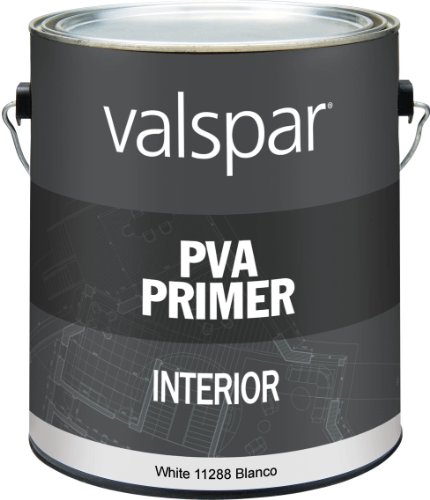
Specifically designed to seal unpainted drywall and plaster, this PVA-based primer creates a uniform surface prepared for latex or oil-based paints. It’s ideal for projects where a clean, even base is essential for color consistency and finish longevity. Best for bare drywall or plaster with visible porosity.
Limitation: may require additional coats if surfaces have heavy porosity or significant repairs.
ROMAN PRO-999 Rx-35 Primer/Sealer – 5 Gallons
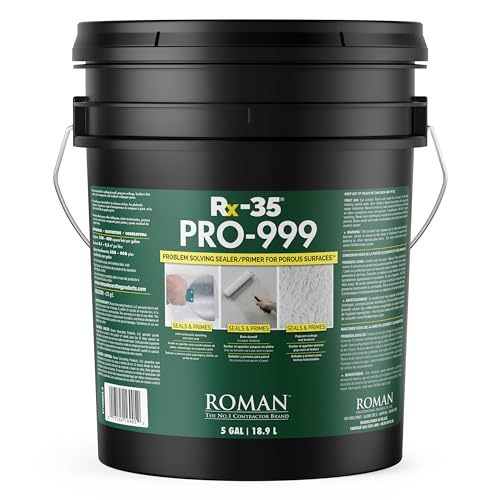
Explicitly marketed for new drywall and skim coats, this clear primer-sealer is versatile for wallpaper prep and lightly textured surfaces. It seals and primes to help prevent joint line bleed-through and offers low odor with easy cleanup. Best for renters or spaces where a clear primer look is preferred or when applying wallpaper soon after priming.
Tip: clear primers can be advantageous for wallpaper installations but may require more time to fully dry in humid conditions.
GORILLA Heavy Duty Wall Repair Spackling + Primer – 16 oz

Designed for repair work that also primes the surface, this spackling product is useful for quick fixes before painting. It’s best for small to medium holes or cracks where a combined repair and primer step saves time. Best for quick fixes in high-traffic areas or projects with limited time for multiple coats.
Caution: heavier repairs or large patches may still require a dedicated primer coat after spackling dries to ensure topcoat adhesion.
Buying Guide: Key Considerations For Bare Drywall Primers
- Drying time and odor: For busy spaces, choose fast-drying, low-odor formulas that fit your schedule and indoor air quality needs.
- One-coat performance: If you want to minimize coats, look for high-solids primers that offer strong hide and uniform base in a single pass.
- Surface type: Bare drywall and plaster respond differently; select primers designed for new drywall to avoid blotching and porosity issues.
- Seal vs. prime balance: Some products function as both primer and sealer, reducing overall labor. Others are specialized primers that require a separate topcoat.
- Application environment: Consider room temperature, humidity, and ventilation when planning application and dry times.
- Clear vs. pigmented primers: Clear primers are useful for wallpaper or specific aesthetic needs, but may require longer drying in humid areas.
FAQ
- What primer should I use for new bare drywall?
– A high-hide primer/sealer designed for drywall, such as EVOLVE or Valspar Pro-Hide, offers strong adhesion and uniformity with minimal coats. - Can I use primer and sealer on the same day as painting?
– Yes, if the surface dries completely and the topcoat is compatible with the primer, a single-visit approach can be efficient. - Is a clear primer necessary for wallpaper?
– Clear primers work well for wallpaper prep, helping lock down surfaces without altering the final wallpaper color. - What if the drywall has many repairs?
– Use a product with strong fill and hide capabilities or pair spackling with a primer for an even base. - Do I need a primer for plaster or skim-coated walls?
– Yes, primers suitable for plaster help seal porosity and ensure consistent paint adhesion across patches. - How important is odor when selecting primer?
– Low-odor formulas improve indoor air quality and comfort during application, especially in occupied spaces.