
Choosing a portable power station that reliably runs a refrigerator during outages or while off-grid requires balancing capacity, safety, and charging speed. The following selections focus on high-capacity LiFePO4 batteries, robust AC output, and practical features like fast charging and UPS-style switching. Each model is suitable for keeping a fridge running, even during prolonged power interruptions, while staying manageable for transport and storage.
Summary of selected products
| Product | Brand | Capacity (Wh) | Max AC Output | Key Strengths |
|---|---|---|---|---|
| Explorer 1000 v2 | Jackery | 1070 | 1500 W | Fast charging, long lifespan, compact for its capacity |
| Explorer 2000 v2 | Jackery | 2042 | 2200 W | High power and capacity, USB-C PD, solid for home backup |
| Delta 2 | EF ECOFLOW | 1024 | 1800 W | Fast charging, expandable with extra batteries, versatile outlets |
| HomePower 3000 | Jackery | 3072 | 3600 W | UPS capability, strong home backup, multi-device support |
| OUPES Mega 1 | OUPES | 1024 | 2000 W | High wattage, expandable capacity, reliable for several devices |
Additional notes: The list emphasizes LiFePO4 chemistry for safety and longevity, while prioritizing units with substantial output and practical charging options. All selections are suitable for keeping a typical household refrigerator running during outages or while camping, RVing, or staying off-grid.
Jackery Explorer 1000 v2 Portable Power Station

The Explorer 1000 v2 offers a 1,500W continuous AC output with a 3,000W surge peak and a 1,070Wh LiFePO4 battery. Weighing 23.8 lbs, its compact form supports portability for camping, RV trips, or emergency preparedness. The device features an advanced ChargeShield 2.0 system for safer, faster charging and can reach a full charge quickly with emergency charging via the Jackery app. Its long life—over 4,000 cycles with more than 70% capacity retention—helps ensure fridge reliability across years of use.
For refrigerators, the combination of high peak output and stable 1,070Wh capacity provides solid runtime for mid-sized units, especially when paired with efficient defrost cycles and routine usage. The unit’s ease of handling and versatility across outdoor and home environments makes it a practical choice for homeowners seeking a portable, reliable power source.
Jackery Explorer 2000 v2 Portable Power Station

The Explorer 2000 v2 brings a robust 2,042Wh LiFePO4 battery and a combined 2,200W AC output. It supports USB-C PD 100W fast charging for devices and offers strong home backup capabilities for longer outages. Its CTB technology helps optimize space and stability, while the unit’s weight (under 40 lbs) remains manageable for transport. The large capacity translates into extended fridge operation during multi-day outages, with faster recharging options when sun or wall power is available.
With its high energy reservoir and substantial surge capacity, the Explorer 2000 v2 serves as a solid mid-to-large-scale backup power source for refrigerators and other critical appliances in homes, campsites, or small businesses looking to maintain cooling integrity during power disruptions.
EF ECOFLOW Delta 2 Portable Power Station

The Delta 2 provides 1,024Wh of LiFePO4 storage and up to 1,800W of continuous AC output, enabling reliable fridge operation during outages. It supports 0-80% charging in about 50 minutes and 0-100% in roughly 80 minutes with AC input, delivering rapid recharges for power readiness. The system is expandable with additional batteries, letting you scale capacity for longer outages. As a versatile solar generator, it pairs well with portable solar panels for grid-independent cooling and essential appliance operation while traveling or camping.
Advantages for refrigerators include fast charging, strong total output, and the option to scale up capacity as needed. The Delta 2 is a strong contender when you want a compact yet capable unit that can power a fridge plus other devices during emergencies or outdoor adventures.
Jackery HomePower 3000 Portable Power Station

The HomePower 3000 delivers 3,600W continuous output with a 7,200W surge and an impressive 3,072Wh capacity. It’s designed for essential home backup, making it ideal for refrigerators during outages while maintaining other critical loads like Wi-Fi, lighting, and small appliances. It features a UL-certified UPS that switches within 20 milliseconds, ensuring uninterrupted cooling for the fridge during sudden power interruptions. This model is well-suited for homes seeking a robust, reliable, and fast-reacting backup power solution.
Its home-oriented design, strong UPS performance, and high capacity make the HomePower 3000 a reliable anchor for refrigerators and other essential devices during outages, while still offering portability for RVs or off-grid scenarios.
OUPES Mega 1 Portable Power Station
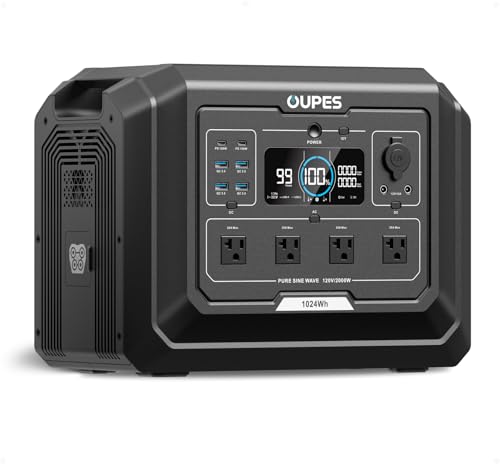
The OUPES Mega 1 offers 1,024Wh of LiFePO4 capacity with a powerful 2,000W AC output (4,500W peak). Its 0-80% charge time of 36 minutes is notable for quick recharging, and its expandability to larger capacities lets users scale up to meet longer outages or higher-power needs. This unit is a strong option for users who require both high output and faster replenishment to keep refrigerators running under varying circumstances, including off-grid adventures or emergency preparedness.
The Mega 1’s combination of high wattage, rapid charging, and scalability makes it a versatile choice for fridge operation alongside other essentials in environments where reliable, quick energy recovery matters.
Buying Guide: Key Purchase Considerations
When selecting a portable power station to run a refrigerator, focus on capacity, constant output, surge capability, and charging speed. A fridge compressor typically draws a substantial startup surge, so a unit with a high surge rating and a continuous watt rating that comfortably covers initial power needs is crucial. LiFePO4 chemistry generally offers longer life and better safety for long-term use, especially in homes.
Consider these factors to tailor a choice to your situation:
- Capacity vs runtime: For a standard household refrigerator, aim for 1,000–3,000Wh depending on size, efficiency, and climate. Larger units extend runtime during multi-day outages.
- AC output and surge: Ensure the power station can handle the refrigerator’s startup load (look for at least 2,000–3,000W surge if you have a larger fridge).
- Battery chemistry and cycles: LiFePO4 offers longer cycle life and stability in varied temperatures, beneficial for long-term use.
- Charging speed: Fast charging minimizes downtime between outages or after sun exposure; consider units with 0–80% in under 40–50 minutes where possible.
- UPS and reliability: A UPS feature helps keep the fridge running without noticeable downtime during the switch from grid power to battery.
- Portability and weight: Higher capacity may bring more weight; balance portability with your setup needs, such as RV or home storage.
- Solar compatibility: If you plan to rely on solar, check panel compatibility, expansion options, and charging input specs to maximize uptime in off-grid scenarios.
Overall, the best option balances a fridge’s energy demand with practical use scenarios—home outages, outdoor adventures, or remote cabins—while offering dependable charging and a safe, long-lasting battery.