
Plastic repair epoxy is a practical solution for quick, durable fixes on a wide range of plastics and related substrates. This how-to guide highlights five top options that balance strength, curing time, and ease of use. Ideal buyers: DIY homeowners, auto enthusiasts, hobbyists, and professionals needing reliable plastic bonding or gap filling. The list emphasizes fast setting, 1:1 mix syringes, and compatibility with thermoplastics and thermosets. Below is a quick comparison table followed by detailed product insights to help you choose with clarity.
| Product | Brand | Best For |
|---|---|---|
| J-B Weld 50139 Plastic Bonder | J-B Weld | Fast, strong bonds on car panels, bumpers, and automotive plastics |
| J-B Plasticweld Epoxy Stick | J-B Weld | Shaping and repairing plastic surfaces, DIY plastic piping, auto parts |
| Gorilla 2 Part Epoxy, Clear | GORILLA | Clean, visible joints and versatile gap filling |
| 3M Semi-Rigid Plastic Repair 04240 | 3M | Reinforcement and bonding of two-sided plastic parts |
| Polymix Rigid Automotive Plastic Repair | Polymix | Structural bonding for a wide range of plastics and metals |
J-B Weld Plastic Bonder Body Panel Adhesive and Gap Filler
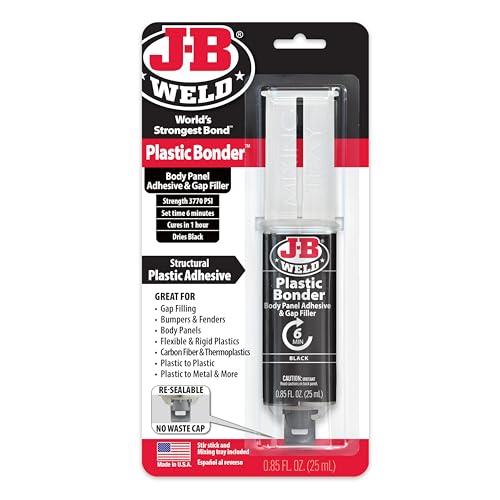
Best for quick, permanent bonds on automotive plastics and coated metals. This 2-part urethane adhesive uses a 1:1 mix and sets in about 15 minutes, with handling strength at 30 minutes. It delivers a tensile strength around 3770 psi, making it a strong choice for bumper repairs, dent fills, and other body panel fixes. The syringe design helps minimize waste and aids precision on tight splices.
Who it’s best for: DIY auto enthusiasts and professionals needing a fast-setting repair that lasts. Why selected: high bond strength, simple 1:1 mixing, and proven performance on thermoset plastics, carbon fiber composites, and coated metals. Caution: ensure surfaces are clean and dry for optimal adhesion; works best on prepared, non-flexing areas.
J-B Plasticweld Epoxy Stick

A hand-mixable two-part epoxy putty designed to repair and rebuild various plastics. It’s suited for ABS, PVC, CPVC pipes, auto bumpers, and more. With a 25-minute set time and 3-hour cure, Plasticweld offers good working time for shaping and filling irregular areas. It has a 600 psi lap shear strength and tolerates sustained high temperatures.
Who it’s best for: quick, moldable repairs where you need to form shapes and fillers. Why selected: ductile putty behavior, NSF certification for potable water contact, and good sandability. Caution: not ideal for continuous flexing or high-stress structural repairs.
Gorilla 2 Part Epoxy, Clear

This clear epoxy resin cures with a durable, glass-like finish and includes a 5-minute set time. It’s useful for household repairs and automotive tasks where appearance matters. The kit also functions as a gap filler for uneven surfaces, giving you flexibility in joints that require a clean, nearly invisible bond.
Who it’s best for: users prioritizing a visually clean repair where aesthetics matter. Why selected: quick set, clear cured appearance, and gap-filling properties. Caution: not a general-purpose heavy-load adhesive; strength is strong for many repairs but not a substitute for high-load structural joints.
3M Semi-Rigid Plastic Repair 04240

3M’s two-part urethane adhesive emphasizes quick setup and robust internal strength for reinforcing and bonding plastic parts. It’s designed for semi-rigid repairs where maintaining alignment and fit is important. This kit supports efficient workflows with fast-curing chemistry for time-sensitive projects.
Who it’s best for: professionals and serious hobbyists performing two-sided plastic repairs or reinforcing weak joints. Why selected: strong internal bonding and quick cure. Caution: follow mixing and curing directions closely to maximize bond integrity; data suggests strong performance but not for ultra-flexible or highly dynamic joints.
Polymix Rigid Automotive Plastic Repair Cartridge

Polymix Rigid Adhesive is a two-component, room-temperature curing polyurethane designed for a broad range of materials, including thermosetting and thermoplastic plastics, metal, concrete, wood, and glass. It uses a dual-syringe cartridge with disposable nozzles and offers a short working window of about one minute, followed by gradual curing.
Who it’s best for: shop professionals and DIYers needing a structural repair with a quick initial set. Why selected: broad material compatibility and metered mixing for consistent results. Caution: very short working time means setup should be prepared in advance; ensure you’re ready to apply within one minute of mixing.
Buying Guide: Key Considerations For Choosing Plastic Repair Epoxy
- Bonding strength and compatibility: Consider the specific plastic types you’re repairing (ABS, PVC, polycarbonate, fiberglass, etc.). Choose a product with proven adhesion to those materials and a high tensile strength for load-bearing repairs.
- Working time vs. cure time: If you need immediate handling, look for fast-setting formulas (5–15 minutes). For complex shaping or large fills, select products with longer work times.
- Form factor: Syringes and putty sticks offer different ease of use. Syringes provide precise 1:1 mixing and cleaner application; putty sticks are moldable and forgiving for irregular gaps.
- Appearance after cure: If aesthetics matter, consider clear or color-matched formulations and the potential for sanding or painting after cure.
- Safety and certifications: For potable water applications or sensitive projects, opt for products with NSF-certified materials or explicit safety data that matches your use case.
- Cure conditions: Some epoxies require fixtures or clamps while they cure. Confirm cure times and any heat or humidity considerations that might affect performance.
- Cost per repair: Consider the amount you’ll use per job and whether a two-part system with reusable mixing trays or a disposible cartridge better fits your workflow.
Frequently Asked Questions
- What is the best epoxy for automotive plastic repairs?
- Can plastic repair epoxies be sanded or painted?
- Are there any safety concerns when using plastic repair epoxies?
- How do I choose between a syringe and a putty stick?
- Is a clear epoxy better for visible repairs?
- Do these products bond to metals or concrete?
Epoxies designed for automotive plastics with high tensile strength and good heat resistance are preferred. Products like Plastic Bonder and strong two-part formulations from reputable brands are common choices for durable bumper and panel repairs.
Many formulations cure hard enough to be sanded and painted after curing. Always follow the product’s cure time and surface preparation guidelines for best results.
Protective gloves, eye protection, and adequate ventilation are recommended. Some formulations may contain solvents or irritants; review the safety data before use.
Choose a syringe when precision and a clean, 1:1 mix are important. Choose a putty stick for moldable fills, large gaps, or when shaping is needed before curing.
Clear or translucent epoxies are preferred for visible joints where appearance matters. They can provide a cleaner finish after sanding and painting.
Some formulations bond to coated metals and certain concretes, but always verify compatibility for your substrate to avoid adhesion issues.