
When you need serious yard cleanup power, a petrol leaf blower is often the best choice for large properties, heavy debris, or when you’re away from outlets. This guide highlights five top petrol-powered backpack or handheld blowers that balance air volume, speed, and comfort. It helps buyers choose between backpack and handheld designs, and between larger engines and lighter models. The selections are tailored for property owners who require sustained performance, reliable starts, and practical maneuverability across lawns, driveways, and garden beds.
Buyer profiles: ideal for homeowners with large lots, landscapers needing longer runtimes, and those who prioritize high airflow and strong wind speed. Below is a quick summary of the chosen products to help you compare at a glance.
| Product | Engine Size | Air Volume | Wind Speed | Best For |
|---|---|---|---|---|
| 80cc | 900 CFM | 206 MPH | Large areas, tough debris | |
| PROYAMA 72CC Gas Backpack Leaf Blower | 72cc | 880 CFM | 275 MPH | Wide spaces, versatile nozzle |
| Husqvarna 150BT Gas Backpack Blower | 51cc | 765 CFM | 270 MPH | Ergonomic long sessions |
| Relxxon Gas Leaf Blower 26cc Handheld | 26cc | 380 CFM | 180 MPH | Light-duty to medium tasks |
| Thalorus 52cc Backpack Leaf Blower | 52cc | 550 CFM | 230 MPH | Mid-sized yards, quick work |
ZTGD 80CC Gas Powered Backpack Leaf Blower

Engine and power: 80cc two-stroke engine delivering up to 900 CFM and 206 MPH. This combination supports rapid clearing of large lawns, piles of leaves, and heavy debris using a long flexible outlet pipe for extended reach. Best for homeowners with extensive acreage or commercial-style cleanup needs where maximum airflow is required.
Design and comfort: Adjustable backpack straps and a weight around 22 pounds aim to balance comfort and durability. The unit uses ABS and metal construction, with an outlet length that can be tuned for different work zones. Choose this if you need sustained power for hours of use.
Run time and fuel: Equipped with a 2.3L tank and a 25:1 fuel mix, it offers relatively long operation before refueling. Consider this model if you routinely tackle large areas without frequent breaks.
Best for: Large properties, heavy debris, and tasks that require high air volume. Limitation: Heavier load may be tiring during long sessions; plan for breaks or a lighter posture strategy.
PROYAMA 72CC Gas Backpack Leaf Blower

Power and airflow: A 72cc two-stroke engine produces up to 880 CFM and 275 MPH, enabling efficient leaf and debris removal and light snow handling. The dual-tube nozzle (flat and round) adapts to tight spaces and open terrain, offering flexibility for varied yard layouts.
Ergonomics: Backpack design emphasizes shock-absorbing straps and balanced weight distribution. The thick backrest helps isolate heat and fatigue during long sessions, making it a practical choice for professional-style cleanup or frequent weekend chores.
Best for: Versatile yard work across different spaces, including near shrubs and driveways. Limitation: Higher engine size may feel bulky for small yards or brief tasks.
Husqvarna 150BT Gas Backpack Leaf Blower

Performance and comfort: The 51cc X-TORQUE engine delivers 765 CFM at 270 MPH, with a padded harness, hip belt, and weight-management features designed for comfort during long cleanup sessions. This unit is well-suited for frequent users who value ergonomic design as a core feature.
Best for: Prolonged use with maximum comfort in mind, especially for larger properties that require consistent power. Limitation: Slightly lower air volume than the largest backpack models, which may affect extremely heavy debris scenarios.
Relxxon Gas Leaf Blower 26cc Handheld

Compact and lightweight: A handheld unit with a 26cc engine producing up to 380 CFM and 180 MPH. Best for lighter tasks, smaller lawns, and quick cleanups where portability matters.
Ease of use: Quick-start features combined with a soft-grip handle and relatively low vibration support comfortable handling. Limitation: Not ideal for heavy-duty, large-area clearing due to lower airflow and engine size.
Thalorus 52cc Backpack Leaf Blower
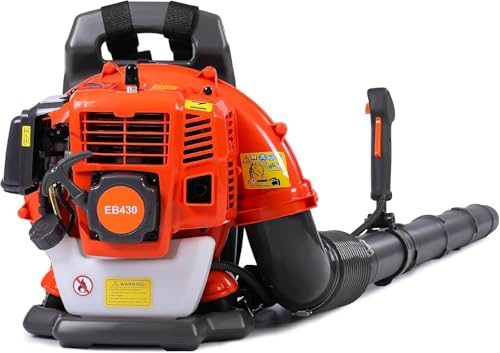
Power and efficiency: The 52cc engine delivers 550 CFM and 230 MPH, offering solid performance for mid-sized yards. The design emphasizes a lightweight build and a cushioned harness to reduce fatigue during extended use.
Best for: Medium yards that require reliable performance without the highest air volume. Limitation: Airflow is lower than top-tier backpack models, so for very dense leaf runs, a higher-output blower may perform faster.
Buying Guide: Key Considerations For Petrol Leaf Blowers
- Engine size vs. weight: Larger engines deliver more air and speed but are heavier. Balance yard size with how long you’ll operate the blower in one session.
- Air volume (CFM) and speed (MPH): Higher CFM moves more air; higher MPH increases wind acceleration. For heavy debris, prioritize higher CFM and MPH together.
- Backpack vs. handheld: Backpacks distribute weight for long sessions; handhelds are lighter and easier to maneuver for tight spaces or quick tasks.
- Fuel system and runtime: Look for larger tanks if you plan extended use away from refueling points. Check oil mixture requirements and starting systems.
- Comfort features: Ergonomic harness, anti-vibration handling, and padded straps improve usability during long cleanup projects.
- Maintenance considerations: Availability of spare parts and simple carburetor or filter service can impact long-term costs.
- Noise and neighbors: Gas blowers can be louder; consider muffler design and operation schedule to minimize disruption.
Frequently Asked Questions
- Is a petrol blower better than electric for large properties? Yes, petrol blowers typically offer longer runtimes and higher airflow, which is advantageous for large yards or heavy debris without frequent recharging.
- Which blower is best for long sessions? Backpack models with ergonomic harnesses and balanced weight distribution are designed for extended use.
- Can petrol blowers handle light snow? Some models can manage light snow, but performance varies; verify airflow and nozzle design for snow tasks.
- What maintenance is essential? Regular fuel mix management, air filter checks, and spark plug inspections help maintain performance and reliability.
- Which features reduce fatigue? Shock-absorbing straps, padded backrests, weight balancing, and vibration dampening all contribute to less fatigue during operation.
- Do heavier engines always mean better performance? Not necessarily; engine size should match yard size and debris volume. Overkill can hinder maneuverability.