
Exploring reliable natural gas detectors helps protect your home, RV, and family from leaks and potentially dangerous situations. The following handpicked devices cover a range of needs—from plug-in wall detectors with digital readouts to portable sniffers with long goosenecks for tight spaces. Each option is designed to detect methane, propane, natural gas, LPG, and related gases with visual and audible alarms to help you respond quickly.
The table below highlights five strong choices and their standout features to help you compare at a glance.
| Product | Brand | Key Feature |
|---|---|---|
| Kidde Carbon Monoxide Detector, Propane, Natural, Methane, & Explosive Gas Alarm | Kidde | Plug-in with 9V battery backup; digital LED CO display; detects explosive gas |
| PT520A Natural Gas Detector | TOPTES | 17-inch gooseneck for hard-to-reach areas; 0.5-second response; 75dB alarm |
| TopTes PT199 Natural Gas Leak Detector | TOPTES | Portable sniffer; fast 0.5-second alarm; included batteries; red LCD for high levels |
| 4-in-1 Upgraded Natural Gas Detector and CO Detector | NICGOL | Dual sensors for gas and CO; plug-in, low power; temperature and humidity readouts |
| Firlarm Natural Gas Detector | Firlarm | Plug-in with LED digital display; multi-gas detection; 85 dB alarm |
Kidde Carbon Monoxide Detector, Propane, Natural, Methane, & Explosive Gas Alarm
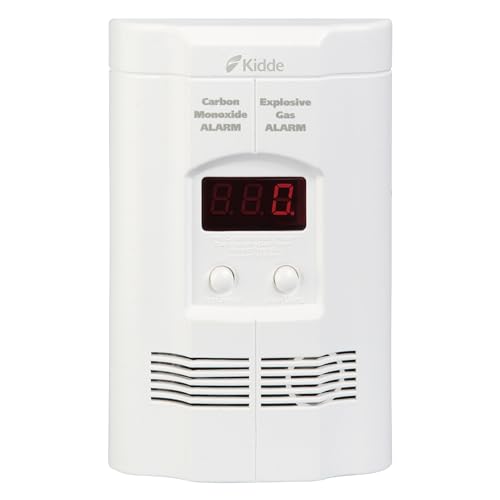
The Kidde device is designed for simple installation by plugging into a standard 120V outlet, with a 9-volt battery backup to maintain protection during outages. It features a digital LED display that indicates carbon monoxide levels or displays “GAS” when an explosive gas is detected. This combination makes it suitable for households seeking quick visual confirmation of gas or CO presence alongside audible alerts.
TOPTES PT520A Natural Gas Detector

The PT520A uses a 17-inch gooseneck probe to access tight spaces, making it ideal for locating gas leaks around pipelines, storage tanks, or basements. It detects methane and propane with a stated detection range of 50-10,000 ppm and a 75dB audible alarm that escalates as gas concentration increases. Visual indicators (7 colored bars) complement the alarm, providing quick assessment at a glance.
TopTes PT199 Natural Gas Leak Detector
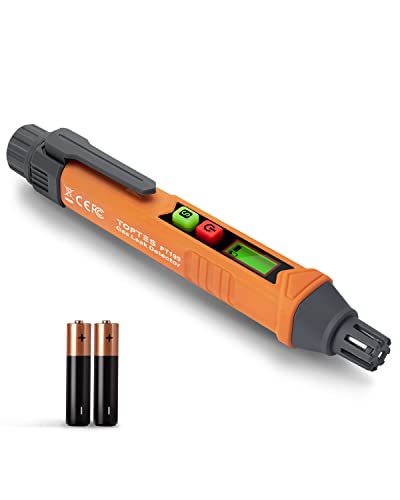
The PT199 is a portable gas detector designed to locate combustible gas sources like methane and propane. It provides a rapid 0.5-second to 3-second alarm depending on gas concentration, with an LCD display that turns red at high levels. Batteries are included, and a 30-second warm-up helps ensure accurate readings before use.
4-in-1 Upgraded Natural Gas Detector and CO Detector

This upgraded device provides four-in-one sensing: naturally occurring gas detection, carbon monoxide, temperature, and humidity. It features dual sensors and dual alarms (sound and flashing light) with a higher alert when gas thresholds are exceeded. Plug-in operation supports 110V–220V AC and offers energy-efficient performance for long-term use.
Firlarm Natural Gas Detector

The Firlarm detector plugs into a standard outlet and monitors multiple gases, including natural gas and propane. It features an LED digital display and an 85 dB audible alarm with synchronized flashing red lights. The device is designed for quick setup and real-time monitoring in kitchens, RVs, or living spaces.
Buying Guide: Key Purchase Considerations
When choosing a natural gas detector, consider the following factors to match your needs and environment:
- Detection targets: Look for devices that cover the gases you use, such as methane, propane, LNG, LPG, and natural gas. Some models also detect CO for broader safety.
- Power source and reliability: Decide between plug-in detectors with battery backup and portable handheld units. In outage-prone areas, dual power options improve reliability.
- Response speed and alarm type: Short response times (0.5–1 second) and clear audible alarms (≥75 dB) plus visual indicators help you react quickly.
- Sensor life and maintenance: Consider sensors with long lifespans and straightforward calibration. Some devices include auto-calibration or easy-to-replace batteries.
- Form factor and installation: Choose plug-in units for fixed protection, or gooseneck detectors for hard-to-reach plumbing or equipment. For RV use, compact portable detectors can be advantageous.
- Readout and indicators: Digital displays and color-coded LEDs help interpret gas levels at a glance, which is useful for quick decisions during an emergency.
- Durability and safety standards: Look for detectors designed for home or RV use with UL or equivalent safety certifications and flame-retardant housings.
In environments with limited space or multiple gas sources, a multi-sensor detector that warns for gas and CO can simplify monitoring. For builders and technicians, handheld leak detectors with flexible probes help locate leaks in hard-to-reach spots, such as gas lines and appliances. Always follow local safety codes and manufacturer guidelines for placement distances from appliances, vents, or heat sources.