
If you work with wood slabs, you need a moisture meter that penetrates surfaces, delivers quick, reliable readings, and works with hard and soft woods alike. This guide highlights five top options that balance non-destructive testing with depth, accuracy, and ease of use. The buyers best suited for these meters range from DIY woodworkers and furniture makers to hobbyists handling kiln-dried slabs or reclaimed lumber. Below, compare each pick, note who it’s best for, and see a quick buying table to help you decide at a glance.
| Product | Best For | Depth | Type |
|---|---|---|---|
| Klein Tools ET140 | Non-destructive, quick checks on drywall and wood | 3/4 inch | Pinless |
| General Tools MMD7NP | Pinless, no-mark readings for walls and wood | 3/4 inch | Pinless |
| Wagner Meters Orion 910 | Professional-grade, deep non-damaging tests | ¾ inch | Pinless |
| Mecurate Digital Pin Type | Versatile with colored indicators for quick spot checks | — | Pin Type |
| TOPTES TS-630 | Easy-to-read, multi-scale for various wood types | — | Pin Type |
Klein Tools ET140 Pinless Moisture Meter

The Klein Tools ET140 is a pinless moisture meter designed for non-destructive moisture detection in drywall, wood, and masonry. It detects relative moisture content up to 3/4 inch below the surface using electromagnetic field (EMF) technology, making it suitable for quick checks on wood slabs without leaving marks. Best for contractors or woodworkers who need fast, surface-nondestructive readings on varied materials. A limitation is that EMF readings can be less precise for tightly sealed finishes or highly dense woods compared with pin-type devices in some cases.
General Tools MMD4E Digital Meter
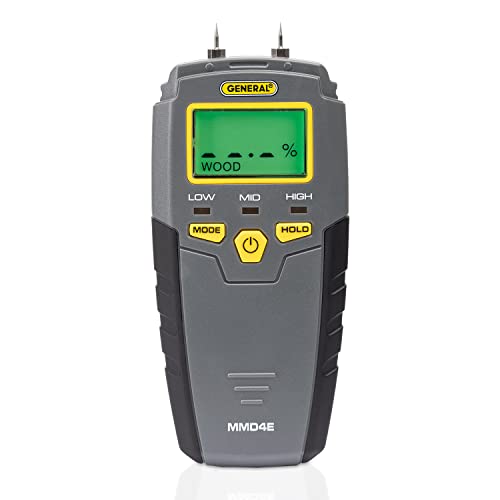
The General Tools MMD4E offers a pin-type moisture tester with a backlit display and audible/visual alerts. It’s well-suited for checking moisture around potential water leaks and drywall, helping identify remediation needs for areas prone to mold growth. This model is best for DIY homeowners and remodelers who want a straightforward pin-type reading with clear indicators. A possible limitation is that pins may leave small holes in delicate surfaces when used on bare wall surfaces or thin finishes.
Mecurate Digital Pin Type Wood Moisture Meter

The Mecurate meter uses a pin-type design with two pins and 8 calibration scales. It features three colored indicators for moisture levels and a backlit display, enabling fast spot checks in wood, walls, and other building materials. It’s an excellent choice for professionals who need precise, scale-specific readings across multiple wood types. Limitations include pin-hole marks on delicate surfaces and dependence on correct calibration for accuracy across different wood species.
Orion 910 Pinless Wood Moisture Meter Kit

The Orion 910 by Wagner Meters provides pinless testing with deep ¾ inch depth and high accuracy for professional use. It’s non-damaging, preserving wood slabs’ finishes and craftsmanship. This kit is best for woodworkers and contractors who require dependable, non-invasive readings on larger projects. A potential drawback is that advanced features require familiarity with the device’s interface and calibration steps.
TOPTES TS-630 Wood Moisture Meter

The TOPTES TS-630 features a large 2.25-inch LCD and tri-color backlight for easy interpretation of readings. It supports multiple calibration scales for wood and building materials and is suitable for woodworking, building construction, and firewood checks. It’s a practical all-around choice for hobbyists and professionals who value readability and versatility. A limitation is that pin-type meters may leave small marks on sensitive surfaces if used heavily on delicate finishes.
Buying Guide: Key Considerations For Choosing A Wood Slab Moisture Meter
- Measurement depth: If you work with thick slabs, prefer pinless meters that measure deeper without marking the surface. Pin-type meters can still be precise, especially with calibration, but pins create small holes.
- Material compatibility: Look for meters that specifically list wood types you work with (softwood vs hardwood) and building materials if you dry slabs in mixed environments.
- Display and alerts: A backlit LCD, clear indicators (green/yellow/red), and audible alerts help quick decisions on-site, especially in dim workshops.
- Calibration and accuracy: Some meters offer multi-scale calibration for different woods, while others rely on self-check aids. Choose based on the variety of wood slabs you handle.
- Portability and ergonomics: Handheld, lightweight meters with simple navigation save time on long sessions.
- Non-destructive testing: Pinless models are preferable when you must preserve finishes; pinless accuracy improves with material depth and conductivity considerations.
- Price vs. performance: While premium meters often provide deeper testing and more precise scales, determine whether your use-case justifies the investment.
Frequently Asked Questions
- What is a wood moisture meter best used for?
Wood moisture meters help determine interior moisture levels to prevent warping, cracking, or mold growth during woodworking or storage. - Pinless or pin-type—which is better for slabs?
Pinless meters are better for non-destructive testing of finished surfaces, while pin-type meters offer precise local readings and can be more accurate for dense woods when properly calibrated. - How deep can pinless meters test?
Many pinless meters measure up to 3/4 inch (19 mm) below the surface, suitable for most slabs and boards. - Can moisture meters detect mold risk?
Moisture readings indicate conditions that may support mold, but dedicated mold tests are required for definitive confirmation. - Do I need calibration before use?
Some meters include a self-test or calibration aids. Always follow the manufacturer’s instructions to ensure accuracy for different wood species. - Is it okay to use a moisture meter on finished surfaces?
Yes, pinless meters are specifically designed to test without leaving marks on finished surfaces.