
When working with PVC materials, choosing the right miter saw blade is essential for achieving clean, precise cuts without damaging the material. This guide reviews the best miter saw blades specifically designed for cutting PVC, plastics, aluminum, and non-ferrous metals. Below is a summary table of selected high-performance blades suitable for these applications.
| Product | Brand | Diameter | Teeth | Arbor Size | Ideal For |
|---|---|---|---|---|---|
| WEN BL1080 10-Inch Ultra-Fine Finish | WEN | 10″ | 80 | 5/8″ | Wood, PVC |
| YullSorom 10″ 80T ATB Tungsten Carbide | YullSorom | 10″ | 80 | 5/8″ | Wood, PVC Pipe, Aluminum |
| TOMAX 12-Inch 100 Tooth TCG | TOMAX | 12″ | 100 | 1″ | Plastic, Aluminum, Non-Ferrous Metals |
| IVY Classic 10″ 200 Tooth Aluminum & Plastic | IVY Classic | 10″ | 200 | 5/8″ | Light Gauge Aluminum, Plastic, Vinyl Siding |
| Diablo TrexBlade 10″ for Composites & Plastic | Diablo | 10″ | 72 MTCG | 5/8″ | Composites, Plastics |
WEN BL1080 10-Inch 80-Tooth Carbide-Tipped Ultra-Fine Finish Saw Blade
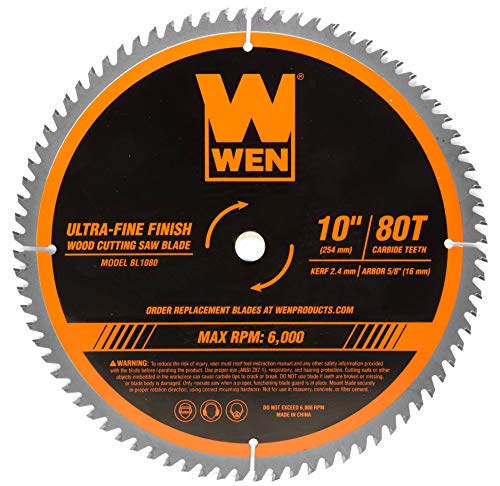
The WEN BL1080 is a 10-inch, 80-tooth miter saw blade offering an ultra-fine finish ideal for cutting both wood and PVC materials. Its carbide-tipped teeth are designed for professional woodworking, delivering clean, efficient cuts with minimal chip-out. Featuring a thin 1/10-inch kerf, it reduces waste and enhances precision.
This blade supports speeds up to 6000 RPM and fits a 5/8-inch arbor. Its construction allows slicing through both hard and softwoods, making it a versatile option for woodworking projects that involve PVC. The ultra-thin kerf also ensures less material binding, reducing strain on your saw and improving cut quality.
YullSorom 10″ 80 Teeth ATB Tungsten Carbide Saw Blade
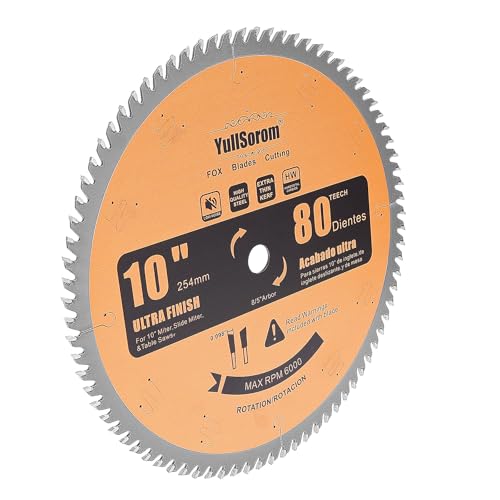
The YullSorom 10-inch saw blade combines an 80-tooth count with an alternating top bevel (ATB) tooth design for smooth, fast cutting. Its thin 0.098 inch kerf reduces vibrations and noise, delivering clean, accurate cuts on PVC pipe, plastic, wood, and aluminum.
Constructed from premium alloy steel and durable tungsten carbide teeth, this blade offers long-lasting performance and wear resistance. The combination of high-density tungsten carbide and a finely engineered tooth design makes it a reliable choice for users needing precision and versatility across different materials.
TOMAX 12-Inch 100 Tooth TCG Aluminum and Non-Ferrous Metal Saw Blade
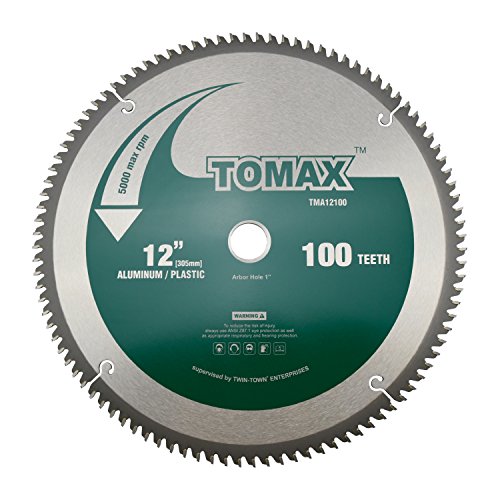
The TOMAX 12-inch 100-tooth circular saw blade features triple chip grind (TCG) teeth optimized for cutting plastics, aluminum, and non-ferrous metals including PVC. It includes a durable construction with construction-grade carbide teeth for extended wear.
This blade includes an electrophoretic coating that helps reduce rust and corrosion, prolonging the tool’s lifespan. Its 1-inch arbor suits larger saws capable of handling heavy-duty tasks. This product provides precise and burr-free cuts while sustaining performance over extensive use.
IVY Classic 35056 Swift Cut 10″ 200 Tooth Aluminum & Plastic Circular Saw Blade
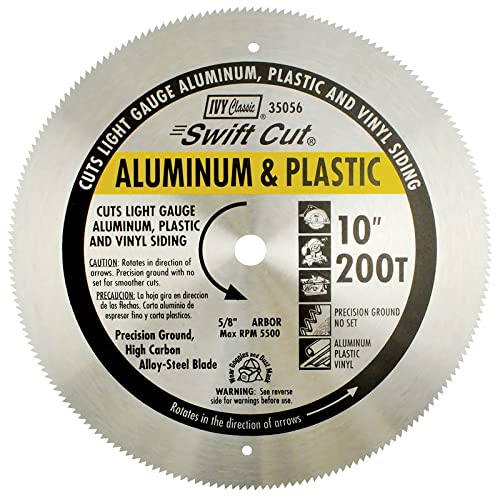
The IVY Classic 35056 is a high tooth count (200) steel blade specifically designed for cutting light gauge aluminum, plastic, and vinyl siding up to 1/8 inch thick. It is effective for applications requiring a fine, smooth cut with minimal edge roughness on thin materials.
This blade uses high carbon-alloy steel and requires proper installation with the rotation direction aligned with the arrow indicators for optimal performance. For thicker materials beyond 1/8 inch, another IVY Classic blade with fewer teeth is recommended to avoid overloading the saw.
Diablo TrexBlade 10″ Diameter Saw Blade for Composites and Plastic

The Diablo TrexBlade features 72 modified triple chip grind (MTCG) teeth that deliver precise, melt-free cuts in composites and plastics including PVC. Its TiCo hi-density carbide tips maximize blade life and resistance to wear, suitable for demanding cutting tasks.
The blade is coated with the Perma-SHIELD non-stick finish that minimizes heat build-up, reduces drag, and prevents corrosion and gumming, thereby extending durability. It fits 5/8-inch arbors and maintains a kerf width of 0.102 inches for consistent and accurate performance.
Buying Guide for Choosing Miter Saw Blades for PVC
Blade Diameter and Arbor Size
Ensure the blade diameter and arbor size match your miter saw to guarantee proper fit and function. Most commonly, 10-inch blades with 5/8-inch arbors and 12-inch blades with 1-inch arbors are standard sizes. Using a compatible blade prevents damage and enhances cutting stability.
Tooth Count and Design
For PVC and plastic cutting, higher tooth counts (80 teeth and above) provide smoother finishes and reduce chipping. Alternating Top Bevel (ATB) or Triple Chip Grind (TCG) tooth designs are recommended as they cut more cleanly through plastics and composites, minimizing melting or rough edges.
Material and Coating
Look for blades with tungsten carbide or hi-density carbide tips for durability and wear resistance. A coating such as electrophoretic or Perma-SHIELD helps reduce heat and corrosion, prolonging blade life and ensuring consistent performance.
Kerf Thickness
Thin kerf blades (around 0.098 to 0.102 inches) reduce material waste, cut more efficiently, and cause less strain on the saw. This is particularly important for plastics like PVC, which can melt or deform if too much pressure or heat builds up during cutting.
Cutting Speed and RPM Rating
Choose a blade rated to handle the speeds your saw operates at, typically up to 6000 RPM for 10-inch and 5000 RPM for 12-inch blades. A blade rated below your saw’s maximum speed can warp or fail prematurely, creating safety hazards.
Intended Materials
Some blades are multipurpose, designed for wood, aluminum, and plastics, while others specialize in non-ferrous metals or composites. Choose based on your primary cutting materials to match the blade’s tooth geometry and material composition for optimal results.