
Answering your search for fine-cutting performance, these 5 miter saw blades are chosen for clean, accurate finishes on wood and non-ferrous materials. Best for detailed moldings, cabinet doors, and precise crosscuts, each option targets different materials and cutting goals. The list helps buyers pick blades tailored to wood, aluminum, and mixed-material projects. The table below summarizes the five selections to compare core specs at a glance.
| Product | Material Focus | Arbor | Teeth (Approx.) | Best For |
|---|---|---|---|---|
| TOYAKI 10-Inch Fine-Finish Blade (120-Tooth) | Wood | 5/8 inch | 120 | Fine finish woodworking |
| DEWALT 12-Inch Fine Finish (100-Tooth) | Wood | 5/8 inch | 100 | Ultra-clean crosscuts |
| WEN BL1280 12-Inch (80-Tooth) | Wood | 1 inch | 80 | Fine finish for hardwoods and softwoods |
| TOYAKI 10-Inch Aluminum/Non-Ferrous (120-Tooth) | Aluminum/Non-Ferrous | 5/8 inch | 120 | Aluminum and non-ferrous metals |
| Diablo Fine Finish Wood Blade (60 Hi-ATB) | Wood | 5/8 inch | 60 | Ultra-smooth cuts with ATB geometry |
TOYAKI 10-Inch Fine-Finish 120-Tooth Wood Blade
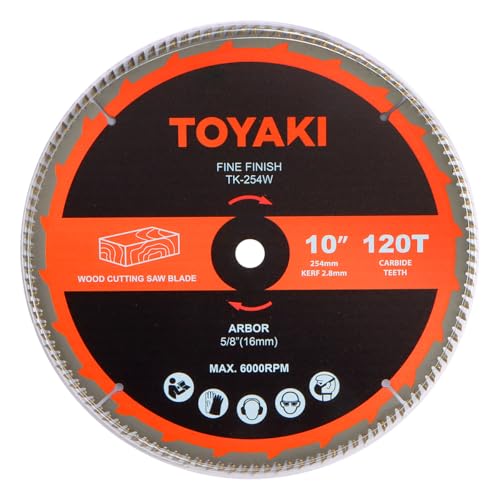
This blade is designed for precise wood cutting with a 120-tooth count to deliver a smooth finish. It maintains consistent cut quality over its lifespan, reducing the need for touch-up sanding on corners and moldings. The tooth pattern targets clean, low-vibration operation, making it suitable for fine cabinetry and decorative trim. Best for woodworkers who value an ultra-smooth surface after each pass. A potential limitation is its primary focus on wood; use different blades for metals or non-ferrous materials.
Best for: Fine finish cabinetry, trim work, and decorative moldings. Choose this if your project demands minimal sanding and a showroom-ready edge.
Limitations: Not ideal for aluminum or non-wood materials; keep separate blades for mixed-material runs.
DEWALT 12-Inch Fine Finish Miter Saw Blade, 100-Tooth

DEWALT’s 100-tooth blade is engineered for high-accuracy yields and reduced vibration thanks to a patented body slot design. The tooth geometry is optimized to deliver clean, precise crosscuts with less chipping on wood. This blade is well suited for professional finish carpentry and cabinetmaking where consistent cuts are critical. A possible limitation is the longer blade diameter requiring compatible saws and adequate clearance for large workpieces.
Best for: Professional finish carpentry and fine cabinet work where consistent, flat cuts are paramount. Better for longer crosscuts on larger panels than compact blades.
Limitations: Larger 12″ format may not fit smaller miter saws or compact benches without clearance.
WEN BL1280 12-Inch 80-Tooth Fine-Finish Blade
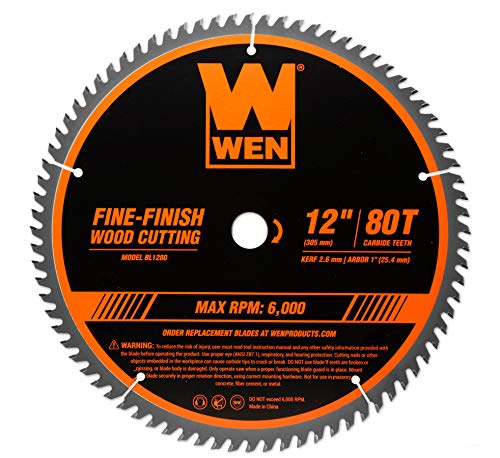
WEN BL1280 balances a 12-inch diameter with an 80-tooth count and a thin kerf for fast, clean cuts. It’s positioned as a versatile choice for both miter and table saw use, suitable for light furniture components and decorative trim. It may perform best on softer woods, with a caveat that denser hardwoods could require more aggressive blades for seating and gluing edges.
Best for: Versatile fine-cutting on a range of softwoods and mid-range hardwoods. Choose this if you want a single blade for multiple saw types.
Limitations: Fewer teeth than higher-end specialty blades may yield slightly more tear-out on very dense woods.
TOYAKI 10-Inch Aluminum/Non-Ferrous 120-Tooth Blade

This blade targets aluminum, plastics, and non-ferrous metals with a 120-tooth count designed to keep a fine finish across aluminum and light metal cutting. The 10-inch diameter and 2.8 mm thickness balance stability with a good kerf for precise metal-wood hybrid projects. It’s best for hobbyist metal fabrication and light aluminum trimming, not for high-volume metal cutting. A caution is that non-ferrous cutting can generate heat that requires proper feed rate to avoid galling.
Best for: Precision aluminum and non-ferrous metal trimming alongside wood cutting in mixed-material projects. A good pick for shop setups that require metal finishing alongside woodwork.
Revvstark 10-Inch 80-Tooth Fine-Finish Blade
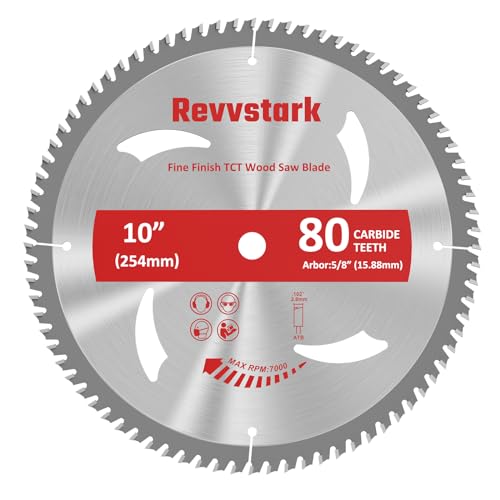
Revvstark’s 80-tooth blade emphasizes a balance of speed and finish, with a 5/8″ arbor and a 7000 RPM rating. The carbide teeth and laser-polished kerf contribute to smooth cuts across varied wood species, making it a solid option for cabinet builders and finish carpenters who need reliable edge quality. A limitation to note is that 80 teeth may produce slightly rougher faces on highly figured woods compared to 100+ tooth blades.
Best for: Finishing work across hardwoods and softwoods where a clean edge matters but sheer speed is also important. Choose this if you want a robust blade that handles diverse projects without switching blades frequently.
OA-BRES 10-Inch 80-Tooth ATB Blade

This blade features an ATB (Alternating Top Bevel) tooth pattern, a fully polished chrome-plated surface, and a 5/8-inch arbor. The 80-tooth count aims to deliver smoother finishes with a thinner kerf for efficient cutting. It is well suited for table saws and miter saws used in furniture and cabinetry. A potential drawback is that fewer teeth than higher-end models might limit performance on very dense hardwoods.
Buying Guide: How To Choose The Right Fine-Cut Blade
- For wood-focused projects, blades with high tooth counts (80-120) provide smoother finishes. For aluminum or non-ferrous metals, look for blades explicitly designed for metal cutting.
- Hi-ATB teeth produce cleaner edge finishes on wood, while ATB or alternate patterns help reduce chipping on figured woods. Consider your typical workload.
- Thinner kerf blades reduce material waste but can be more sensitive to feed rate. Balanced blades reduce vibration for better finish consistency.
- Most blades use a 5/8″ arbor; ensure your saw accepts the blade diameter and arbor. Large 12″ blades require compatible saws and ample workspace.
- Match the blade’s maximum RPM to your saw’s spec to maintain safe operation and avoid overheating or edge damage.
- For flawless faces and minimal sanding, prioritize blades advertised for fine finishing and low tear-out. For speed in cabinet assembly, consider blades with balanced tooth counts and kerf.
FAQ: Fine-Cut Blade Questions
- What blade is best for fine woodworking? A blade with a high tooth count (60-120), Hi-ATB or ATB geometry, and a thin kerf is typically best for clean, precise cuts in wood.
- Can I use a wood blade for metal cutting? It’s not recommended; blades designed for metal cutting or non-ferrous materials should be used to ensure safety and quality.
- How does tooth count affect finish? More teeth generally yield smoother edges but can reduce cutting speed; balance is key for finish vs. throughput.
- Is a 12-inch blade always better? Not necessarily. The blade diameter must fit your saw and project; small projects may benefit from a 10-inch blade for maneuverability.
- Should I choose ATB or HTT for hardwoods? ATB patterns perform well on soft and hardwoods; Hi-ATB can provide even finer finishes on figured woods.
- What safety considerations exist with fine-cut blades? Always use a sharp blade, proper guards, and a stable clamping setup to prevent kickback and ensure clean cuts.