
Answering your search for a compact, easy-to-maneuver mini tiller, these five models are selected for small spaces, raised beds, or light garden tasks. Each option offers portability, simple operation, and suitable power for light-to-moderate soil prep. The listed buyers are ideal for first-time tillers, urban gardeners, or homeowners tending flower beds and vegetable plots where a full-size tiller isn’t practical.
Buyer-friendly quick reference table
| Product | ||||
|---|---|---|---|---|
| Westinghouse 6-Inch Mini Tiller | 6.3 in | Shallow | Corded Electric | Small beds and tight spaces |
| Muylux 20V Cordless Tiller | Noted per pass | 4 in | Battery Powered | Mobility without cords |
| Alloyman 20V Cordless Tiller | 9 in | 6 in | Battery Powered | Small to medium beds; flexible layout |
| GELIDALITE 20V Cordless Tiller | 9 in | 7 in | Battery Powered | Raised beds and flower gardens |
| DEGGE 21V Cordless Tiller | 9 in | 6.7 in | Two 21V Batteries | Balanced performance with long run time |
Westinghouse 6-Inch Mini Tiller Cultivator

Powered by a 2.5 Amp, 120V motor, this model delivers up to 300 RPM for light duties like flower beds or small vegetable patches. It weighs 9.9 lbs with a 6.3-inch cultivating width, enabling easy maneuverability in tight spaces. Four heavy-duty steel blades break up compact soil, supporting healthier plant growth. Best for gardeners who want a corded option with compact reach and straightforward operation. A caution: corded use limits movement to reach from outlets, so plan work around power access.
Muylux 20V Cordless Tiller Cultivator

This cordless tiller runs on two 20V batteries, delivering up to 240 RPM with two steel tines and a 4-inch depth. It offers freedom from cords, making it ideal for small, hard-to-reach patches. The lightweight, ergonomic grip reduces fatigue, making it suitable for gardeners of various ages. Best for yard tasks where mobility and light soil work are the focus. Limitation: limited depth and battery runtime can constrain longer sessions in larger beds.
Alloyman 20V Cordless Tiller Cultivator
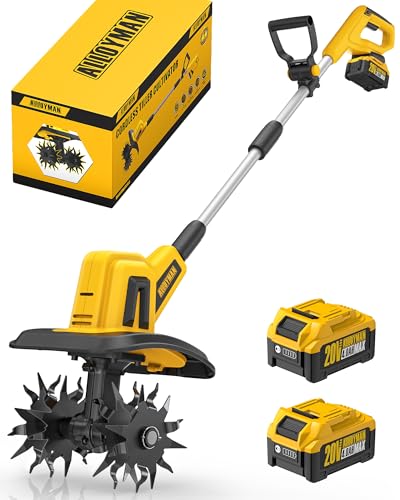
With 4 durable steel tines and operation up to 360 RPM, this model cultivates up to 9 inches wide and 6 inches deep per pass. It includes two 4.0Ah batteries and a charger, and features an adjustable auxiliary handle for comfort in extended sessions. Best for gardeners needing longer run time and broader pass coverage in small to mid-sized beds. Caution: ensure batteries are charged before planned work to avoid interruptions.
GELIDALITE 20V Cordless Tiller

Compatible with DeWalt 20V MAX batteries, this tiller uses a 300W peak motor at up to 360 RPM, cultivating a 9-inch width and 7-inch depth with four hardened steel blades. It includes battery gauge for runtime awareness, and offers options for 4.0Ah or 6.0Ah batteries to extend use in larger plots. Best for users who already own DeWalt batteries or want a ready-to-use cordless setup. Caution: use the recommended batteries to ensure optimal performance and battery life.
DEGGE Tiller: Cordless 21V, 9×6.7

This model runs on two 21V 3.0Ah batteries, delivering up to 50 minutes of continuous use. It features 48 hardened steel tines to reach a 9-inch width and 6.7-inch depth per pass. No cords and no fuel simplify setup, while lightweight design aids maneuverability in raised beds and tight spaces. Best for those who want moderate run time and a quick setup. Limitation: battery interchangeability is model-specific, so verify compatibility with your batteries.
Buying Guide: Mini Tiller Cultivator Essentials
- : Corded models provide constant power, ideal for longer tasks near outlets. Cordless variants offer mobility for tight spaces but depend on battery life and charge times. Choose based on garden size and access to power.
- tilling width and depth: Wider and deeper passes cover more ground quickly but can be heavier to maneuver. For raised beds and flower gardens, a 6–9 inch width and 6–7 inch depth is typically sufficient.
- blade/tine design: Four tines are common in light-duty tillers; more tines improve soil breakdown but may add weight. Hardened steel blades tend to last longer in compact soil.
- weight and ergonomics: Lighter models are easier to carry and use for extended periods. Ergonomic handles and adjustable auxiliary grips reduce fatigue and improve control.
- runtime and battery life: For cordless units, battery capacity (Ah) and number of batteries determine how long you can till before recharging. Consider models with gauges or indicators to monitor remaining power.
- maintenance: Look for simple assembly, minimal maintenance, and availability of spare parts. Cordless models generally require battery care and occasional blade checks.
- best-use scenarios: Corded mini tillers excel in fixed spaces with nearby outlets; cordless models shine in raised beds, lawns with limited access, and outdoor areas without reliable power.
How to choose the right mini tiller
- Evaluate garden size and soil type: harder soils may benefit from wider tilling paths and deeper passes, but lighter soils are easily managed with smaller widths.
- Consider movement needs: if you work in tight plots, cordless models reduce trip hazards and cable management concerns.
- Factor future tasks: raised beds and perennial borders benefit from versatile, adjustable handles and comfortable grips for extended sessions.
Frequently Asked Questions
- What is a mini tiller best used for? Light soil preparation in small gardens, raised beds, and flower patches; it’s suitable for breaking up compact soil and mixing in amendments in limited spaces.
- Are cordless tillers as powerful as corded models? Cordless models provide good performance for light-to-moderate tasks but may have limited runtime. Corded models offer continuous power for longer sessions near outlets.
- How deep can these mini tillers till? Depth varies by model; most compact units reach 4–7 inches. Check the product specs for exact depth per pass.
- Can I use these in hard-packed soil? Some models recommend back-and-forth motion and multiple passes for dense soil; for very hard packing, consider larger tillers or soil preparation first.
- What maintenance do cordless tillers need? Regular blade checks, battery care, and charging according to the manufacturer’s guidance help maximize performance and lifespan.
- Do these tillers require assembly? Most models come with quick assembly and simple setup; follow included instructions for safe operation.