
Looking for a precise Japanese dovetail saw to improve joinery and clean cuts? This guide highlights five top Japanese pull saws best suited for dovetails, tenons, and fine joinery. They are ideal for woodworkers who prefer light, controlled cuts with a pull stroke. The selections emphasize edge quality, blade versatility, and craft-made durability. Whether you’re a hobbyist or professional, these picks help you achieve sharp, accurate joinery with minimal effort.
| Product | Best For | Why It Stands Out |
|---|---|---|
| SUIZAN Dozuki 6″ Crosscut | General dovetails and crosscuts | Lightweight pull saw with sharp Japanese steel; made in Japan by master craftsmen |
| SUIZAN Dozuki 7″ Rip Cross Angle | Rip cuts and angled joinery | Versatile with crosscut and rip-teeth; excellent for detailed joinery planning |
| SUIZAN Dozuki 9.5″ Crosscut | Medium-to-large dovetails | Longer blade for deeper cuts; high-quality steel for clean edges |
| Temple Tool Japanese Pull Saw 9.5 | Dovetails and fine joinery | Dual-edge rip and crosscut with premium handle; balanced for accuracy |
| Temple Tool Dozuki 6 | Fine dovetails | Universal teeth for multiple cut types; compact size for control |
The table above helps you compare typical uses, blade types, and size considerations at a glance. Use these notes to pick a saw that matches the scale of your projects and your preferred cutting style.
SUIZAN Dozuki Dovetail Saw 6″ Crosscut

Best for small dovetails and precise crosscuts. This pull saw uses Japanese steel known for razor sharp cuts. It is made in Japan by master craftsmen, ensuring traditional quality and consistent performance. The lighter weight and pull-cut action reduce fatigue on extended joinery work. A suitable choice for beginners who want clean edge quality and for professionals who require reliable daily use. Limitation: shorter blade length may require more frequent repositions on larger cuts.
SUIZAN Dozuki Dovetail Saw 7″ Rip Cross Angle

Best for combined rip and crosscut tasks when working with joinery. The dual-edge design supports versatile cuts, making it easier to lay out complex dovetails and angled joints. Like other SUIZAN saws, it uses high-quality Japanese steel and is manufactured in Japan, offering a refined edge and smooth cutting action. Choose this if you need flexibility across cut directions; avoid if you require a longer blade for deeper joint work.
SUIZAN Dozuki Dovetail Saw 9.5″ Crosscut
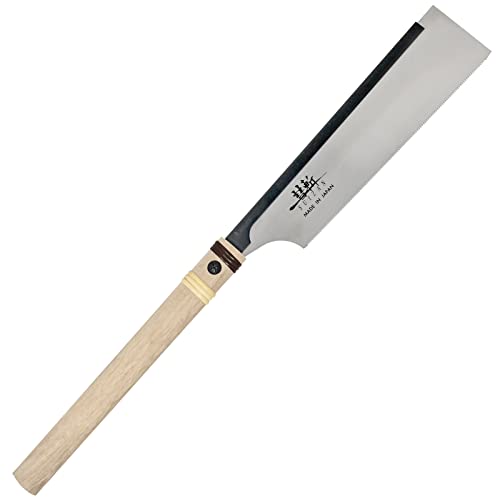
Best for larger dovetail and fine joinery tasks where depth matters. The longer blade enables extended crosscut reach, while the pull-stroke design minimizes kerf width for cleaner joints. The blade construction relies on top-quality Japanese steel to maintain a sharp edge through repeated use. Consider this if your work includes deeper dovetails; it may be less ideal for very small, intricate cuts that a shorter blade handles more precisely.
Temple Tool Japanese Pull Saw 9.5

Best for dovetails, tenons, and fine joinery with dual-edge versatility. It features a Wingnut wood handle with brass components for a comfortable grip and precise control. The saw cuts on the pull stroke, promoting a thin kerf and smooth finish. One limitation: blade length at 9.5 inches may be less maneuverable in very tight spaces compared with shorter blades. Use this when you value a balanced, aesthetic tool for detailed work.
Temple Tool Co. Dozuki 6 for Ripcut and Crosscut

Best for compact, precise dovetails and fine joinery in tight spaces. This saw uses universal teeth that blend crosscut and rip-cut performance, allowing flexible use across cut types. Its smaller 150mm blade size increases control for delicate joinery tasks. Limitation: shorter blade means deeper cuts require more repositioning on large stock. Choose this when control and precision in tight details matter most.
Buying Guide
What should you consider when choosing a Japanese dovetail saw?
- Blade type: Do you need crosscut, rip-cut, or universal teeth? For dovetails, universal or dozukis with both teeth types can handle multiple tasks.
- Blade length: Short blades offer control in tight joints; longer blades reach deeper dovetails but require steadier hands.
- Handle design: Look for a comfortable Wingnut-style handle and brass fittings for durability and grip under precise cuts.
- Blade material: High-quality Japanese steel maintains a keen edge longer and supports clean, smooth cuts.
- Cut direction: Pull-stroke cuts reduce kerf width and minimize blade binding, improving edge quality.
- Project scope: For fine joinery and small dovetails, prefer compact blades; for larger joinery or thicker stock, a longer blade is beneficial.
Usage tips for better results:
- Mark joints carefully; alignment is critical for dovetails and complex joinery.
- Stay consistent with the pull-stroke to maintain a thin kerf and clean edge.
- Maintain blades with gentle sharpening to preserve tooth geometry and cutting efficiency.
FAQ
- What is a Dozuki saw?
The Dozuki is a traditional Japanese pull saw known for its fine teeth and precise cuts, ideal for dovetails and fine joinery. - Is a longer blade always better for dovetails?
Not necessarily. Longer blades reach deeper joints but can be harder to control in tight spaces. Choose based on your project needs. - Why pull-cut saws are preferred for joinery?
The pull stroke creates a thinner kerf, reducing tear-out and providing cleaner edges with less effort. - Are all Japanese pull saws made in Japan?
Many premium models are made in Japan, which often indicates traditional craftsmanship and high blade quality, though some brands may assemble elsewhere. - What is the best saw for beginners?
Look for a compact 6–7 inch blade with universal teeth and a comfortable handle to develop control and consistency. - Can I use these saws on hardwoods?
Yes, Japanese pull saws cut hardwoods, but ensure the blade has appropriate stiffness and teeth for the material density.