
Choosing the right insulation for a pole barn helps regulate interior temperatures, reduce moisture risks, and lower energy costs. This guide focuses on reflective insulation options that perform well in metal buildings, garages, and agricultural structures. We highlight five top picks, outlining when each shines and how to install for best results. The buying guide at the end offers practical considerations to help you compare products without guesswork.
| Product | ||||
|---|---|---|---|---|
| SmartSHIELD -1.5mm 48″ x100ft | INSULATION MARKETPLACE | 400 sq ft | ||
| INSULATION MARKETPLACE – 48″ x50ft Bubble Core | INSULATION MARKETPLACE | 240 sq ft | ||
| SmartSHIELD -3mm 48″x100ft | Insulation Market Place LLC | 400 sq ft | ||
| BlueTex 2mm PRO Metal Building Insulation | BlueTex Insulation | 700 sq ft | ||
| Houseables Insulation Roll | Houseables | 50 ft x 48 in |
Note: All five products prioritize radiant barrier performance, moisture management, and ease of installation in pole barns, sheds, or metal buildings. The choice depends on climate, roof design, and how the space is used. This guide provides a balanced view of options that combine affordability with durable performance.
SmartSHIELD 1.5mm Reflective Insulation Roll

The SmartSHIELD 1.5mm roll offers a heavy radiant barrier with a foam core for added rigidity. It reflects up to 95% of radiant energy, helping to keep pole barns cooler in summer and warmer in winter. A built-in vapor barrier reduces condensation risk in humid environments, which is especially important for metal-sided structures. The product is marketed as commercial grade, designed to withstand typical workshop or barn wear while remaining relatively easy to handle during installation.
INSULATION MARKETPLACE Bubble Core Reflective Insulation

This 48″ x 50 ft roll uses a bubble core and dual foil layers to deliver a reliable radiant barrier along with a moisture-control surface. It’s suitable for use in pole barns, sheds, garages, and similar structures where condensation can be a concern. The dual foil and bubble construct helps with airtighting and easier handling during installation, particularly when working around framing or irregular roof spans. It is designed to tolerate outdoor conditions when properly installed.
SmartSHIELD 3mm Reflective Insulation Roll
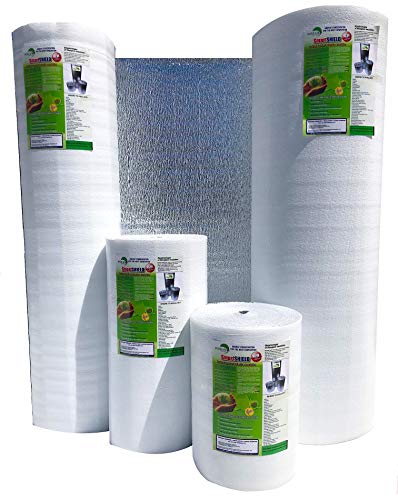
The 3mm version uses a closed-cell polyethylene foam core with a reflective foil layer on one side and white film on the other. It claims 95% radiant energy reflection and a clean white look that requires no painting. The thicker foam improves sound dampening and adds a robust feel, making it a strong option for pole barns that double as workshop spaces. The product emphasizes a higher R-value per sheet while maintaining ease of installation.
BlueTex 2mm PRO Metal Building Insulation

BlueTex’s 2mm PRO insulation features a single-sided aluminum foil bonded to 2mm EPE foam. It provides strong radiant heat reflection (up to 97%) when installed with an air gap, making it well-suited for hot climates and metal buildings common in pole barn applications. The 50-inch width and 168-foot length help cover wide spans and reduce seam gaps. A built-in vapor barrier supports condensation control, contributing to a more stable indoor environment.
Houseables Insulation Roll

Houseables offers a 48″ x 50 ft white foam insulation roll with a reflective surface designed for ceilings, walls, and floors in pole barns or metal buildings. It advertises 95% reflective capability and a Class 1 fire rating, which contributes to safety and energy performance. The product’s versatile design makes it suitable for a variety of installations, from attic-like spaces to lower-ceilinged areas in barns, plus potential use in RV structures or other covered spaces. The emphasis is on a clean aesthetic and straightforward installation.
Buying Guide: Key Purchase Considerations
- Radiant barrier efficiency: Look for products claiming 95% or higher radiant energy reflection. Higher reflectivity translates to more effective temperature control in metal or insulated pole barns.
- Foam core vs. bubble core: Foam cores generally provide better rigidity and moisture resistance, while bubble cores can be easier to handle but may require careful moisture management and sealing.
- Vapor barrier capabilities: In damp or humid climates, a built-in vapor barrier reduces condensation risk. This is especially important for metal buildings where condensation can lead to corrosion or mold.
- Installation practicality: Consider sheet width, roll length, and flexibility to fit roof slopes, purlins, and wall studs. Wider rolls with consistent thickness speed up installation on large structures.
- Fire rating and safety: A Class 1/Class A rating indicates higher fire safety, a beneficial feature for buildings used as workshops or living spaces.
- Durability and UV exposure: Some insulation systems tolerate sun exposure for shed roofs or solar-prepped spaces. Check if the product is designed for outdoor or semi-outdoor installations.
- Moisture resilience: For pole barns near the coast or in humid regions, moisture resistance and vapor control are essential to prevent mold and corrosion.
- Maintenance and longevity: Thicker foams (e.g., 3mm or more) often offer better long-term performance and durability in demanding environments.
- Cost and coverage: Compare price per square foot of coverage, not just per roll. A larger roll with higher coverage may reduce overall project cost and labor time.
When selecting insulation for a pole barn, match the product’s characteristics to your climate, roof type, and usage plan. For a workshop that experiences frequent temperature swings, prioritize high radiant reflectivity and vapor control. For agricultural or storage uses with packaging humidity concerns, moisture management becomes a decisive factor. In many cases, combining a reflective barrier with proper ventilation delivers the best overall performance while keeping installation straightforward.