
For homeowners, campers, and off-grid enthusiasts, high-wattage solar panels deliver more usable energy in less space. This guide highlights five top-rated high-output panels, focusing on efficiency, durability, and shading resilience. Read on to compare features and find the best fit for your system.
| Product | Wattage Range | Key Benefit | Best For |
|---|---|---|---|
| Callsun N-Type 16BB 400W (2x200W) | 200–400W per panel | Bifacial potential, high efficiency | RVs, marine, off-grid |
| Renogy 400W ShadowFlux (2x200W) | 200W per panel | Anti-shading tech, lightweight | RVs, cabins, boats |
| Renogy 200W N-Type (24V) | 200W | Compact, 25% cell efficiency | Vans, tight spaces |
| JJN Bifacial 400W (2x200W) | 200W per panel | Transparent backsheet, 16BB N-type | Off-grid, marine |
| Rvpozwer 400W (4x100W) | 100W per panel | 25% efficiency, 18BB design | Flexible configurations |
Callsun N-Type 16BB 400W 2-Pcs Solar Panel Pair

The Callsun 200W panels use N-Type 16BB cells and a bifacial design for higher total energy capture. With up to 25% efficiency, these panels deliver better performance under high temperatures and reduced hotspot risk. Their bifacial backsheet allows rear-side light absorption, boosting output by as much as 30% in optimal conditions. The twin-cell layout provides enhanced shading tolerance, maintaining power when part of the panel is shaded by trees or structures. This pair is well-suited for RVs, marine setups, and off-grid roofs where space and reliability matter.
Renogy 200W Portable Solar Panel with 16BB N-Type

Renogy’s 200W portable panel features 16BB N-Type cells and an impressive 25% efficiency, delivering more energy per sun hour than many conventional panels. The foldable, lightweight design (about 13.89 lbs) makes it ideal for tight camper spaces and quick setups. A magnetic closure streamlines storage, while MC4 outputs support easy charging for power stations or direct 12V systems. USB-C and USB-A ports provide on-the-go charging for devices, making it versatile for campers and tiny homes alike.
Renogy 400W ShadowFlux Anti-Shading N-Type Panels

These Renogy panels incorporate ShadowFlux anti-shading technology to mitigate hotspots and power loss when partially shaded. With N-Type cells and 16BB wiring, they achieve up to 25% efficiency, delivering robust performance in variable sunlight. The panels are designed to be compact and lighter than many PERC alternatives, making them suitable for RV roofs, boats, and small cabins where space efficiency matters. The combination of shading resilience and strong environmental tolerance makes them a solid long-term choice for off-grid systems.
Rvpozwer 400W Solar Panel Kit (4x100W Each)
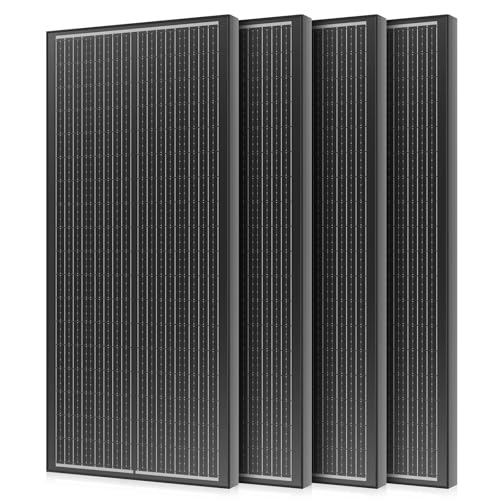
Rvpozwer packages offer a modular approach with four 100W panels, all built on 18BB N-Type cells. Each panel boasts up to 25% efficiency and solid weather resistance with durable framing. The 12V compatibility and robust_iP68-rated junctions support a wide range of off-grid configurations. This setup is well-suited for expanding existing systems, RVs needing additional capacity, or remote cabins where a flexible array layout is advantageous.
JJN Bifacial 400W Dual-Paneled Solar Modules

The JJN bifacial panel pair uses 16BB N-Type cells to deliver over 25% efficiency per panel, with a backsheet design that absorbs light from behind for extra output. The panels feature a black aluminum frame and IP-rated connectors and junction box to withstand wind and snow loads. The bifacial capability makes them especially appealing for open rooves with high sun exposure, such as RVs, sailboats, or farm buildings where additional backside energy can boost daily yields.
Buying Guide
When choosing high-wattage solar panels, consider the following factors to match your needs:
- Cell Technology and Efficiency: N-Type with 16BB busbars often yields higher efficiency and better reliability than older designs. Look for panels rated around 25% efficiency for dense installations.
- Configuration and System Size: Decide between 2-panel, 4-panel, or modular arrays. Bifacial designs can add rear-side energy but require favorable mounting and light conditions.
- Shading Tolerance: Anti-shading or bypass diode features help maintain power when partial shading occurs. This is critical in urban or tree-dappled environments.
- Weight, Size, and Mounting: Lighter, more compact panels simplify roof installations and vehicle mounting. Ensure mounting hardware supports the panel weight and wind loads for your location.
- Durability and Weather Resistance: Look for IP ratings, corrosion-resistant frames, and tempered glass to withstand marine and off-road conditions.
- System Compatibility: Verify compatibility with your battery bank (12V vs 24V), charge controller, and power station or inverter. USB-C/PD outputs are useful for direct device charging in portable setups.
- Warranty and Support: Longer warranties and robust customer support reduce long-term ownership risk.
For best results, match high-wattage panels with a suitable charge controller and a battery system sized to your typical daily energy usage. In shaded or mixed-sun environments, prioritize panels with anti-shading tech and, if possible, bifacial capabilities to maximize annual energy yield. Always follow manufacturer installation guidelines to optimize performance and safety.