
If you’re seeking a heavy duty chainsaw, you want power, durability, and reliable starting performance. This guide highlights five strong options and their ideal buyers. The top picks span professional gas models and capable electric/heavy-duty tools, helping you choose based on cutting speed, bar length, and maintenance needs. Best for rural properties, farms, or serious woodcutting, these models balance task size with user safety and long-term reliability.
| Product | Best For | Key Benefit |
|---|---|---|
| Baotree 62cc Gas Chainsaw | Professional users, large trees | Forged magnesium crankcase and tool-free tensioning |
| Husqvarna 450 Rancher | Smart Start and inertia kickback brake | |
| VEVOR 62CC Gas Chainsaw | Heavy-duty yard work | Dual fuel tanks and high RPM |
| Snoonwee 58cc Gas Chainsaw | Ranch or farm use | Dual bar system for quick bar swaps |
| Husqvarna 455 Rancher | Versatile farm and property maintenance | X-TORQUE engine with easy start |
Baotree 62cc Gas Chainsaw — 20 Inch Bar

Best for heavy-duty cutting with a balanced engine design. This model uses a forged magnesium crankcase for durability and features a tool-free chain tensioning system for quick maintenance. The 20-inch guide bar makes it suitable for large trunks and thick branches. The 3D anti-kickback chain brake enhances safety during aggressive cuts.
Who it’s best for: professional operators and property owners who regularly tackle large trees. Why selected: a robust construction paired with maintenance-friendly features supports long-term use. Caution: heavier without anti-vibration handles may be tiring for beginners on long sessions.
SEESII 40V 18-Inch Electric Chainsaw

Best for light-to-moderate felling and fast yard cleanup with minimal maintenance. This electric option offers a long reach with an 18-inch bar and a 2200W brushless motor. Two 5000mAh batteries extend work time, and auto-oiling simplifies upkeep. It’s ideal for contractors who prefer cord-free operation and lower operating noise compared to gas models.
Who it’s best for: homeowners or small forestry tasks where emissions and fuel handling are concerns. Why selected: it delivers solid performance with convenient battery life. Caution: the battery system may require purchasing extra sets for large projects, and weather can affect cold-starts.
Husqvarna 450 Rancher — 20 Inch

Best for mixed tasks with reliable starting and kickback protection. The 50.2-cc X-Torq engine balances power with efficiency, and Smart Start helps reduce pull force. The inertia-activated chain brake minimizes kickback risk, making it a solid choice for homeowners with occasional heavy cutting or pruning needs.
Who it’s best for: homeowners needing dependable performance for pruning, firewood, and light-to-medium timber work. Why selected: proven Husqvarna reliability and features that enhance safety during demanding sessions. Caution: 20-inch bar capacity may be underpowered for very large diameter trees without proper technique.
VEVOR 20Inch 62CC Gas Chainsaw
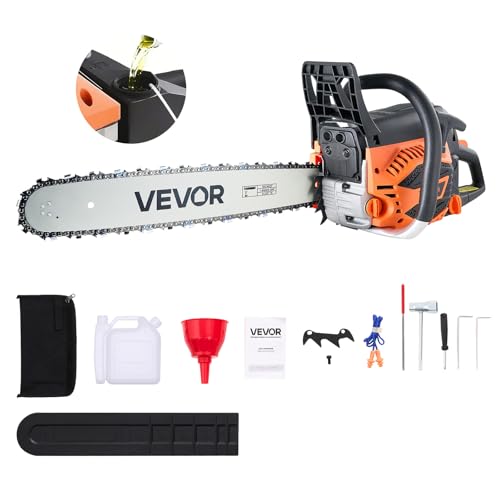
Best for heavy-duty yard work and professional land clearing. This model offers a 12,000 rpm max and a 20-inch guide bar capable of handling thick trunks and large branches. It also includes dual fuel tanks for extended operation. A safety guard reduces wood chips exposure, supporting safer cutting in rugged environments.
Who it’s best for: professionals and serious DIYers needing sustained cutting power. Why selected: strong RPM and bar length for challenging jobs. Caution: cold starts may require extra attention on very cold days; contact support if startup issues arise.
Snoonwee 58cc Dual-Bar Chainsaw

Best for versatility on farms or ranches needing quick bar swaps between 20-inch and 18-inch setups. The 58cc engine delivers solid torque, while the dual bar system enables faster transitions between felling and limbing. Starts are designed to be easier, even in cooler conditions.
Who it’s best for: users who require rapid adaptation to different cutting tasks on large properties. Why selected: one-tool versatility reduces the need for multiple machines. Caution: weight can be higher than compact models, potentially impacting maneuverability for beginners.
Husqvarna 460 Rancher — 24 Inch

Best for heavy-duty tree removal and larger acreage maintenance. The 60.3-cc X-TORQ engine delivers robust power, and the 24-inch blade supports bulkier cuts. An inertia-activated chain brake improves safety during kickback events, while the automatic oil pump helps with consistent lubrication.
Who it’s best for: professionals and experienced DIYers handling substantial wood removal tasks. Why selected: high power-to-weight ratio and long bar length suit demanding workloads. Caution: more demanding to operate for beginners; requires proper handling and safety training.
Buying Guide: Key Considerations for Heavy Duty Chainsaws
- Engine Type: Gas vs Electric. Gas chainsaws offer portability and power for large trees; electric options reduce maintenance and emissions but require a power source or longer battery life.
- Bar Length: Common ranges are 16–24 inches. Longer bars cut thicker trees but add weight; shorter bars are easier to maneuver for pruning and lighter tasks.
- Power and RPM: Higher horsepower and RPM improve cutting speed in hardwoods but may increase vibration and fatigue. Look for a model with smooth delivery and a reliable start system.
- Safety Features: Anti-kickback brakes, inertia-activated chain brakes, and low kickback bars reduce injury risk. Start assist systems improve ease of use, especially for beginners.
- Durability and Maintenance: Magnesium or reinforced crankcases, easy chain tensioning, automatic oiling, and accessible air filters extend service life and simplify upkeep.
- Fuel and Operating Costs: Consider fuel efficiency, availability of parts, and maintenance intervals. Dual fuel tanks, if available, can reduce downtime during long sessions.
- Weight and Handling: Heavier units demand stronger handling and proper technique. Look for vibration reduction and ergonomic handles to minimize fatigue.
- Best Use Case: Align the model with your typical tasks—home trimming, property maintenance, or professional logging—to maximize value.
FAQ
- What is the advantage of a 20-inch bar on a heavy-duty chainsaw?
– It enables deep cuts in thick trunks and makes processing large logs more efficient, reducing the number of passes. - Are gas chainsaws safer than electric ones for beginners?
– Safety features like inertia brakes and anti-kickback bars help, but proper training and protective gear are essential for any chainsaw. - What maintenance does a heavy-duty chainsaw require?
– Regular bar and chain lubrication, chain tension checks, air filter cleaning, spark plug inspection, and occasional fuel system care are common tasks. - How long does a typical saw last with heavy use?
– Durability depends on maintenance, usage, and build quality. Models with magnesium crankcases and quality components tend to resist wear better over time. - Should I choose a dual-bar system?
– A dual-bar setup is beneficial if your tasks include both felling and limbing, saving time switching bars on site. - Is a longer warranty important for heavy-duty models?
– A robust warranty can be helpful for unexpected issues, but it should accompany reliable service and easy access to parts.