
Looking for a reliable hatchet or splitting maul to prep firewood? This guide highlights five top options that balance durability, ease of use, and value. Ideal buyers include campers needing portable wood splitters, homeowners prepping kindling, and outdoor enthusiasts seeking versatile chopping tools. The table below summarizes the five selected products to help you compare at a glance.
| Product | Brand | Type | Best For |
|---|---|---|---|
| ESTWING Fireside Friend Axe | Estwing | 14″ forged steel maul | One-handed splitting and durable edge |
| Fiskars X7 Small Hatchet | Fiskars | 14″ hatchet with sheath | Kindling and light camping work |
| Purple Dragon Camping Hatchet | Purple Dragon | 14.7″ hand-forged axe | Balanced, secure head for forest work |
| Fiskars 8 lb Splitting Maul | Fiskars | 36″ splitting maul | Medium to large logs, firewood prep |
| KSEIBI Wood Axe (Small) | KSEIBI | 14″ outdoor camp hatchet | Backpacking and light splitting |
Note: Each product section provides practical use cases and a concise limitation where relevant. The goal is to help you choose based on balance between weight, edge durability, and handling comfort.
ESTWING Fireside Friend Axe — 14″ One-Piece Forged Steel

The ESTWING Fireside Friend Axe features a weighted wedge design for efficient splitting with one-handed use. It is forged from a single piece of American steel, which reduces the risk of weak welds or castings failing. A ballistic nylon sheath is included to protect the edge during transport. Best for users who want a durable, compact maul for quick, controlled splits and for those prioritizing edge longevity. Limitation: the 14″ size may be less ideal for very large logs compared with longer mauls.
Fiskars X7 Small Hatchet — 14″

The Fiskars X7 Small Hatchet emphasizes portability with a 14″ length and a forged steel head integrated through insert-molded construction. It offers a low-friction blade and a shock-absorbing handle for reduced fatigue during kindling prep and light splits. Best for hikers and campers needing a compact, reliable tool; better for small- to medium-kindling tasks than heavy-duty log splitting. Caution: not ideal for heavy-duty, large-log splits over long sessions.
Purple Dragon Camping Hatchet — 14.7″ Hand Forged
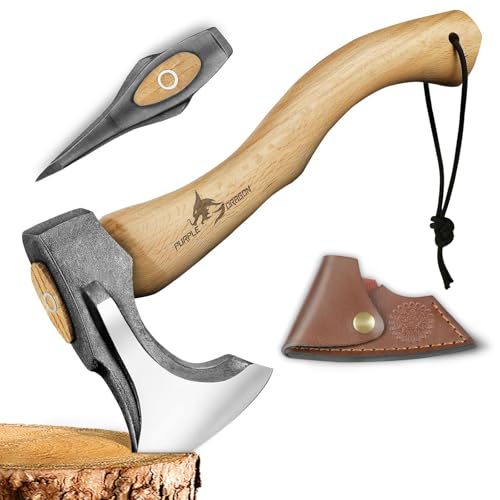
This Purple Dragon hatchet is hand-forged with a carbon-manganese steel head and a carefully balanced, S-curve hickory handle. The two-ring wedge attachment adds security, and the polished splitting face aims for efficient multiple splits per stroke. Best for bushcraft and garden work where reliability and comfort are priorities. Limitation: the 56–60 HRC hardness requires careful maintenance to avoid edge chipping if used improperly on hard knots.
Fiskars 8 lb Splitting Maul — 36″

The Fiskars 8 lb Splitting Maul combines a longer 36″ handle with an IsoCore shock-absorbing grip for reduced vibration. The forged steel blade is designed to stay sharp longer, aiding in medium-to-large log splits. Best for users who regularly handle bigger logs and want reduced fatigue. Caution: longer handle may be harder to maneuver in tight spaces or for smaller users; use proper stance for safety.
KSEIBI Wood Axe — Small Outdoor Hatchet

The KSEIBI Wood Axe offers a lightweight 14″ overall length with a forged steel blade and an anti-slip, shock-reducing handle. It is well-suited for backpackers and campers who need a compact tool for kindling, brush clearing, and small splits. Best for those prioritizing portability; limitation: may require more swings for tougher wood than heavier mauls.
DESHIL Splitting Axe — 15”

The DESHIL 15” camping axe uses a carbon steel head with a fiberglass shock-reduction handle. The head is treated for corrosion resistance, and the tool doubles as a hammer with a flat back. Best for campers who need a versatile tool for wood splitting and light hammering tasks. Limitation: may not match the edge retention of premium forged axes in extended use.
Edward Tools Wood Splitting Maul — 17”
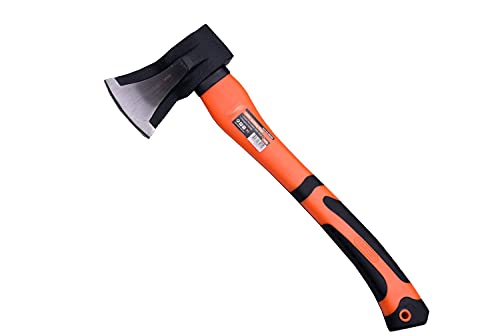
The Edward Tools Maul pairs a 17” length with a weighted head and a reinforced rubber sheath for safety. It is designed to split firewood efficiently and capture the feel of a heavier splitting maul in a more compact form. Best for users who want a robust maul at a mid-size length; limitation: heavier than small hatchets, which can affect maneuverability for some users.
Buying Guide: Key Purchase Considerations
What size is right for you? Shorter axes are easier to control and better for kindling, while longer mauls split larger logs with fewer swings. Material matters: forged steel offers edge longevity, while heat treatment enhances durability against rust and wear. How will you use it? For camping and light wood prep, a small hatchet is often sufficient; for regular firewood splitting, a heavier maul is usually preferred. Handle design affects comfort and safety; look for shock-absorbing grips and secure blade attachment.
Choose this if you want a portable tool for quick splits and kindling. Choose that if you regularly split mid-to-large logs or prefer a longer strike. Avoid this if you need ultra-light tools for backpacking, or if you operate in tight spaces where a long maul is cumbersome.
Frequently Asked Questions
- What is the best size for home firewood splitting? A mid-sized maul (around 14–17 inches) balances power and control for typical yard work.
- Are forged steel heads better than cast heads? Yes. Forged heads usually provide higher durability and fewer weak points than cast heads.
- Is a sheath important? Yes. A sheath protects the blade and reduces accidental cuts when transporting or storing the tool.
- Do longer handles reduce fatigue? Longer handles can reduce fatigue on large splits by increasing leverage, but may be harder to maneuver in tight spaces.
- Should I choose a hammer-back axe? Some models include a flat back that can function as a hammer, which adds versatility for camping tasks.
- How do I maintain a splitting axe edge? Regularly sharpen with appropriate files or grinders and keep the edge dry to prevent corrosion.