
Choosing the right glue for PETG can prevent failed assemblies and weak joints. This guide highlights five top Amazon options, each selected for PETG compatibility, precision application, and reliable bonding on 3D-printed parts. It’s especially useful for makers working with PETG components, PETG-based prototypes, or multi-material projects. The buyer types best suited to each product are noted to help you compare quickly.
Summary table of highlighted products:
- KRAFTPROTZ 3D Printer Super Glue Thin — Ultra-thin capillary action for micro gaps; best for high-detail PETG parts.
- KRAFTPROTZ 3D Printer Superglue Gel — No-drip gel; ideal for vertical seams and complex joints on PETG parts.
- ALECPEA 3D Printer Glue — Fast cure with precision applicators; great for assembling multi-part PETG models.
- GleamGlee 3D Printing Super Glue — Thin CA for precise bonding on PETG; fast set without residue.
- NoClogger 3D Printing Glue — Fast-drying CA with precision tip; good for small PETG components and miniatures.
KRAFTPROTZ 3D Printer Super Glue Thin

The ultra-thin formula uses capillary flow to penetrate micro gaps and cracks. It bonds reliably with PETG along with other common filaments, reducing blooming, warping, or surface residue. The XXL 1.76 oz size supports high-volume use in labs or print farms. Best for high-detail PETG assemblies and models with tight seams. Limitations include precision requirements for manual application; care is needed to avoid over-penetration in delicate joints.
KRAFTPROTZ 3D Printer Superglue Gel

The gel formula remains in place, making it ideal for vertical surfaces, complex joints, and layered PETG parts. It bonds PLA, ABS, PETG, TPU, ASA, and Nylon with a clean finish. The XXL tube provides up to five times more glue than typical bottles, supporting ongoing repairs. Choose this if you need precision placement on PETG joints and frequent repairs; avoid if you require a quick, runny application for large flat areas.
ALECPEA 3D Printer Glue
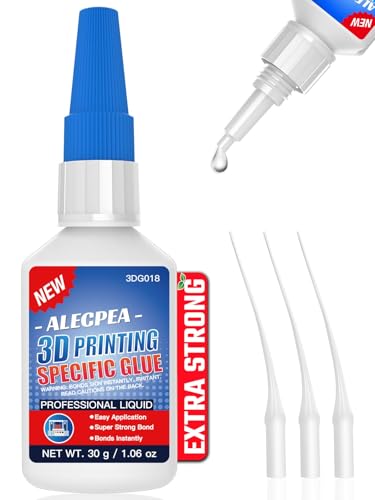
Formulated for 3D model assembly, this liquid adhesive creates permanent, seamless connections for PLA cosplay props, PETG mechanical parts, and delicate resin miniatures. It sets in 10-45 seconds, enabling fast assembly, with full cure in 24 hours for maximum impact resistance. Includes three micro-tips to control flow into tight seams. Best for multi-part PETG assemblies; limit is that full cure takes up to a day for maximum strength.
GleamGlee 3D Printing Super Glue

This extra-strong, fast-setting adhesive is tailored for 3D printed parts, including PETG. The thin CA formula ensures precise bonding in micro-gaps and layer lines, with a 10-second fast set that minimizes downtime. A clear finish helps preserve surface aesthetics on PETG prints. Best for quick, clean repairs and small component bonding; caution: very small parts can be sensitive to handling before full cure.
NoClogger 3D Printing Glue
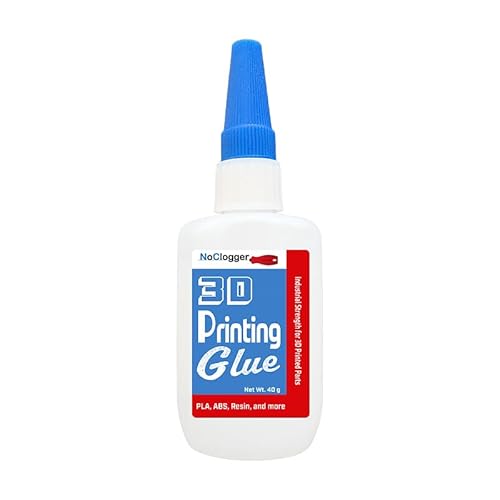
This CA-based adhesive is designed for fast-drying, precise application. It bonds PLA, PETG, ABS, resin, and other 3D printing materials with strength suitable for functional parts and prototypes. The 40 g bottle includes a precision tip to target small components, making it ideal for PETG miniatures and tight joints. Limitation: extremely large surface areas may require additional product or multiple applications for full bond strength.
Buying Guide: PETG Glue Basics
What should you consider when choosing PETG glue? Bond strength, cure speed, and application control are the top factors. PETG can bead or warp under heat, so a precision, non-messy adhesive helps keep surfaces clean. Consider whether you need a thin pour for micro gaps or a gel for vertical surfaces. If you’re repairing quickly, a fast-set CA with a clean finish is useful. For high-volume prototyping, an XXL bottle reduces refill frequency. Also weigh the impact on surface finish and the ease of cleanup after bonds cure fully.
Key questions to help you decide:
- Is micro-gap penetration important for your PETG parts? Look for a capillary or thin CA formula.
- Do you work on vertical or overhead joints? A no-drip gel or precision applicator helps control flow.
- Will you assemble multi-part PETG models? A fast-curing option with multiple micro-tips can speed up builds.
- Do you need an adhesive for repeated repairs or high-volume prototyping? XXL tubes offer more value per project.
- Is surface finish critical? Choose a clear, residue-free formula to preserve appearance.
Frequently Asked Questions
- What makes PETG glue different from general-purpose CA glue? PETG glues are formulated to minimize blooming and residue on PETG surfaces, with precise flow control for fine details.
- How long does PETG glue take to cure? Many adhesives reach handling strength within seconds to minutes; full cure often ranges from 24 hours to 48 hours depending on formula.
- Can I use these glues on other filaments besides PETG? Yes, most listed glues bond PLA, ABS, TPU, and nylon, but performance varies by material and joint design.
- Is a non-drip gel better for PETG? For vertical or complex joints, gel formulas reduce slip and overflow, improving alignment during cure.
- Should I use precision tips for PETG parts? Precision tips help apply adhesive in tight seams and layer lines without creating a mess.
- Is full cure necessary for maximum strength? Yes; many glues achieve maximum impact resistance after a full cure period per product guidelines.