
Answering the common question, these adhesives are chosen for bonding luxury vinyl plank (LVP) securely while offering workable open times and clean finishes. The list prioritizes products with strong initial tack, moisture resistance, and compatibility with vinyl floors. Ideal buyers: contractors needing permanent bonds, DIYers seeking releasable options, and installers working with subfloor varieties like concrete or wood. The table below highlights five well-suited options with practical strengths for LVP projects.
| Product | Best For | Notable Feature | Limitations |
|---|---|---|---|
| Roberts 1406 Tongue & Groove Flooring Adhesive | Direct-screw or glue-down LVP over wood subfloors | Made in United States | Limited details listed |
| Gorilla Max Strength Construction Adhesive (2.5 oz) | Indoor/outdoor repairs, quick fixes | Crystal clear dry, waterproof | Thin tube may require frequent reapplication |
| Loctite PL Premium Polyurethane Construction Adhesive (10 fl oz) | Wide material bonding including concrete and wood | 3x stronger than ordinary adhesives | Strong odor during cure |
| ROMAN PRO-690 Flooring Adhesive – 1 Gallon | LVT, LVP, VCT installations | Releasable or permanent install options | Requires proper trowel/roller technique |
| Titebond 2104 Tongue and Groove Glue | Laminate floors and floating floors | Solvent and water resistant when dry | Not a full spread adhesive for all subfloors |
Roberts 1406 Tongue & Groove Flooring Adhesive

Product highlights: Made in the United States. This adhesive is positioned for tongue-and-groove flooring installations and may suit bonding LVP to appropriate substrates. Best for buyers seeking a domestically produced option with straightforward application. A potential limitation is that the available data emphasizes origin rather than specific substrate compatibility or open time.
Who it’s best for: DIY installers prioritizing local manufacturing and a simple, direct connection for groove-fit flooring. Why selected: its tongue-and-groove application aligns with typical LVP installation methods. Caution: confirm substrate compatibility and cure conditions with the project environment before use.
Gorilla Max Strength Construction Adhesive (2.5 oz)

Product highlights: Our strongest formula with a clear, professional finish. Claims 100% waterproof bonding and paintable in 2 hours. Useful for quick fixes and areas requiring robust adhesion, including wet or damp conditions. Limitation: the data emphasizes general construction use, not exclusively LVP-specific installations.
Who it’s best for: Projects needing a strong, water-resistant bond in functional spaces. Why selected: 2x stronger than standard Gorilla formulas, with a crystal-clear finish for discreet seams. Caution: good ventilation and substrate prep are important to maximize bond quality, especially on damp substrates.
Gorilla Max Strength Construction Adhesive; 7 Ounce Tube
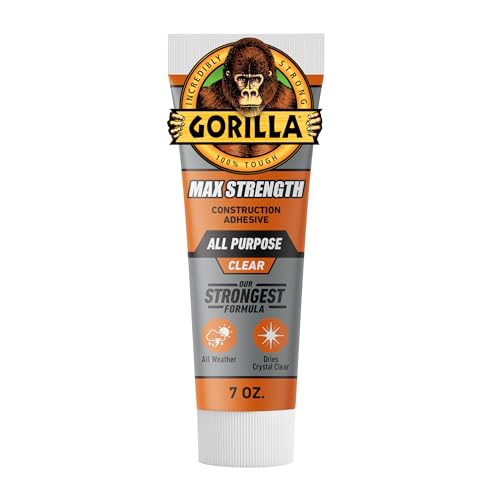
Product highlights: Crystal-clear finish, versatile all-purpose glue, highly water resistant, ideal for indoor and outdoor projects. Best for quick repairs and when a discreet bond line matters. Limitation: tube size may require multiple applications for larger LVP areas, affecting workflow efficiency.
Who it’s best for: Remodelers needing a strong, visible-lean bond for mixed-material projects. Why selected: its robust formula and waterproof characteristics suit many LVP-adjacent repairs. Caution: confirm compatibility with vinyl flooring edges and subfloor materials prior to full installation.
Loctite PL Premium Polyurethane Construction Adhesive
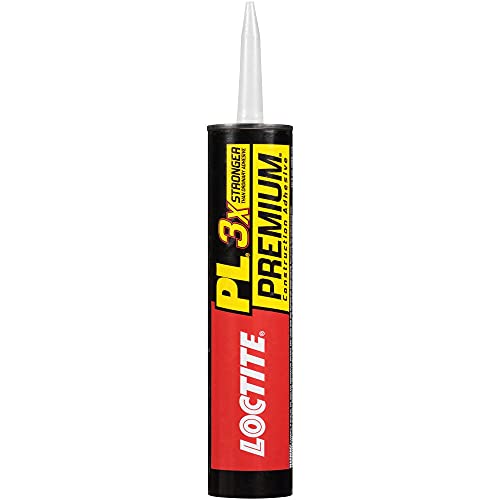
Product highlights: One-component polyurethane adhesive covering a wide range of materials, including wood, concrete, stone, and metal. Three times stronger than ordinary construction adhesives. Best for subfloor bonding and areas with irregular surfaces. Limitation: polyurethane chemistry can require more ventilation and longer cure times than water-based formulas.
Who it’s best for: Pros needing a strong, multi-substrate bond with long-term durability. Why selected: the broad material compatibility and higher strength rating support LVP installations on challenging substrates. Caution: ensure proper surface preparation and follow curing guidance to avoid bond failures in damp environments.
ROMAN PRO-690 Flooring Adhesive

Product highlights: Zero VOC, releasable or permanent install options for LVT, LVP, and VCT. Workable with wet bonds or dry tacky bonds, offering installer flexibility. Best for conservative environments prioritizing low odor and ease of removal. Limitation: releasable option may not provide a permanent hold in all installations.
Who it’s best for: Commercial and residential installers seeking flexible install methods and lower odor. Why selected: strong initial tack with practical reusability options. Caution: test tack and adjust open time for large LVP areas to maintain layout accuracy.
Titebond 2104 Tongue And Groove Glue

Product highlights: Recommended for laminate and floating floors, including applications over radiant heat. Provides superior bond strength and resistance to solvents and water when dry. Best for tongue-and-groove installations where a clean seam is desired. Limitation: not all subfloors are compatible with every Titebond formulation; verify substrate specifics before use.
Who it’s best for: Projects requiring sturdy tongue-and-groove joints and radiant-heat compatibility. Why selected: proven bond strength for grooves and ease of application. Caution: ensure the product is used within its recommended substrate and environmental guidelines.
Buying Guide
What to consider when choosing a glue for LVP installations
- Bond strength: For high-traffic areas, pick adhesives claiming higher initial tack and long-term bond.
- Subfloor compatibility: Confirm whether the adhesive bonds well with wood, concrete, or existing underlayment used under LVP.
- Open time and working time: Choose adhesives with a workable period that suits your installation pace and layout complexity.
- Moisture and temperature resistance: For kitchens, bathrooms, or outdoors, select moisture-resistant or waterproof formulas.
- VOC and odor: If indoor air quality is a concern, prefer low-VOC or zero-VOC options.
- Removability vs. permanence: Releasable installs offer easier future updates; permanent bonds are essential for long-term floors.
Practical questions to guide your choice
- Should I use a polyurethane adhesive for LVP? If bonding to concrete or challenging substrates, polyurethane options like PL Premium can be strong and versatile, but require proper ventilation.
- Is a clear adhesive important for LVP? For visible seams, crystal-clear formulas (like some Gorilla products) help maintain a seamless appearance.
- Do I need a releasable option? Releasable installations are useful in commercial settings or for temporary layouts, but permanent bonds usually outperform in long-term durability.
- Can I use wood glue on LVP? For most LVP installations, specialized flooring adhesives or polyurethane formulations yield better bond and durability than standard wood glues.
- What about moisture exposure? Choose adhesives labeled for water resistance or waterproofing for bathrooms or basements to minimize edge peeling.
- Are these products compatible with radiant floor heating? Some formulas are designed to work over radiant heat; verify product specifications before use.
FAQ
- What is the best adhesive for LVP over plywood? Look for a high-tack, moisture-resistant adhesive that bonds well to wood subfloors and LVP, such as PL Premium or ROMAN PRO-690 variants.
- Can I use contact cement for LVP? Not generally recommended; use flooring adhesives designed for vinyl plank installations to avoid edge lifting.
- Do I need a primer before applying adhesive to vinyl? Some subfloors may benefit from a primer; always follow the substrate and adhesive manufacturer’s guidance.
- Is a releasable option better than permanent for LVP? Releasable methods offer easier updates; permanent bonds are typically preferred for long-term installations.
- Should I avoid water-based adhesives for kitchens? In wet zones, prioritize moisture-resistant or waterproof bonds to prevent edge failures.
- How long does it take LVP to cure after installation? Cure times vary by product and conditions; follow the adhesive’s guidelines for open time and final cure.