
The right generator can turn a camping trip into a comfortable, safe experience—powering lights, fans, and essential electronics without the noise and fuss of a larger setup. This guide highlights five solid portable power options that excel for tent camping in the American outdoors. Each pick balances portability, battery capacity, charging speed, and safety features to keep your campsite energized without intruding on the natural environment.
| Product | Brand | Key Benefit For Tent Camping | Approximate Capacity | Weight |
|---|---|---|---|---|
| Explorer 1000 v2 | Jackery | High wattage for fridges and small appliances | 1070Wh | ~23.8 lbs |
| MARBERO 88Wh | MARBERO | Ultra-compact for lightweight hikers | 88Wh | ~3.2 lbs |
| Explorer 300 | Jackery | Compact backup power for essential devices | 293Wh | ~7.1 lbs |
| ALLWEI 300W | ALLWEI | Multiple outputs for varied devices | 280Wh | ~6 lbs |
| Anker SOLIX C300 | Anker | Balanced power with many ports | 288Wh | lightweight |
Jackery Explorer 1000 V2 Portable Power Station

The Jackery Explorer 1000 v2 offers a 1,070Wh LiFePO4 battery with a robust 1,500W AC output and a 3,000W surge peak. Its portability is aided by a 23.8-pound body and a foldable handle, making it suitable for tent camping where ground space and weight matter. A key advantage for campers is the one-hour fast charging option via emergency charging in the Jackery app, enabling rapid top-ups after a long day outdoors. The system uses a durable LifePO4 chemistry with a claimed lifespan exceeding 4,000 cycles while keeping more than 70% capacity after many uses, which is appealing for repeat campground trips.
At a campsite, strategic use matters: power-sensitive devices should be prioritized, and high-watt tasks (like air conditioning) should be limited to when a campsite has access to extra solar or grid charging. The Explorer 1000 v2 can run lights, small fans, chargers, and compact appliances reliably, and it remains a credible option for weekend trips or longer off-grid adventures when you need more juice than a small USB power bank can provide.
MARBERO Portable Power Station 88Wh

The MARBERO unit emphasizes ultra-compact design with a slim footprint and a light weight of around 3.2 pounds. It provides eight output ports simultaneously and includes USB-C PD, USB-A, and two AC outlets, making it versatile for charging phones, tablets, cameras, laptops, and small appliances during camping trips. The product notes emphasize efficient charging with both included adapters and optional solar panels, which is useful when you want to extend runtime off-grid. While the capacity is modest, its portability makes it ideal for minimalist tent setups, quick weekend excursions, or as a secondary power source for a larger setup.
Jackery Portable Power Station Explorer 300

The Explorer 300 offers 293Wh of energy with two Pure Sine Wave AC outlets and a compact, travel-friendly form factor. It recharges quickly, boasting an 80% recharge in around two hours via a wall outlet and a USB-C PD port. Its modest weight and size make it a practical choice for tents where space is limited but reliable power is still needed for essential devices such as a headlamp, a compact cooler, or a small fan. It’s ideal as a primary camping power source for couples or small groups who prioritize portability over large energy reserves.
ALLWEI Portable Power Station 300W
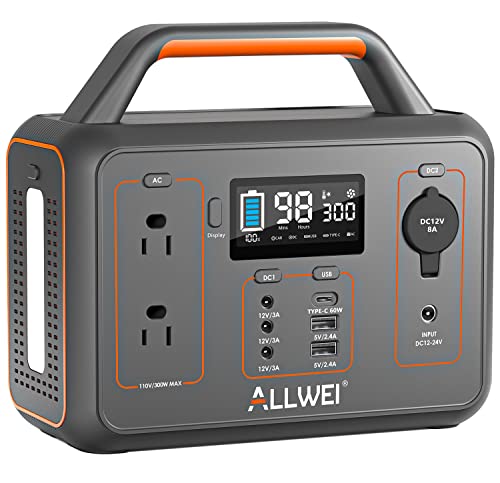
ALLWEI’s 280Wh battery provides up to 300W continuous power across 9 outputs, including two AC outlets and USB-C ports. It supports multiple recharging modes—AC wall, car, and solar panel—facilitating flexible charging when outdoors. The built-in MPPT controller helps optimize solar charging, which can be beneficial for longer camping trips where sun exposure is steady. The unit’s compact design, silent operation, and a selection of DC and USB outputs make it a versatile choice for campers who want straightforward power for lights, charge banks, small fans, and essential devices without carrying a heavy generator.
Anker Portable Power Station SOLIX C300

The Anker SOLIX C300 blends a compact 288Wh LiFePO4 battery with a robust 300W continuous output and a 600W surge, delivering reliable power for camping essentials. It includes eight ports, with multiple USB-C options and both AC and car-style outputs, making it suitable for charging laptops, cameras, and small appliances. The LiFePO4 chemistry supports longevity and stability across many cycles, which is advantageous for frequent campers. Its design emphasizes travel friendliness, with a weight and form that suit backpacking or car camping where space is at a premium.
Buying Guide: Key Purchase Considerations
- Power needs: Assess your campsite’s typical loads. If you plan to run a mini-fridge or a small fan, prioritize higher wattage and stable sine-wave AC output. For lights, phones, and charging banks, a smaller unit with USB-C PD may suffice.
- Portability vs capacity: A 1000Wh model is powerful but heavier, ideal for longer trips or groups with multiple devices. Smaller 300–300W units are easier to carry but offer limited runtime. Choose based on the trip length and the number of people relying on power.
- Charging options: Look for devices with fast charging, multiple input methods (AC, car, solar). Solar-ready models extend camping life when a grid is unavailable.
- Battery chemistry and longevity: LiFePO4 batteries tend to offer longer lifespans and greater safety, which is valuable for frequent use or long-term outdoor use.
- Noise and footprint: If you’re camping near others, quieter models (often under 75 dB at a reasonable distance) improve the camping experience. Compact designs conserve tent space and reduce bulk in your pack or vehicle.
- Safety features: Overload protection, short-circuit protection, and smart BMS systems help prevent damage to devices and the power station itself. Check for protection against overheating and safe charging cycles.
- Expandability: Some units permit solar panel integration or external battery packs. If you foresee long trips with limited access to charging, consider expandability options.
In summary, the best generator for tent camping depends on your priorities: maximum runtime and appliance power (Explorer 1000 v2), extreme portability (MARBERO 88Wh or Takki-style setups), or a balanced multi-port unit (Anker SOLIX C300). Each option above offers distinct strengths that fit common camping scenarios, from minimalist overnight stays to extended backcountry trips. When selecting, align power needs with weight, charging versatility, and safety features to ensure a dependable campsite experience.