
Garage floor paints come in epoxy, polycuramine, and latex-style epoxy acrylic formulas. This guide highlights reliable options for concrete floors in garages, workshops, and basements. It helps buyers choose based on durability, odor, cure time, and ease of application. The top picks include 5 products well-suited for different use cases, from quick-dry kits to high-build, long-lasting coatings. Use the table below to compare the best choices at a glance and then read detailed sections for each option.
| Product | Best For | Notes |
|---|---|---|
| Rust-Oleum 365186 Epoxyshield | Heavy-use garages | 2-part epoxy, glossy finish |
| Rust-Oleum 251965 Epoxyshield 1 Car | Smaller garages | 2-part epoxy, gloss finish |
| Rust-Oleum 293513 RockSolid Polycuramine | Low odor, fast cure | 20X stronger than epoxy |
| Rust-Oleum 318697 RockSolid Polycuramine | Low VOC, high gloss | 2.5 car kit, quick walk-on |
| KILZ 1-Part Epoxy Acrylic | Budget-friendly indoor/outdoor | One-part formula, satin finish |
Rust-Oleum 365186 Epoxyshield Garage Floor Coating Kit
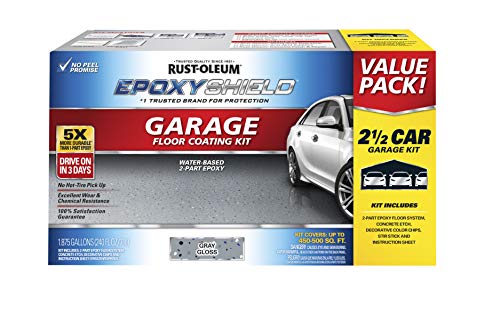
Best for: Medium to large garages that demand a long-lasting, highly durable surface. This 2.5 car kit uses a two-part epoxy formula noted for a glossy finish and strong protection. It is designed for interior concrete surfaces such as garages, workshops, and basements. The coating is described as five times harder than many single-part epoxy paints and is suitable for vehicle traffic after a cure period.
Why chosen: The kit’s two-part epoxy provides a robust, high-build coating with a glossy look that’s easy to clean. It’s appropriate for high-traffic areas and tools-and-parts environments where oil and chemical resistance matter. It cures to a walk-on state in about a day and vehicle-ready in a few days, reducing downtime.
Limitations: Requires proper surface preparation and mixing of components. Longer cure times may delay when a vehicle can drive on the surface. Follow ventilation and safety guidelines during application.
Rust-Oleum Epoxyshield 1 Car Garage Floor Kit
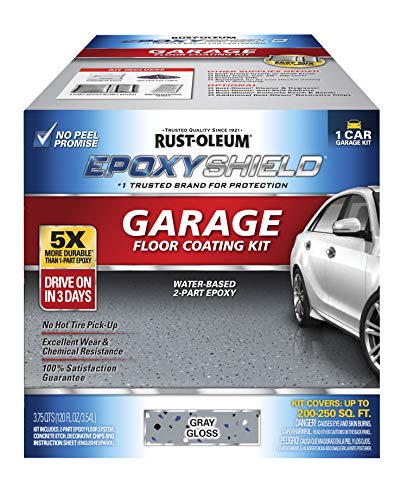
Best for: Smaller garages or first-time epoxy users who want a straightforward, durable coating. This 1-car kit uses the same two-part epoxy concept with a glossy finish. It provides strong protection for concrete surfaces and is easier to manage for a single-car space.
Why chosen: It mirrors the larger kit’s advantages in a smaller package, balancing durability with a more accessible price and application scope. The glossy coating enhances cleaning and provides long-lasting protection against wear and chemicals.
Limitations: It is designed for interior use; exterior exposure or high-UV lighting may affect longevity. Ensure thorough surface prep and even application to maximize results.
Rust-Oleum 293513 RockSolid Polycuramine
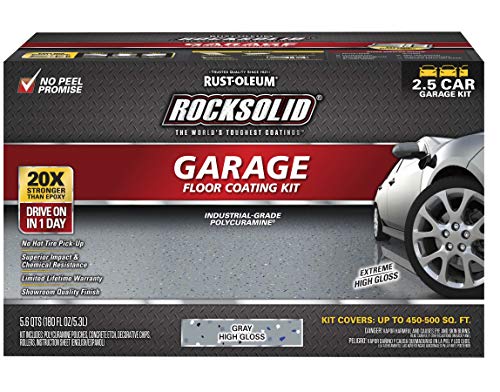
Best for: Buyers seeking a low-odor, low-VOC option with exceptional durability. The polycuramine formula is designed for interior concrete surfaces including garages, workshops, and basements, offering higher strength than traditional epoxy.
Why chosen: The product claims very high strength (20X stronger than epoxy) with self-leveling and buildable properties, enabling quicker project completion. It is packaged in two-part bursts for controlled mixing and curing times that support faster readiness.
Limitations: It may require careful mixing and proper ventilation due to solvent content. Surface preparation remains essential for bond and longevity.
Rust-Oleum 318697 RockSolid Polycuramine

Best for: Homeowners who want a high-gloss finish with strong protection and quicker walk-on times. This 2.5 car kit offers a durable polycuramine coating that’s self-leveling and buildable for DIY projects in garages and utility spaces.
Why chosen: It combines low odor with robust performance, enabling walk-on readiness within hours and vehicle readiness within a day. The kit is well-suited for those prioritizing speed without sacrificing durability.
Limitations: Like other polycuramine options, consistent mixing and correct surface prep are important to avoid uneven texture or color variance.
KILZ 1-Part Epoxy Acrylic Concrete Floor Paint

Best for: Budget-conscious buyers seeking a simple, ready-to-use option for indoor concrete surfaces like basements, garages, porches, and driveways. It’s suitable for interior and exterior use on horizontal surfaces.
Why chosen: The one-part epoxy acrylic formula reduces mixing complexity while offering resistance to hot tire pickup, scuffing, and fading. It provides a satin finish that looks clean and long-lasting on various concrete surfaces.
Limitations: Not ideal for vertical surfaces or areas with hydrostatic pressure or heavy forklift traffic. It’s best for residential use and modest, low-traffic spaces.
KILZ 1-Part Epoxy Acrylic Concrete Floor Paint, Silver Gray

Best for: Similar budget-friendly scenarios where a silver-gray tone is desired for contrast with workshop tools or storage. It’s a reliable option for indoor and outdoor horizontal concrete surfaces.
Why chosen: It mirrors the capabilities of the slate-gray variant with similar durability and ease of use, offering a satin finish that hides minor surface imperfections. It’s a practical choice for homeowners upgrading a garage or porch floor.
Limitations: As with other one-part products, curing depends on temperature and ambient humidity. Follow manufacturer guidelines for surface prep and recoating intervals.
Buying Guide
What type of garage floor coating should I choose? Consider these factors:
- Durability and traffic: For heavy vehicle traffic or workshops, two-part epoxy or polycuramine coatings provide superior hardness and chemical resistance.
- Odor and VOCs: If you’re sensitive to fumes or need to apply in a closed space, look for low-VOC polycuramine or low-odor epoxy products.
- Drying and cure times: Some kits allow quick walking on within hours, while vehicle readiness can take several days. Plan downtime accordingly.
- Finish and appearance: Glossy finishes look cleaner and easier to wipe down; satin finishes can better hide micro imperfections.
- Application complexity: One-part formulas are easier but often less durable; two-part systems demand accurate mixing and thorough surface prep.
- Surface prep: Proper cleaning, etching, and repairing cracks are essential for long-term adhesion and performance.
- Porous vs non-porous: Porous concrete benefits from a primer or patching before coating to ensure even coverage.
Frequently Asked Questions
- What is the difference between epoxy and epoxy acrylic garage floor paints?
Answer: Epoxy formulas often provide stronger, longer-lasting protection, while epoxy acrylic options offer easier application and lower odor, suitable for DIY projects with moderate traffic. - How long before parking on a coated garage floor?
Answer: It varies by product, but many epoxy kits are walk-on ready within 8-24 hours and vehicle-ready within 1-3 days after application, depending on cure conditions. - Can these coatings be used on basement floors?
Answer: Yes, most interior concrete surfaces like basements are compatible, provided the surface is properly prepped and the product is recommended for indoor use. - Do I need a concrete primer before applying these coatings?
Answer: Some products require priming or patching, especially very porous or damaged concrete. Always follow the product’s instructions. - Are low-VOC options as durable as traditional epoxy coatings?
Answer: Modern polycuramine or low-VOC epoxy formulations can offer excellent durability with reduced odor and emissions, though performance varies by product and conditions. - What maintenance is needed after coating?
Answer: Regular cleaning with mild detergents and avoiding harsh solvents will help preserve gloss and durability; address chips or wear promptly to prevent further damage.