
Choosing the right floor sander for hardwood floors means balancing power, dust control, reach, and ease of use. This guide highlights five sanders that are well-suited to prep and refinishing hardwood surfaces, from lightweight drywall-style machines that can handle occasional floor work to dedicated floor sanders. Each option is explained with who it’s best for, what to expect, and any notable limitations. Use this to compare suitability for DIY projects, professional tasks, and cramped or high-ceiling spaces.
Summary of chosen products
| Product | Best For | Why It Stands Out |
|---|---|---|
| MYTOL Drywall Sander | Homeowners with mixed projects | Strong 7.2A motor, variable speed, built-in dust system |
| KUPERIA Drywall Sander | Dust control enthusiasts | Dual vacuum system, LED lighting, extendable reach |
| Oreck Commercial Orbiter | Flat, broad floors | Multi-surface capability, random orbital motion, easy maneuverability |
| SKIL 5” Random Orbital Sander | Budget-friendly projects | Lightweight, cyclonic dust box, variable speed |
| GEVEELIFE Drywall Sander | Efficient dust collection | Powerful 880W motor, 5 speeds, 360° LED |
MYTOL Drywall Sander With Dust Vacuum

The MYTOL sander is powered by a 7.2-amp copper motor and offers 900–1800 RPM across six speed levels. It includes a vertical suction dust system and a 10-hole sanding disc design, plus a 3-in-1 dust management structure (ring cleaning brush, flexible hose, and dust bag). This model is best for buyers who need a versatile tool that can handle drywall, floors, and ceilings with decent dust control in medium-duty tasks. Caution: you may encounter static buildup in dry environments, which is normal.
Who it’s best for: DIYers performing mixed projects around the home, including light floor sanding and ceiling work. Best for those who value a simple auto-dust system and extendable handle for comfortable operation.
Key considerations
- Strength: 7.2A copper motor provides solid sanding power for small to medium areas.
- Dust control: Built-in vacuum design reduces cleanup, though it may require bags or hoses to stay efficient.
- Versatility: Suitable for drywall, floors, and ceilings; not a dedicated hardwood floor sander.
KUPERIA Drywall Sander With Extendable Handle

The KUPERIA sander offers a robust 8.5-amp copper motor and 7-speed control (800–1800 RPM). Its dual vacuum system (two channels) aims for high dust-collection efficiency, reportedly up to 97–99% when used correctly. An LED light strip and detachable chassis help reach corners and work in low-light spaces. This tool is best for users who prioritize dust containment and flexible reach in complex projects. Caution: dry environments may cause minor static buildup.
Who it’s best for: Users focused on keeping the work area clean and who need a tool that reaches tight corners and ceilings with consistent dust control.
Key considerations
- Dust vacuum: Dual-channel system designed for minimal dust leakage.
- Reach: 360° LED light helps in dark spaces; detachable chassis improves access to corners.
- Versatility: Works on drywall and plaster; primarily a drywall tool with floor-capable design.
Oreck Commercial Orbiter Hard Floor Cleaner

The Oreck Orbiter is a commercial-grade cleaner designed for multiple floor types. Its random orbital drive helps minimize brush marks and swirls on hardwoods while allowing for deep cleaning. The model features a wide cleaning path and a long cord, making it suitable for larger rooms or commercial spaces. Best for buyers seeking a single tool for broad floor care rather than a dedicated belt sander. Caution: It is not a user-friendly tool for precise edge work or detailed refinishing.
Who it’s best for: Businesses or homeowners needing a versatile floor-cleaning solution on large areas, including wood, tile, and carpeted floors.
Key considerations
- Versatility: Multi-surface capability beyond wood; good for maintenance and stripping tasks.
- Maneuverability: Random orbital motion reduces visible sanding marks on flat surfaces.
- Edge work: Limited edge-detail performance; not a substitute for dedicated edge sanders.
SKIL 5” Random Orbital Sander

The SKIL SR211601 provides a compact 2.8-amp motor and 13,000 orbits per minute, with a cyclonic dust container for easier clean-up. Variable speed control allows tailored performance for different materials, including hardwoods. This option is best for budget-conscious projects where a lightweight tool is beneficial. Caution: it may lack the heavy-duty power of larger models for extensive floor refinishing.
Who it’s best for: DIYers or hobbyists tackling small to medium hardwood prep projects on flat surfaces.
Key considerations
- Power/size: Lightweight, suitable for shorter sessions and tight spaces.
- Dust management: Cyclonic dust box is easy to empty and maintain.
- Application: Ideal for general sanding; not a heavy-duty floor refinisher.
GEVEELIFE Drywall Sander With Vacuum
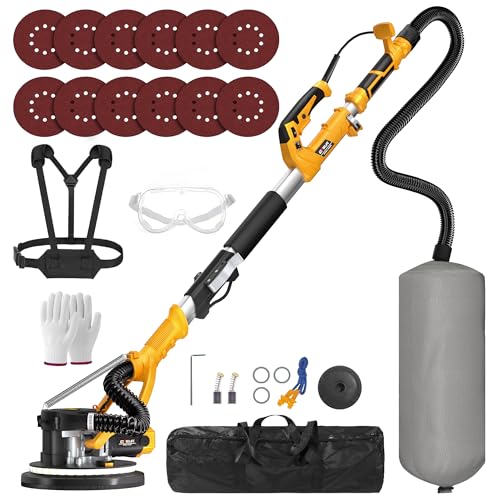
The GEVEELIFE sander features an 880W copper motor and five variable speeds from 1000 to 2100 RPM. It includes a vacuum dust collection system that captures around 98.5% of dust with a 10-hole sanding disc. The tool’s 360° rotating disc, 120° pivoting pole, and foldable handle provide flexible access to walls, ceilings, and floors. It suits buyers who value strong dust control and multi-angle access for complex surfaces. Caution: static electricity may occur in dry environments.
Who it’s best for: Professionals or serious DIYers who need powerful, dust-controlled sanding across walls, ceilings, and floors with good reach.
Key considerations
- Dust control: Built-in vacuum with high dust capture efficiency.
- Angle accessibility: 360° disc and pivoting pole aid tight corners and ceilings.
- Noise and heat: Like many powerful sanders, expect typical operating noise and heat with extended use.
Buying Guide: What To Consider When Selecting A Floor Sander For Hardwood
What surfaces will you sand?
If you’re primarily refinishing hardwood floors, a dedicated floor sander or a random-orbit sander with appropriate grit papers is ideal. For mixed tasks (walls, ceilings, floors), tools with adjustable speed and good dust collection help keep cleanup manageable.
How important is dust management?
Dust control is crucial for hardwood finishing. A vacuum-assisted unit or a tool with a robust dust-collection system reduces mess and airborne particles. Look for models with high collection efficiency and compatible dust bags or hoses.
What about reach and accessibility?
Ceilings and corners demand extendable handles, 360° swinging heads, or detachable chasses. For tight spaces, LED lighting and pivoting heads improve visibility and accuracy.
Power, speed, and grit compatibility
Higher amperage generally means more sanding power, but you’ll want variable speeds to adapt to different wood densities. Confirm sanding pads and grit compatibility match the intended hardwood finish project.
Safety and practicality
Consider weight, ease of use, and noise level. A tool that’s too heavy can cause fatigue in long sessions, while excessive vibration can affect control on delicate finishes.
Which product fits your project scope?
– For mixed-use versatility and dust containment: MYTOL or GEVEELIFE offer robust options with vacuum features and adjustable speeds.
– For tight corners and bright illumination: KUPERIA shines with the detachable chassis and LED strip.
– For broad area cleaning and maintenance: Oreck Orbiter provides multi-surface capability beyond sanding alone.
– For budget-oriented hobby projects: SKIL offers a lightweight, cost-effective choice with basic dust handling.
FAQ
- What is the best sander for hardwood floors?
- Is dust collection essential for floor sanding?
- Can drywall sanders be used on wood floors?
- Should I choose variable speed?
- Are belt sanders better for floors than orbital sanders?
- What maintenance is needed after sanding hardwood?
The best option depends on the project scope: for refinishing, random-orbit sanders with proper grit sets are common; for large flat floors, a floor sander or orbital sander with dust control is advantageous.
Yes. Effective dust collection improves finish quality and minimizes cleanup time.
They can handle light floor sanding, but dedicated floor sanders or orbital sanders are typically more efficient for hardwood refinishing.
Yes. Variable speed helps adapt to different wood densities and finishes, improving control and reducing burn-through risk.
Belt sanders remove material quickly but can be less forgiving; orbital sanders are easier to control for finishing and edges.
Clean and replace sanding discs as needed, check dust collection components, and store the tool in a dry place to prevent rust and wear.