
Flat, accurate surfaces are essential for precision woodworking. The flattening router bits below are designed to plane spoilboards, slabs, and hard-to-reach panels with clean, level results. We’ve highlighted five highly-rated options that balance durability, insert longevity, and ease of use, making them solid choices for hobbyists and approaching-pro woodworkers alike. The summary table captures key specs to help you compare at a glance.
| Product | Brand | Cut Diameter | Shank | Notable Feature |
|---|---|---|---|---|
| SICWOOD Slab Flattening Router Bit | SICWOOD | 2″ | 1/2″ | Replaceable carbide inserts, 6-wing design |
| BINSTAK CNC Spoilboard Surfacing Bit (2″) | BINSTAK | 2″ | 1/2″ | Three-wing with replaceable inserts, anti-kickback |
| SpeTool 2+2 Flute Slab Flattening Bit | SpeTool | 1-1/4″ | 1/4″ | ATS coating, 2+2 carbide inserts for longevity |
| POWERTEC Slab Flattening Router Bit | POWERTEC | 2″ | 1/4″ | Tungsten carbide-tipped edges, anti-kickback design |
| BINSTAK 1-3/8″ Slab Flattening Bit | BINSTAK | 1-3/8″ | 1/4″ | 2+2 carbide inserts, cost-effective replaceable edges |
Note: Each product listed offers replaceable carbide inserts to extend tool life and reduce downtime from dull blades. When choosing a bit, consider the surface area you typically flatten, the compatibility with your router’s shank size, and how quickly you expect to resurface large panels.
SICWOOD Slab Flattening Router Bit
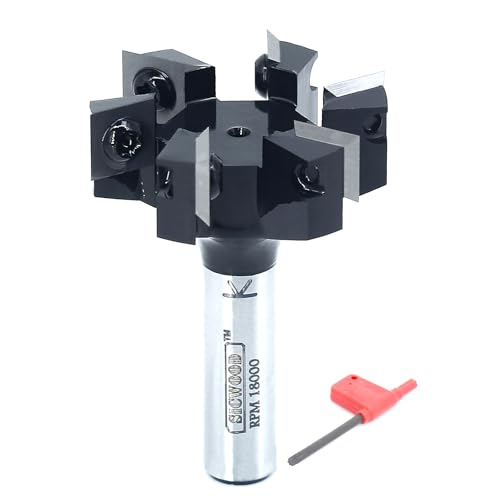
The SICWOOD slab flattening router bit features a 1/2-inch shank and a 2-inch cutting diameter, supported by six cutting wings. Carbide inserts measure 12x12x1.5 mm, designed for high hardness and sharpness to deliver smooth cuts. A max RPM of 18,000 enables efficient material removal while maintaining control. Replaceable four-sided inserts (1.5 mm) extend life and keep the bit sharp longer, reducing downtime. This bit is well-suited for spoilboard surfacing, flycuts, and slab leveling in CNC or hand-held setups.
Construction emphasizes durability: solid carbide inserts provide consistent performance under heavy use, and the six-wing geometry aims to balance aggressiveness with surface quality. Users can rotate inserts as edges dull, maximizing tool longevity. The design helps produce flat, even surfaces with less need for subsequent sanding, making it a practical choice for shop workflows focused on spoilboard maintenance and slab flattening.
BINSTAK CNC Spoilboard Surfacing Bit, 2″ Diameter

The BINSTAK option offers a 2-inch cutting diameter with a 1/2-inch shank, featuring a 3-wing carbide arrangement and an anti-kickback design for stable operation. The body is hardened steel with a heat-resistant coating to minimize resin buildup, facilitating cleanup. It’s designed to resurface spoilboards and flatten slabs efficiently, while also coping with trimming and slotting tasks. The replaceable carbide inserts extend tool life by allowing edge rotation rather than complete bit replacement, delivering value for frequent users.
With a focus on industrial-grade durability, this bit is suitable for heavy-duty woodworking tasks in workshop, cabinet-making, and furniture production environments. Its balanced geometry helps maintain a smoother cut and consistent surface texture, reducing the need for extra passes or sanding, which can speed up production schedules.
SpeTool 2+2 Flute Slab Flattening Bit

The SpeTool 2+2 flute slab flattening bit uses a 1-1/4 inch cutting diameter with a 1/4 inch shank and carbide inserts arranged as 2+2. Each insert is 10x10x2.2 mm, with ATS coating to boost wear resistance and reduce heat buildup. The design allows for extended tool life by enabling edge changes rather than replacing the entire bit, which is particularly advantageous for frequent flattening tasks on softwood, hardwood, and MDF. The cutter configuration aims for efficient stock removal while delivering a smooth, level surface.
ATS-coated carbide inserts improve longevity in demanding shop conditions, and the 2+2 edge layout provides a balanced cut to minimize chatter. This bit excels on large spoilboards and slab surfaces where consistency and finish are critical. For users who routinely re-surface and flatten, SpeTool offers a reliable option with predictable performance and lower long-term cost per project.
POWERTEC Slab Flattening Router Bit

The POWERTEC slab flattening bit provides a 2-inch cutting diameter with a 1/4-inch shank and a 1/2-inch cutting depth. It features a solid hardened steel body and tungsten carbide-tipped cutting edges for durability and precise cuts. An anti-kickback design enhances safety and control during heavy passes on spoilboards and slabs. This bit is designed to handle large surface areas efficiently, making it suitable for professional shop settings where consistent flattening and planing are routine tasks.
Durability and cut quality are emphasized through high-grade materials and engineering that reduces resin buildup and maintains edge sharpness over time. The bit’s geometry supports smooth, even stock removal, contributing to a reliable flattening experience across various wood types and thicknesses.
BINSTAK 1/4 Inch Shank Slab Flattening Bit, 1-3/8″ Cutting Diameter

This BINSTAK option uses a 1/4-inch shank with a 1-3/8-inch cutting diameter and 2+2 carbide inserts. The insert design enables edge rotation to extend life, while the solid steel body provides durability and anti-kickback protection. The 1-3/8 inch cut is well-suited for flattening wider slabs and spoilboard surfaces, delivering a balanced cut with smooth finish. Replacing inserts instead of the entire bit is a cost-conscious approach for frequent users.
The tool is marketed as a robust choice for industrial woodworking tasks, including spoilboard resurfacing, planing, and heavy-duty flattening. Its design emphasizes consistent performance and an economical lifecycle, making it a practical option for shops looking to optimize tool replacement costs while maintaining surface quality.
Buying Guide: Key Purchase Considerations
- Cutting diameter vs. spoilboard size: Larger diameters cover more surface in fewer passes but require sturdier setups and capable routers.
- Shank size compatibility: Ensure the shank matches your router (1/4″ or 1/2″ is common); some bits support both via adapters, but performance varies.
- Insert design and life: Replaceable carbide inserts extend tool life; assess the number of usable edges and ease of replacement.
- Coating and resin resistance: ATS or other coatings reduce resin buildup and heat, aiding cleanup and longevity.
- Anti-kickback features: Consider bits with anti-kickback designs for safer operation on large spoilboards.
- Workpiece material: Softer woods may dull inserts more quickly; select a bit with higher insert edge count for rougher woods.
- Applications: Confirm suitability for spoilboard resurfacing, slab flattening, trimming, dadoing, and slotting to maximize versatility.
When selecting a flattening router bit, weigh the volume of work, typical panel sizes, and your router’s power. For shops performing frequent spoilboard maintenance or large-scale flattening, investing in a set with multiple insert configurations can provide flexibility and cost efficiency. Balanced designs that minimize chatter will improve surface quality and reduce post-work sanding time, contributing to a more efficient workflow.