
Answering your search for reliable fire resistant gloves: this guide highlights five top options that balance heat protection, dexterity, and comfort. These gloves are best for grill masters, welders, campers, and DIY enthusiasts who handle hot equipment, embers, or welding sparks. Each pick shows how the design supportsforearm protection, grip, and flexible movement in demanding environments.
Summary table of selected products:
| Product | Best For | Heat Rating | Length | Notes |
|---|---|---|---|---|
| RAPICCA Fireplace Gloves | Fireplace and wood stove users | 932°F (500°C) | 16 inches | Long forearm protection |
| Comsmart BBQ Gloves | High-temp grilling | 1472°F (804°C) | Short | Non-slip silicone, machine washable |
| WZQH 16-Inch Gloves | Shop & welding tasks | 932°F (500°C) | 16 inches | Sturdy leather, long sleeve |
| DKHDBD BBQ Fireproof Gloves | Oven & grill handling | 1472°F (804°C) | 13.8 inches | Three-layer design with silicone |
| ONETIGRIS Welding Gloves | Welding & forge work | 932°F (500°C) | Most models around 14 inches | Comfortable lined leather |
RAPICCA Fireplace Gloves: 16 Inch Leather Fireproof Protection

Best for: Home heat tasks around fireplaces and wood stoves. This glove set offers extended forearm protection with a 16-inch length and a 7.5-inch sleeve to guard against open flames and hot coals. The layered construction—fireproof leather exterior, aluminum foil insulation, and cotton lining—aims to maintain dexterity at fingertip level.
Why chosen: The multi-layer build provides strong heat resistance up to 932°F (500°C) while preserving grip and tactile sensitivity. Suitable for handling poker tools, logs, or hot metal with confidence. Caution: bulky padding may reduce fine motor accuracy for very small items.
Comsmart BBQ Gloves: 1472°F Heat Resistant
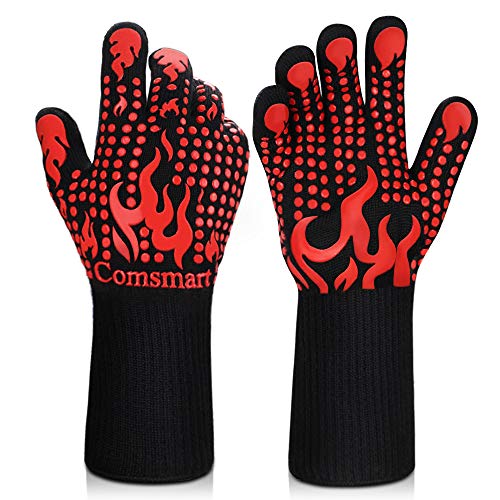
Best for: High-heat grilling and oven handling. These gloves advertise an impressive instant heat resistance up to 1472°F, making them a strong choice for tasks like searing, broiling, or moving hot pans from the oven.
Why chosen: The design emphasizes a non-slip silicone exterior, a durable inner aramid layer, and a breathable cuff for versatile kitchen use. Caution: vigilance is needed to avoid prolonged exposure to direct flame, and fit may vary with hand size due to stretchable design.
WZQH 16-Inch Leather Welding Gloves
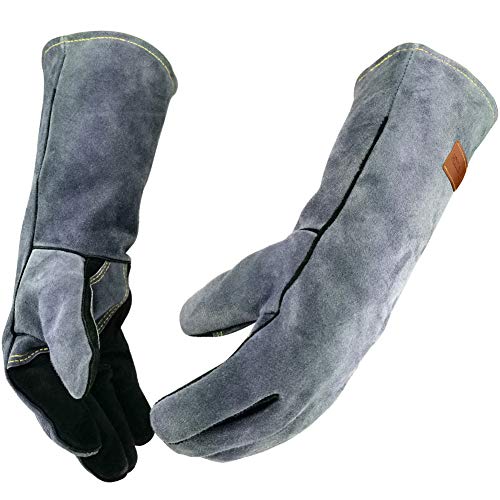
Best for: Welding, forging, and high-heat workshop tasks requiring long forearm coverage. The gloves use genuine cowhide leather with an aluminum foil liner and cotton interior to provide heat resistance and abrasion protection.
Why chosen: Extra-long 16-inch design shields forearms against sparks and hot debris. Caution: the heavy-duty construction may limit some fingertip flexibility for very delicate tasks.
DKHDBD BBQ Fireproof Gloves
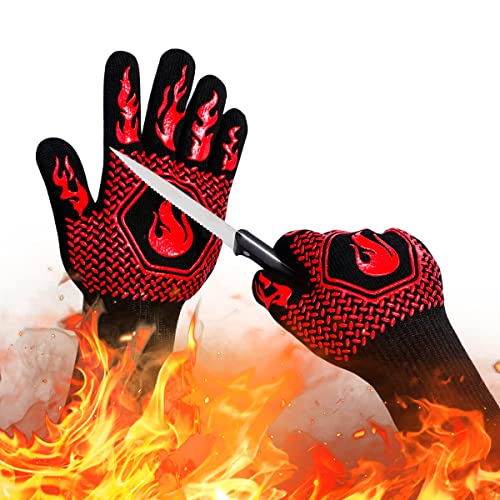
Best for: Oven mitts and grill handling with strong heat resistance and a silicone grip. The three-layer structure combines silicone, aramid fiber, and breathable inner lining for durability and comfort.
Why chosen: The gloves claim up to 1472°F for brief holds, with emphasis on a secure grip and washability. Caution: avoid direct, prolonged exposure to flames to prevent heat transfer to the hands.
ONETIGRIS Welding Gloves: Durable Leather Work Gloves

Best for: Welding, forge work, and camping with a focus on comfort and dexterity. These gloves use A-grade cowhide with fireproof treatment and a breathable cotton lining for extended wear.
Why chosen: Features such as Velcro cuffs and reinforced stitching provide secure fit and durability. Caution: sizing varies; ensure the glove length and fit suit personal hand measurements for optimal protection.
Buying Guide
What tasks will you perform?
Determine whether you need gloves primarily for grilling, oven handling, wood stove tending, welding, or campfire use. Different tasks demand varying lengths and levels of forearm protection.
How much forearm protection is needed?
Gloves range from about 13 to 16 inches in length. Choose longer sleeves (16 inches) for welding and intense fire exposure, or shorter styles (13–14 inches) for cooking and kitchen use.
What materials balance protection and dexterity?
Common builds include leather outer layers with aluminum foil insulation and cotton linings. Silicone coatings offer non-slip grip for wet or greasy items but can be less breathable. Consider aramid fibers for heat resistance and durability.
Is grip or washability more important?
Non-slip silicone surfaces improve grip on hot, wet, or greasy items. Machine-washable fabrics simplify cleaning for kitchen and barbecue applications, while flame-resistant stitching and reinforced seams extend glove life in workshops.
Fit and comfort considerations
Look for gloves with adjustable closures, cushioned palms, and breathable linings. A secure cuff helps prevent sparks from entering, while finger dexterity impacts the ease of handling small tools or food items.
FAQ
- What is the typical heat resistance rating for these gloves? Many options feature protection up to 932°F (500°C) or higher briefly, with some models claiming 1472°F (804°C) for short holds.
- Are these gloves suitable for welding? Yes, several models are designed for welding tasks, offering extended forearm protection and reinforced stitching.
- Do the gloves provide a non-slip grip? Several gloves incorporate silicone or textured palms to improve grip on hot or greasy items.
- How should I choose the right length? For intense heat or welding, longer gloves (14–16 inches) are safer. For cooking or oven use, 13–14 inches often suffice.
- Are these gloves easy to clean? Some gloves are machine washable, while others require hand washing; check the product details for care instructions.
- What should I avoid using these gloves for? Avoid prolonged direct exposure to open flames beyond the stated limits to prevent heat transfer and possible burns.