
Choosing the right fiberglass insulation for walls can improve comfort, energy efficiency, and indoor air quality. This guide highlights top fiberglass insulation options that fit typical American wall assemblies, focusing on kraft-faced batts and roll formats for 2×4 and 2×6 walls. Each product is selected for performance, ease of installation, and accessibility for DIY or professional projects. Use theBuying Guide below to compare R-values, coverage, and installation considerations to match your climate and home design.
Summary of chosen products:
| Product | Type | Typical Use | Approximate Coverage |
|---|---|---|---|
| Owens Corning R-19 Faced 23×48 Batt | Fiberglass Batt | 2×6 walls or floors | 1280 sq ft (10 bags) |
| Owens Corning R-13 Pink Kraft Faced Roll (15×32 ft) | Faced Roll | 2×4 walls | Varies by roll length |
| Owens Corning R-13 Pink Kraft Faced Roll (3-Pack) | Faced Roll | 2×4 walls | Varies by pack |
| Owens Corning R-19 Kraft Faced 16×96 Exterior Walls | Fiberglass Batt | 2×6 exterior walls | 853 sq ft (10 bags) |
| SmartSHIELD Reflective Insulation Roll 48 x 25 ft | Reflective Insulation | Radiant barrier and insulation combo | Up to R-23 (one layer) |
Owens Corning R-19 Faced 23×48 Fiberglass Batt Insulation

R-19 kraft-faced batt insulation designed for 2×6 walls and certain floor applications. This product ships as multiple bags to cover large areas, with a moisture barrier suitable for exterior surfaces. The kraft facing helps with vapor control and installation alignment. The package notes a total of 1280 square feet across 10 bags, making it a practical option for mid-to-large wall cavities. Placement should follow local building codes and framing layouts to ensure full coverage and minimum compression.
Key features include a built-in moisture barrier and the ability to pair with multiple bags for extended wall coverage. The product is designed to maintain thermal performance and reduce heat transfer through wall assemblies, contributing to energy efficiency in homes located in varied climates.
Owens Corning R-13 Pink Kraft Faced Roll 15 in. x 32 ft

This R-13 faced insulation roll is sized for quick exterior/internal 2×4 wall installs. The pink fiberglass is formaldehyde-free and soft to the touch, making handling more comfortable during installation. Its foam-free, kraft-faced design provides straightforward vapor control and helps reduce thermal bridging across standard 2×4 wall cavities. The roll format is convenient for long wall runs and retrofit projects where rolling out insulation is preferred over batt cutting.
With easy exterior/interior installation and sound-dampening benefits, this product balances performance with homeowner-friendly handling. It’s well-suited for projects where space and accessibility limit more bulky batt configurations.
Owens Corning R-13 Pink Kraft Faced Roll (3 Pack)
This 3-pack of R-13 faced rolls provides additional wall insulation options for 2×4 cavities, especially useful for larger interior projects or multi-room renovations. The kraft facing yields reliable vapor control, while the pink fiberglass maintains a soft touch for easier handling during installation. As with single rolls, it’s best installed with even coverage and careful bending around studs to prevent gaps.
These rolls are designed to work well in climates where 2×4 walls predominate, balancing cost, ease of installation, and thermal performance across standard residential structures.
Owens Corning 853 SQFT R-19 Kraft Faced Insulation

Designed to fit 2×6 exterior walls, this 853 sq ft kit uses Kraft-faced batt insulation in a dual-bag setup (two bundles of five bags each). The product is identified as R-19 type, with dimensions 16W x 96L x 6.25 inches thick. The bulk packaging offers cost efficiency for larger exterior wall projects while maintaining a reliable moisture barrier and vapor control through kraft facings. The coverage aligns well with standard 2×6 framing in modern homes and additions.
Performance expectations include stable thermal resistance, ease of installation in wall cavities, and compatibility with typical stud spacings. This option supports energy-saving goals in climates with significant seasonal temperature variation.
SmartSHIELD Reflective Insulation Roll 20mm

This reflective insulation roll uses a foam core and radiant barrier to reflect radiant energy, offering a combined approach of insulation and vapor management. It can contribute to overall wall performance by reducing heat gain in hot climates and heat loss in cooler seasons when paired with traditional insulation materials. The package highlights a R-value up to 23 with one layer and up to 29 with two layers, making it a versatile option for retrofit projects where space is limited or additional vapor diffusion control is desired.
The product is designed to meet or exceed ASTM standards and features corrosion resistance through a protective coating on the foil surface. It can be a strategic addition to wall assemblies that aim to maximize energy efficiency without adding excessive bulk.
SmartSHIELD Reflective Foam Core Insulation Roll (5mm)
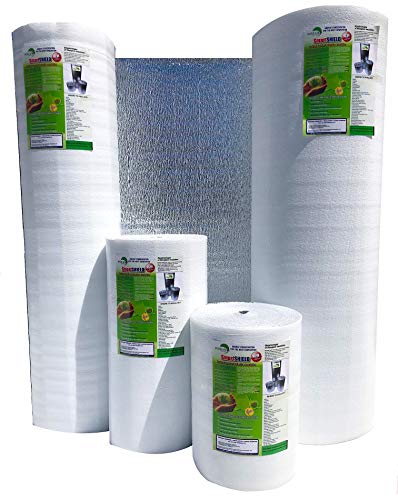
Another SmartSHIELD option combines insulation, radiant barrier, and vapor barrier into a single product. The unit is a 5mm foam core roll, designed for quick installation and notable radiant reflectivity. The product claims an R-value up to 15.67 with one layer and emphasizes a clean white finish that requires no painting. This is suitable for spaces where a compact, all-in-one solution is advantageous, such as retrofits or retrofit attic accesses that tie into wall assemblies.
Consider its compatibility with existing wall insulation and vapor barriers to ensure that layering does not create unintended moisture paths. It complements traditional fiberglass where space is constrained or where radiant heat transfer dominates the climate profile.
Buying Guide: Key Purchase Considerations For Fiberglass Insulation In Walls
When selecting fiberglass insulation for walls, consider R-value per inch, cavity depth, and the wall type (2×4 vs 2×6). Kraft-faced products provide vapor control but require proper sealing at joints to prevent gaps. Roll formats can simplify long runs and retrofit work, but batt systems may offer easier cutting around outlets and irregular stud spacing.
Factors to compare across products include: R-value and thickness, moisture and vapor barriers, fire safety ratings, formaldehyde-free formulations, and environmental impact of the insulation fibers. For exterior walls, ensure compatibility with house wraps and weather barriers. If radiant barriers are used, plan for layering and ventilation to avoid moisture entrapment.
Installation considerations: wear protective gear to handle fiberglass dust, cut precisely with a utility knife, and compress only in cases where a test build confirms no gap creation. Avoid compressing insulation in wall cavities, as this reduces R-value and air sealing performance. For DIY projects, align insulation runs with stud spacing, and seal edges with compatible tape or sealant to minimize air leakage.
Performance perspectives: in colder climates, higher R-values and deeper cavities often yield better energy savings. In hot climates, radiant barriers or reflective insulations can significantly reduce cooling loads when used alongside traditional fiberglass. For sound control, consider adding thicker batts or combining with acoustic panels in areas with high noise levels, while noting that dedicated soundproofing products may offer superior NRC ratings.
Summary strategies: prioritize R-19 or R-13 options for common 2×4 and 2×6 wall assemblies, and assess whether reflective or multilayer solutions fit within your budget and climate goals. Always verify local code requirements for vapor diffusion, insulation installation, and fire safety standards before purchasing.