
Answer: If you’re tackling drywall sanding, a dustless drywall sander with an integrated vacuum system is essential for a cleaner, healthier workspace. These tools minimize airborne dust, protect surfaces, and reduce cleanup time. The top picks below are best for contractors, DIY homeowners, and hobby renovators who want efficient dust control, reliable suction, and adjustable speeds for different materials.
Summary of top picks
| Product | Best For | Key Benefit |
|---|---|---|
| Hyde Tools 09165 Dust-Free Drywall Vacuum Hand Sander | Small jobs, tight spaces | Attachable to any wet/dry vacuum; EasyClamp for quick screen changes |
| Drywall Sander, 2026 Upgraded 8-Amp, IMQUALI | High ceilings, variable speeds | 7-speed control; built-in vacuum; extendable handle |
| Gioventù Dustless Drywall Sander, 780W | Medium to large areas | Integrated auto vacuum; 26ft cord; long extendable rod |
| Drywall Sander, Protmex 1000W | High-efficiency sanding | Vacuum dust collection; 6 speeds; foldable handle |
| VEVOR Drywall Sander, 800W | Budget-friendly dust control | Automatic vacuum system; 1200-2300 RPM; LED lights |
Hyde Tools 09165 Dust-Free Drywall Vacuum Hand Sander

The Hyde 09165 is designed for hand-sanding tasks that require dust control. It works with any compatible wet/dry vacuum, helping to keep furniture, floors, electronics, and lungs free from drywall dust. A key benefit is the EasyClamp system for quick sanding screen changes, reducing downtime between grit changes. Best for smaller projects, corner work, and spots where a bulky sander isn’t practical. A potential limitation is the need for a separate vacuum; it depends on an external power source and vacuum compatibility.
Drywall Sander, 2026 Upgraded 8-Amp IMQUALI

IMQUALI’s 2026 upgraded model packs an 8-amp copper motor and 7-level variable speed (800–1800 RPM) to adapt to drywall, ceilings, and plaster. It includes an auto dust vacuum system with a 10-hole disc design that claims up to 99% dust capture when used correctly. The telescopic, foldable design and lightweight build (about 8.59 pounds for the sander) support easy storage and transport. Choose this for larger rooms or ceilings where consistent suction and adjustable speed improve results; avoid if you prefer a lighter, single-height tool for small tasks.
Gioventù Dustless Drywall Sander With Auto Vacuum

This model integrates an auto vacuum dust collection system and a 26-foot power cord, enabling broader reach in one session. The 780W motor and 7-speed control (900–1800 RPM) offer flexible sanding for surfaces including drywall, ceilings, and plaster. A foldable ergonomic design with an adjustable aluminum extension rod supports reaching high walls and ceilings. Use this when long reach and continuous dust extraction are priorities; note that users should maintain the sander parallel to surfaces to minimize dust leakage.
Protmex Drywall Sander, 1000W
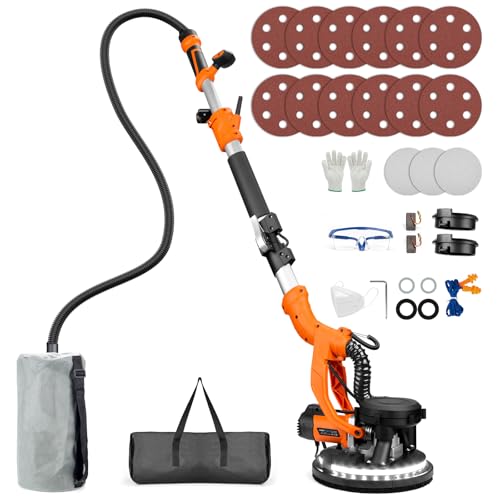
The Protmex sander uses a 1000W copper motor and offers six speeds from 800 to 2200 RPM for versatile finishing across drywall, paint-coated walls, ceilings, and plaster. It includes a built-in vacuum system and a 6-hole sanding disc design to reach up to 98.5% dust suction, supporting a cleaner work environment. The retractable aluminum pole extends from 4.9 to 6.2 feet for high ceilings, reducing ladder use. Best for heavy-duty sanding sessions; avoid if you need the lightest possible tool for small touch-ups.
Goldblatt Dust Free Hand Sander
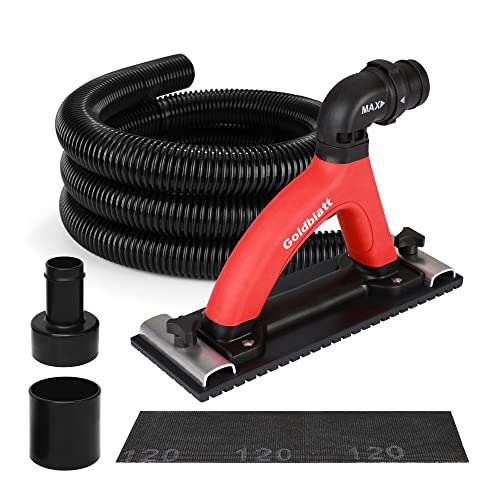
Goldblatt’s Dust Free Hand Sander offers a 6.5-foot hose and 360° pivoting elbow for easy operation on vertical surfaces. It emphasizes dust-free sanding by attaching to a vacuum and using a compatible sand screen; however, access to a vacuum is assumed. This option is well-suited for users who want a hands-on hand-sander with flexible hose articulation and a longer reach. It’s a solid pick for spot work or irregular surfaces but may be less ideal for broad, high-ceiling projects without a robust vacuum setup.
HYDE 9160 Dust-Free Sponge Sander
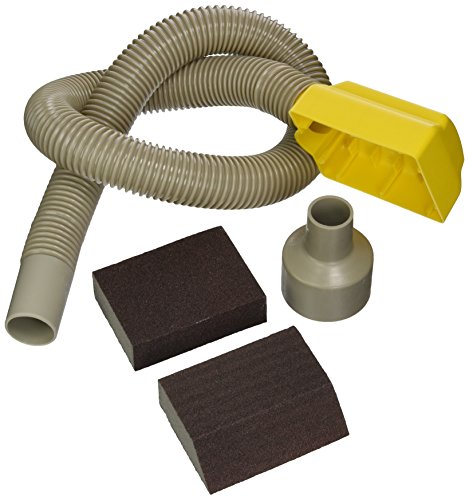
The HYDE 9160 is a compact, dust-free sponge sander that includes two medium grit sponges and a vacuum hose with adapter. It is best for light detailing, edges, and delicate surfaces where minimal dust is critical. It’s the most portable option among the list, making it ideal for quick touch-ups or tight spaces; the limitation is that it offers less debris capacity and suction than motorized belt-style sanders.
IMQUALI 2026 Upgraded 8-Amp Model

IMQUALI’s 2026 upgrade continues to emphasize a foldable, lightweight design with enhanced suction and a 7-speed range (800–1800 RPM). The longer extension and LED lighting improve visibility and reach for corner work and popcorn ceiling removal. It’s a balanced choice for users who want reliable performance with a modern foldable design; consider lighter models if you predominantly do low-height tasks.
Buying Guide: Key Purchase Considerations
What should you look for when selecting a dustless drywall sander?
- Dust collection efficiency: Prefer models with built-in vacuum systems or automatic dust collection that claim high removal rates. Check compatibility with common shop vacs and the availability of replaceable dust bags or filters.
- Power and speed control: A strong motor (800–1000W range) with multiple speed settings helps tailor sanding to drywall, plaster, or paint coatings. Variable speed is especially helpful for avoiding gouges on delicate surfaces.
- Reach and ergonomics: Telescoping handles, foldable designs, and lightweight builds reduce fatigue and enable sanding ceilings or tall walls without ladders or excessive maneuvering.
- Disc or pad design: Look for a 6–10 hole dust disc design, which can improve suction, along with compatible sandpaper grits for different finishing needs.
- Cord length and mobility: Long cords (20–26 ft) and retractable extensions save time moving between outlets or sections of a room.
- Maintenance and accessories: Consider the availability of replacement skins, sponges, or sanding discs and how easy it is to change screens with clamps or twist-lock systems.
Choosing by use-case
- Small projects, tight spaces: A compact hand sander with strong dust control (like Hyde 09165).
- High ceilings and large areas: Models with extendable poles and longer cords (IMQUALI and Gioventù) work best.
- Heavy dust environments: Sander models with near-total dust capture (up to 98–99%) are preferred (Protmex, IMQUALI).
- Budget-friendly options: Consider basic dust-free hand or sponge sanders with compatible hoses (Goldblatt, HYDE 9160).
FAQ
- What makes a sander “dustless”? Yes, a dustless or dust-collection system uses a vacuum or integrated bag to capture dust during sanding, reducing airborne particles.
- Do these sanders require a vacuum to run? Most models are designed to be used with a vacuum system or dust bag; check compatibility with your vacuum and hoses.
- Is higher RPM always better? Not necessarily. Higher RPMs can finish faster on flat surfaces but may gouge soft materials; use adjustable speeds for best results.
- Can I use these on plaster or ceilings? Yes, many models handle drywall, plaster, and popcorn ceilings, with careful technique and appropriate safety measures.
- What safety gear should I use? Always wear a dust mask or respirator, eye protection, and hearing protection when sanding.
- Are these products interchangeable with most vacuums? Many are designed to fit standard vacuums through common hose adapters; verify compatibility before purchase.