
The best drills for concrete combine power, durability, and user-friendly features to tackle cement, brick, and masonry tasks. This guide highlights five top options, from corded SDS-Plus rotaries to versatile cordless hammer drills, to help buyers choose the right tool for masonry work, wall drilling, or overhead tasks. Each pick is evaluated for which user it suits best—whether professional contractor, DIY homeowner, or occasional installer—plus practical tips and a quick-at-a-glance buying table.
| Product | Best For | Key Benefit |
|---|---|---|
| DESHUO 1″ SDS-Plus Lightweight Rotary Hammer Drill | Pros/DIYers | Lightweight with SDS-Plus compatibility |
| DEKOPRO 6-Amp 1/2-Inch Hammer Drill | Home improvement | Two modes, variable speed for wood, metal, masonry |
| BOSCH 11255VSR Bulldog Xtreme | Professional | Vibration control and tool-free bit changes |
| Dong Cheng 20V Brushless Hammer Drill | Cordless portability | High torque with brushless efficiency |
| DCA 20V Cordless Hammer Drill Set | Budget cordless | 18+1+1 clutch for precise control |
Note: Each product section below links to the manufacturer’s or retailer’s listing for reference and does not imply endorsement. The table above is for quick comparison of who each tool is best for and the core advantage they offer when drilling into concrete and masonry materials.
Deshuo 1″ SDS-Plus Lightweight Rotary Hammer Drill
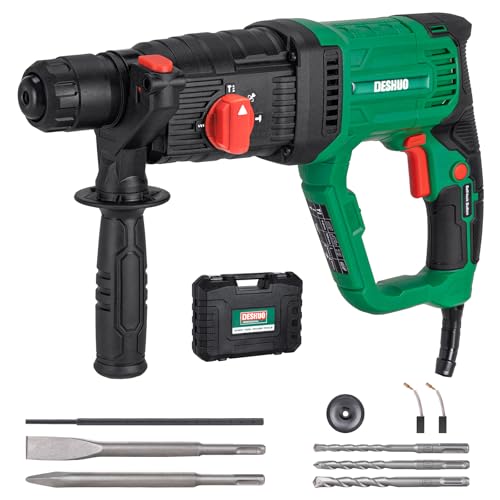
Best for overhead and vertical drilling in concrete. This tool requires SDS-Plus (SDS+) bits and is not compatible with regular drill bits or other bit types. The 9-amp motor delivers strong impact energy, supporting fast drilling in masonry, cement, brick, and wall surfaces. The lightweight design reduces user fatigue during extended use. Choose this if you plan many overhead installations or ceiling anchors and need tool-less bit changes with reliable impact transfer.
Who it’s best for: professional installers and serious DIYers who frequently drill into concrete and require efficient SDS-Plus compatibility. Limitation: not compatible with SDS-Max or standard drill bits, so ensure you have proper bits before purchase.
DEKOPRO 6-Amp 1/2-Inch Hammer Drill

Best for general home projects requiring concrete and masonry drilling with flexible modes. This 6-amp hammer drill offers two modes: standard drill and hammer, plus 12 adjustable speeds for precise control. It’s suited for users who need a capable all-purpose tool for wood, metal, and masonry tasks in a single unit. Caution: performance can vary on reinforced concrete; consider a dedicated SDS-Plus or heavy-duty drill for frequent high-impact tasks.
BOSCH 11255VSR Bulldog Xtreme

Best for professional use with heavy-duty concrete and masonry jobs. Bosch’s Bulldog Xtreme features SDS-Plus compatibility, vibration control for comfortable long-use sessions, and tool-free bit changes with automatic bit locking. A depth gauge and carrying case add practical value for job sites. Choose this if you need a reliable, high-energy transfer hammer drill for frequent concrete work and chiseling tasks. Limitation: slightly higher price and bulk compared to entry-level cordless models.
Dong Cheng 20V Brushless Heavy-Duty Impact Drill
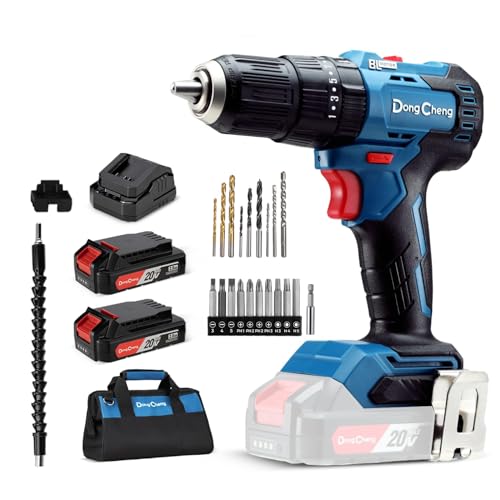
Best for cordless versatility with strong torque. The brushless motor design enhances efficiency and longevity, delivering high torque (up to 443 in-lbs) and an extensive impact rate suitable for drilling into brick, masonry, and wood. It provides 2-speed settings and a 1/2″ metal chuck for reliable bit retention. Choose this if you need mobility on-site or in areas without easy access to power outlets. Limitation: cordless models may require battery management and charging time considerations.
DCA 20V Cordless Hammer Drill Set

Best for budget-conscious cordless projects with adjustable clutch control. This set offers a 20V system with 18+1+1 clutch, a 1/2″ keyless chuck, and 22,500 IPM impact rate. It’s well-suited for light-to-moderate masonry drilling, wood, metal, and general fastening tasks. One caveat is that it may have lower overload resistance compared with higher-end models, so use within its torque limits for best results.
Buying Guide
- What material will you drill most often? For concrete, SDS-Plus rotary hammers or hammer drills with masonry settings are typically best for high-impact tasks, while standard drills handle light-duty concrete or masonry.
- Corded vs cordless: Corded drills provide consistent power for long sessions, while cordless options offer portability and ease of use in remote or elevated spaces. Consider a spare battery for cordless models.
- Bit compatibility: SDS-Plus is favored for heavy concrete work with easier bit changes and energy transfer. Ensure your drill and bits match in type and size.
- Torque and speed: Higher torque and adjustable speeds help prevent bit stalling and improve control when drilling into hard surfaces. Look for models with variable speed and torque settings.
- Ergonomics and weight: Overhead or long-duration drilling benefits from lighter, well-balanced tools with comfortable grips and 2-handed operation options.
- Additional features: Depth gauges, carrying cases, and auxiliary handles add practical value on job sites. Dust protection and vibration control contribute to comfort and accuracy.
Frequently Asked Questions
- Q: What is the difference between a rotary hammer and a hammer drill? A: A rotary hammer uses a piston mechanism for higher impact energy and is better for drilling into concrete, while a hammer drill provides hammering action with lower impact energy and is more versatile for wood and metal.
- Q: Do I need SDS-Plus for concrete drilling? A: SDS-Plus bits are ideal for concrete and masonry due to easy bit changes and improved energy transfer, but some tasks can be done with standard hammer drills using masonry bits.
- Q: Can I use regular drill bits in concrete with a hammer drill? A: For light-duty drilling, masonry or carbide-tipped bits are recommended. For heavy-duty concrete, SDS-Plus systems are preferred.
- Q: How do I choose the right chuck type? A: If you need quick bit changes and maximum compatibility with larger bits, a 1/2″ metal chuck is common. For compact, lighter usage, standard chucks may suffice.
- Q: How important is vibration control? A: Vibration control reduces user fatigue and improves accuracy during extended drilling sessions, especially on hard concrete surfaces.
- Q: Should I buy a cordless model for concrete work? A: If mobility and working away from outlets matter, a cordless hammer drill with sufficient torque and battery life is beneficial. For high-demand, continuous concrete drilling, a corded model is often more reliable.