
Direct answer: electricians need tough, precise, and versatile drill bits that perform on metal, wood, and plastic while fitting a 1/4 inch hex shank. This guide highlights five top sets that cover common wiring and installation tasks, from slotted and Phillips bits to step and auger styles. Each option is chosen for durability, ease of use, and relevance to electrical work. Best for: professional electricians, installers, and serious DIYers tackling panels, conduits, and wall cavities.
Summary table of chosen products:
| Product | Brand | Use Case | Best For |
|---|---|---|---|
| FPH2 Impact Screwdriver Bit Set | Treayes | Slotted/Phillips bits for electrical enclosures | Electricians needing reliable 1/4″ hex shank bits |
| GMTOOLS Auger Drill Bit Set | GMTOOLS | Wood drilling with quick-change hex shank | Wiring in studs, conduit runs, tight spaces |
| Step Drill Bit Set for Metal | SEDIANAS | Multi-size metal drilling for panels, boxes | Electricians handling metal enclosures |
| Flexible Installer Drill Bit | HANSHAN | Wire pulling through walls/ceiling cavities | Overhead or tight-access installations |
| Irwin Speedbor Set | IRWIN | Wood holes with self-feeding tips | General wood drilling for mounting, boxes, and studs |
Treayes FPH2 Impact Screwdriver Bit Set

Best for: electricians who need reliable Phillips and Pozidriv compatibility with 1/4″ hex shanks. The set’s FPZ2 and FPH2 heads are designed to withstand high-speed torque without distortion, making it suitable for panel work, circuit breakers, and electrical enclosures.
Why chosen: CNC-machined tips and a magnetized tip interaction aid quick seating in screw heads, reducing cam-out during long installation sessions. The compact 10-piece assortment balances versatility with portability.
Caution: data notes the material design for high-speed use; avoid using these bits with tools that exceed the intended torque range to prevent tip wear.
GMTOOLS Auger Drill Bit Set for Wood
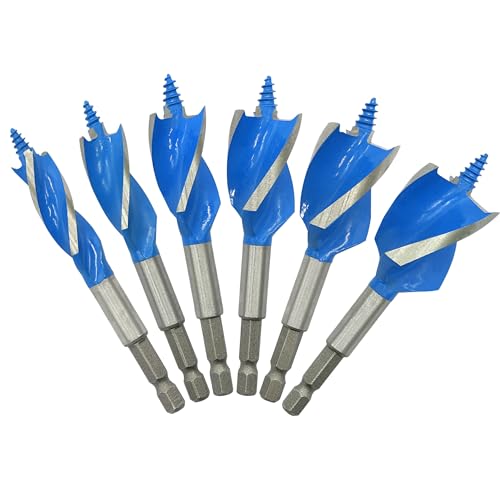
Best for: electricians and installers drilling through wood for cable routes, stud openings, and mounting points where quick, self-feeding bits are beneficial.
Why chosen: 3-flute design with screw-point tips facilitates faster start and efficient cutting. Shorter length suits tight spaces, while the 1/4″ quick-change hex shank integrates with standard chucks and impact drivers.
Caution: intended for wood and soft surfaces; avoid misusing on hard metals where longer-life coated bits perform better.
SEDIANAS Step Drill Bit Set for Metal

Best for: electricians who work with metal electrical boxes, panels, and aluminum or steel components requiring multiple hole sizes.
Why chosen: titanium coating extends the bit’s life and reduces heat buildup. The 50-size range in five pieces offers versatility for varied metal thicknesses and applications.
Caution: titanium-coated bits can still wear if abused; use proper drill speeds and lubricants to maximize life.
HANSHAN Flexible Installer Drill Bit

Best for: electricians pulling wires through walls, ceilings, and cramped spaces where a rigid bit cannot reach.
Why chosen: dual-purpose feature set includes a fish-eye eyelet for wire pulling and an anti-slip 3-flat shank to prevent slipping in the chuck, improving safety in overhead work.
Limitation: designed for pulling wires; for pure drilling, a standard bit may sometimes provide faster metal or wood cutting.
Mriykio Wire Stripper Tool & Wire Twister Kit

Best for: electricians performing wire preparation and cabinet wiring where stripping and twisting are frequent tasks.
Why chosen: 8-in-1 toolkit includes multiple wire strippers, a drill connector, and replacement jaws; this supports efficiency in busy electrical work without swapping tools.
Caution: ensure compatibility with your drill’s chuck size and wire gauge; some components are specialized for specific insulation types.
Buying Guide: Key Considerations For Electricians
What sizes and materials do I need? Electricians typically work with wood, metal, and various plastics. Look for sets that include step bits for metal, auger bits for wood, and slotted/Phillips bits for electrical enclosures.
Which shank type matters? A 1/4 inch hex shank is common and fits most impact drivers and drills. Quick-change hex shanks save time on repeat bit changes.
Is coating important? Titanium or carbide coatings increase longevity in metal drilling. For electricians, heat resistance and reduced friction help when drilling into metal electrical boxes and conduit staples.
What about flexibility and reach? Flexible installer bits help in walls and ceilings where rigid bits cannot reach. Anti-slip shanks minimize bit slip in overhead installations.
What safety features are useful? Anti-kick designs, magnetized tips, and self-feed tips reduce cam-out and increase control during long runs or tight spaces.
FAQ
- What drill bit should an electrician use for metal electrical boxes? Answer: Step and auger bits with appropriate coatings for metal, plus a 1/4″ hex shank for compatibility with impact drivers.
- Can these bit sets be used with standard cordless drills? Answer: Yes, most are designed for 1/4″ hex shanks and fit standard chucks on cordless drills and impact drivers.
- Is a magnetic bit helpful for electricians? Answer: Yes; magnetized tips hold screws in place, reducing drop-offs in tight spaces.
- Should I choose titanium-coated bits for long-term use? Answer: Titanium coatings extend life in metal drilling and reduce heat buildup, beneficial for repeated metal work.
- Are flexible installer bits necessary for every job? Answer: Not for every job, but they are valuable for overhead or tight-space wire pulling tasks.
- How many sizes should a metal drill set include? Answer: A broad range (50 sizes in several pieces) covers typical panel, box, and conduit work.