
Looking for an easy-to-use polisher that helps beginners achieve professional-looking paint finishes? This guide highlights five beginner-friendly, cordless polisher kits that are well-suited for learning the basics of modern auto detailing. Each option emphasizes lightweight design, manageable speed ranges, and versatile DA/RO modes. Ideal buyers include new DIY car detailers, weekend hobbyists, and anyone who wants a portable polish system without constant outlet dependence. Below is a quick table of the selected products to compare at a glance.
| Product | Mode | Power | Battery | |
|---|---|---|---|---|
| SPTA Cordless Mini Car Polisher | DA/RO | 80W | 1 x 80W battery, up to 1 hour | Beginners seeking compact, cordless mobility |
| DEVTBLUN Cordless Car Buffer Polisher | DA/RO | 5500 RPM | 2x batteries (not included) | Outdoors or on-the-go polishing |
| BATOCA S4 Cordless Polisher + S2 Kit | DA/RO (two machines) | 2000-5500 RPM | Interchangeable 2.5Ah and 5Ah batteries | Detailers who want a professional-grade starter combo |
| SPTA Cordless Mini Car Polisher 12V (Sets) | DA/RO | 12V system | 2 batteries | Beginners needing a complete kit |
| Chicmall Cordless 6″ DA Buffer Polisher | DA | 1800-5500 OPM | Battery compatible with Dewalt 20V/60V | Those who value flexible battery ecosystems |
Note: Each entry offers a cordless workflow to reduce cord clutter, with adjustable speeds and dual-action or rotary options to suit learning curves and different paint correction tasks. See individual sections for specifics on who each product is best for and any limitations.
SPTA Cordless Mini Car Polisher, 12V Micro Polisher
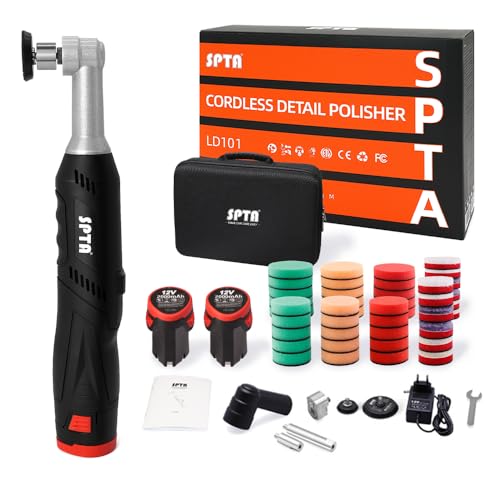
This compact, lightweight polisher is optimized for hard-to-reach areas around emblems, body lines, and tight panels. The 1-inch backing plate enables precision work, while its cordless design eliminates the need for power outlets. Best for beginners who want mobility and a simple setup for small-area polishing and cleaning tasks.
Best for: New detailers focusing on spot corrections, trim work, and emblem polishing. The smaller footprint makes it easier to learn control and consistent passes on curved surfaces.
Limitation: Shorter runtime at maximum speed and smaller polishing area compared with larger machines. Consider a second battery for longer sessions.
DEVTBLUN Cordless Car Buffer Polisher Kit

This brushless, 6-inch offset polisher offers a larger polishing area and a robust 5500 RPM top end. It runs on interchangeable Dewalt 20V/18V lithium batteries and supports eight speeds. The design is suitable for outdoor use, thanks to its cordless operation and powerful motor. Best for beginners who want a more capable tool that remains portable and adaptable to various tasks.
Best for: Beginners seeking a versatile, high-speed option for faster correction on flat panels. A caution: battery compatibility requires separate purchase of compatible batteries.
BATOCA S4 Cordless Polisher + S2 Kit

This 2-in-1 system includes a 3″/1″ mini DA/RO polisher and a larger 5″/DA polisher, with interchangeable batteries that offer extended runtime. The S4 mini unit covers precision work like headlights and trim, while the S2 handles broader surfaces. Best for buyers who want a two-machine setup for both detail work and larger polishing tasks.
Best for: Beginners who anticipate a range of tasks from small accents to wide panels. Limitation: You’ll manage two machines, requiring some space and setup time.
SPTA Cordless Mini Car Polisher Sets
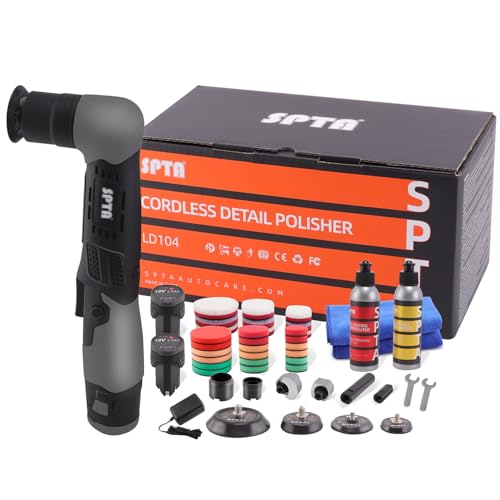
This set expands the single-unit option with a complete kit, including multiple backing plates, polishing pads, compounds, and two 2000mAh batteries. The result is an easier transition for beginners, enabling practice across different pad sizes and compounds. Best for learners who want a full kit for practice and on-the-go polishing.
Best for: Absolute beginners who benefit from a ready-to-go kit with extras. Caution: Kit contents vary by seller; verify included items before purchase.
Chicmall Cordless 6″ DA Buffer Polisher

This 6-inch dual-action polisher emphasizes a wide foam pad for smooth, swirl-free finishes with a broad speed range (1800–5500 OPM). It is compatible with a variety of Dewalt 20V/60V MAX batteries, offering flexibility for those who already own a compatible battery ecosystem. Best for: Beginners who want a larger orbit and compatibility with common battery brands.
Limitation: Battery compatibility depends on owning a compatible DeWalt system, which may require separate battery purchases if not already owned.
BATOCA S5 Cordless Mini Car Polisher

The S5 model offers a 2-in-1 rotary and random orbital capability with two 12V batteries and interchangeable shaft configurations for 3-inch or 1/2-inch polishing. This model supports multiple polishing modes to tackle both mild waxing and deeper correction. Best for: Beginners who want a flexible machine capable of both swirl-free finishes and light correction.
Limitation: Two batteries are provided, but overall runtime depends on load, and the small 12V setup may require careful battery management on larger projects.
Protmex Cordless Mini DA/RO Car Buffer Polisher

This 3-in-1 polisher easily switches between DA and RO modes, with eight adjustable speeds and two large 2000mAh batteries. It supports corrosion-free operation and a straightforward interface for beginners. Best for: Beginners who want a versatile tool with clear mode transitions and a helpful LED display for speed and battery readouts.
Limitation: Though versatile, the unit may be heavier than ultra-compact models, which could affect fatigue during long sessions.
Buying Guide: How To Choose A Beginner-Friendly Polisher
What should a first-time polisher prioritize? Start with weight, balance, and ease of use. Look for a dual-action (DA) or rotary option based on your comfort level. Cordless design offers mobility, but check battery type and runtime to prevent mid-session pauses. A kit with multiple backing plates and pads helps you learn different techniques and finishes. Consider whether you want one tool with expandable capabilities or a two-machine system for broader tasks, such as headlights and large panels.
What power level is suitable for a beginner?
Beginners typically benefit from lower to mid-range power and speeds. A tool that offers a safe DA mode and a gradual ramp in RPM helps prevent paint damage while learning control.
Should you choose a kit or a single polisher?
A kit is ideal for beginners who want variety and immediate access to pads, compounds, and backup batteries. A single, compact polisher is enough to start, with additional pads and compounds purchased separately as needed.
Is battery life important?
Yes. Look for at least 45 minutes of usable runtime on a single charge for typical practice sessions. Dual-battery setups reduce downtime between charges and enable longer detailing sessions.
What about compatibility and future upgrades?
If you own other cordless tools, consider a polisher that uses the same battery platform to maximize compatibility and minimize extra purchases.
Safety considerations
Begin with light pressure and slow speeds. Use correct backing plates and pads, and follow the manufacturer’s instructions to avoid swirls or holograms on your paint.
FAQ
- What is the best beginner polisher for small areas? Answer: A compact 1″ or 1.5″ backing plate polisher with a DA mode is ideal for tight areas and learning control.
- Can I use a rotary polisher if I’m a beginner? Answer: Yes, but start with low RPM and light pressure to avoid tireless damage; many units include DA-RO switching for learning progression.
- Do cordless polishers work on all car finishes? Answer: Most do, but car paint types vary; practice on a small area first and avoid applying heavy compound on delicate finishes.
- How long does a typical beginner session last? Answer: Plan for 30–60 minutes, depending on the project and the pad size used.
- Is a kit necessary for beginners? Answer: Not strictly, but kits provide valuable practice materials and spare batteries, which can reduce setup time for new learners.