
Answering buyers seeking effective crawl space ventilation, humidity control, and odor reduction. This guide highlights top crawl space fans that balance airflow, humidity sensing, and durability for different spaces such as basements, garages, attics, and grow tents. The selected products suit homeowners needing reliable exhaust for damp areas, renters seeking quick improvements, and DIYers installing in crawl spaces with standard openings. A quick summary table of the five featured products follows for easy comparison.
Product comparison at a glance
| Product | Airflow | Key Feature | Best For |
|---|---|---|---|
| 220 CFM | Humidistat, dehumidistat, freeze protection | Small to mid-size crawl spaces needing humidity control | |
| 260 CFM | Humidistat Thermostat, IP-55 rated | Humid environments with moisture and dust exposure | |
| 570 CFM | Humidistat, thermostat, isolation mesh, stainless steel | Medium to large crawl spaces needing strong airflow | |
| High airflow (exact CFM varies by unit) | WiFi/app control, temperature/humidity programming | Smart-automation setups and larger areas | |
| 540 CFM | IP-55, dehumidistat, freeze protection | Larger damp spaces with durable build needs |
Note: This table is for quick reference. Each product is described in detail below with suitability guidance and potential limitations.
CADPXS Crawlspace Ventilation Fan Review
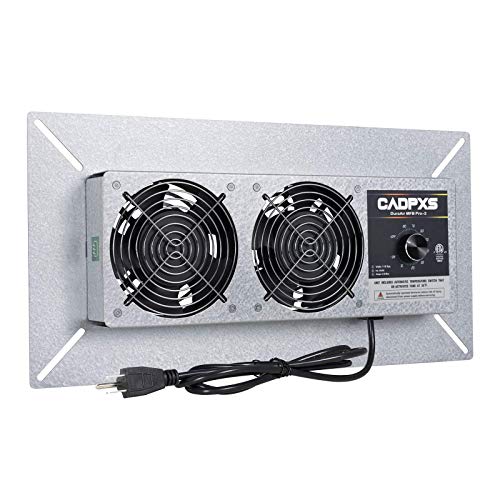
Airflow is rated at 220 CFM, with dual fans and a 6.56-foot grounded power cord. This unit is designed to exhaust air from a wet crawl space, exchange outdoor and indoor air, and improve overall air quality while balancing humidity. Its humidistat range is 20%–80% RH, and it includes a freeze protection thermostat so the dehumidistat does not operate when outdoor temperatures are very low.
Best for: Small to mid-size crawl spaces that require balanced humidity control and radon or odor exhaust. Limitation: The 220 CFM airflow may be modest for larger crawl spaces; ensure installation matches the unit’s capabilities.
Abestorm 260CFM Crawlspace Ventilation Fans

This 260 CFM exhaust fan is designed to exchange indoor and outdoor air, improving room air quality and balancing humidity. Features a 6.7-inch diameter fan, a trimmed faceplate to fit different openings, and an IP-55 rated housing with a 5.5mm isolation mesh. It includes a humidity-based control panel for easy operation and helps move air to reduce moisture and radon-related concerns.
Best for: Crawl spaces and garages where humidity is a concern and a robust enclosure is desired. Caution: Installation may require trimming to fit non-standard openings.
Tjernlund V2D Underaire Crawlspace Ventilator

Designed to ventilate crawl spaces through existing passive vents, this unit delivers 220 CFM using a compact face plate sized for standard brick openings. It’s a straightforward option for passive-to-active ventilation upgrades in smaller spaces that need consistent airflow.
Best for: Homes with existing vent openings seeking reliable, simple venting upgrades. Limitation: May require additional ducting or sizing for larger spaces.
ALORAIR 570 CFM Crawlspace Ventilator

Powerful 570 CFM airflow with a stainless steel shell and IP-55 rated blades. Includes a built-in dehumidistat and freeze protection thermostat, controlling operation based on humidity and temperature. The 6 ft power cord and isolation mesh help protect against dust and particulates, making it suitable for damp spaces up to roughly 950 sq. ft.
Best for: Medium to large crawl spaces requiring strong airflow and humidity-aware operation. Limitation: Higher power draw than smaller units; ensure electrical capacity and space fit.
AC Infinity AIRTITAN T8 Crawlspace Ventilator

This system emphasizes smart control, with WiFi app compatibility for temperature and humidity management, digital scheduling, and VPD programming. It’s designed to exhaust moisture and odors, making it suitable for crawl spaces, basements, attics, garages, and grow tents that require automation and precise environmental control.
Best for: Homeowners who want app-based monitoring and programmable humidity/temperature control. Limitation: Requires setup via app and may be more complex than basic manual fans.
ALORAIR 540 CFM IP-55 Crawlspace Fan With Humidistat

This 540 CFM unit includes a dehumidistat and freeze protection thermostat, a back isolation mesh, and an aluminum-zinc shell with IP-55 rating. It’s designed for damp crawl spaces, basements, attics, and garages, providing robust airflow with protection against dust and moisture.
Best for: Larger damp spaces needing strong airflow and moisture protection. Limitation: Slightly heavier and may require more space for installation.
Abestorm 540CFM Crawlspace Ventilation Fan

Airflow 540 CFM with an IP-55 rated internal design and 5.5mm isolation mesh to deter reptiles from entering. The built-in dehumidistat and freeze protection thermostat automate operation based on humidity levels, helping reduce moisture and protect structures from condensation and wood rot.
Best for: Larger, humid crawl spaces that require durable protection against moisture and pests. Caution: Ensure proper clearances to accommodate the unit’s size and mesh.
Buying Guide: Key Purchase Considerations
What size space do you need to ventilate?
Airflow is measured in CFM. For small crawl spaces, 200–300 CFM may suffice. For larger or more humid areas, 540–570 CFM units offer stronger moisture control. Match the unit’s CFM to the space size and typical humidity levels.
Do you need humidity and temperature controls?
Humidistats and thermostats automate operation in response to humidity and temperature. Units with automatic dehumidistat controls help prevent condensation, wood rot, and mold. Freeze protection prevents needless cycling in freezing outdoor conditions.
Is the environment harsh or damp?
Look for IP ratings (IP-55 or higher) and corrosion-resistant materials (stainless steel or aluminum-zinc shells). Isolation mesh helps prevent pests and debris from entering the crawl space while protecting the interior.
Smart control vs. basic operation?
Smart controllers (WiFi or app-enabled) offer scheduling and remote monitoring, which is beneficial for ongoing moisture management and energy efficiency. If you prefer simple plug-and-play operation, basic models with manual or humidity-triggered controls work well.
Installation considerations
Check enclosure size, faceplate compatibility, and whether trimming is needed to fit the opening. Some models provide adjustable faceplates to match various installation openings. Ensure electrical capacity supports the unit’s power requirements.
Durability and maintenance
Choose units with corrosion-resistant housings and robust isolation meshes. Look for units designed for continuous operation in damp environments. Long-term maintenance depends on the ease of cleaning and accessibility of the fan and mesh.
FAQ
- What is a crawl space humidistat? A humidistat automatically turns the fan on or off to maintain a target humidity level, reducing moisture buildup and condensation.
- Is 540 CFM enough for a large crawl space? For larger or heavily damp spaces, 540 CFM generally provides substantial airflow, but you may need higher airflow or multiple units for optimal results depending on space size and climate.
- Do these fans help with radon? Some units help exchange indoor and outdoor air, which can reduce radon buildup when installed as part of a broader ventilation strategy; verify with product specifications.
- Can I install these fans myself? Many models are designed for DIY installation with standard openings, but ensure you can safely handle electrical connections and match electrical requirements to your space.
- What maintenance is required? Regular inspection of the mesh, cleaning of blades, and checking humidity controls help maintain performance and longevity.
- Are IP-55 rated fans worth it? Yes, IP-55 rated fans are better at resisting dust and water exposure in damp crawl spaces, extending service life.