
If you’re looking to upgrade your compound miter saw, having the right blade is essential for accuracy and finish quality. This article reviews the best compound miter saw blades available, highlighting their features for crosscutting various woods and laminates. Below is a summary table of five top choices to help you find the perfect blade for your woodworking needs.
| Blade | Brand | Diameter & Teeth | Kerf Thickness | Link |
|---|---|---|---|---|
| Freud Thin Kerf Sliding Compound Miter Saw Blade | Freud | 12″, 72 Teeth | Thin Kerf | View on Amazon |
| DEWALT Miter Saw Blade Combo Pack | DEWALT | 12″, 40 & 60 Teeth | Standard Kerf | View on Amazon |
| CMT 253.060.10 ITK Industrial Finish Blade | CMT | 10″, 60 Teeth | 0.098″ | View on Amazon |
| Freud D0860S Diablo 8-1/2″ 60T Fine Finish Blade | Diablo | 8.5″, 60 Teeth | Standard Kerf | View on Amazon |
| CMT 219.080.10 Industrial Sliding Compound Blade | CMT | 10″, 80 Teeth | 0.118″ | View on Amazon |
Freud Thin Kerf Sliding Compound Miter Saw Blade 12″ 72 Teeth

This 12-inch blade from Freud is specially crafted for sliding compound miter saws and features a thin kerf design that minimizes material removal, requiring less horsepower. It features a premium TiCo carbide blend for enhanced edge durability and consistent performance. The negative 5° hook angle helps prevent the blade from being overly aggressive, reducing kickback and pushing the workpiece steadily downwards and towards the fence. Ideal for tougher woods, this blade excels in producing clean, smooth crosscuts.
DEWALT 12″ Miter Saw Blade Combo Pack, 40 & 60 Tooth

The DEWALT combo pack includes two 12-inch blades with 40 and 60 teeth, designed for precision and fine finish cuts. A patented body slot design reduces vibration, promoting smoother operation and longer blade life. The blades’ optimized tooth geometry enhances cutting accuracy, while up to 3 times longer lifespan ensures durability through multiple projects. This pack is versatile for rough cuts and fine finishes, covering a wider range of woodworking tasks.
CMT 10-Inch Industrial Finish Sliding Compound Miter Blade

This 10-inch blade from CMT is built for fine finishing, delivering glass-smooth crosscuts. It features a 7° hook angle and a 1 flat + 2 ATB grind pattern optimized for clean cuts through hardwood, softwood, plywood, and laminates. The kerf is measured at 0.098 inches, giving a balance between precision and durability. This blade is ideal for professionals needing a perfect finish on trim and framing cuts.
Freud D0860S Diablo 8-1/2″ 60T Fine Finish Miter Blade

The Freud Diablo blade measures 8.5 inches and has 60 teeth, making it an excellent choice for precise trim carpentry. It handles crosscutting on oak, pine, melamine, molding, and plywood efficiently, leaving a smooth surface that reduces sanding time. Its fine tooth configuration produces minimal tear-out and smooth edges, suitable for detailed woodworking and finish carpentry tasks where surface quality matters.
CMT 10-Inch 80 Tooth Industrial Sliding Compound Miter Saw Blade
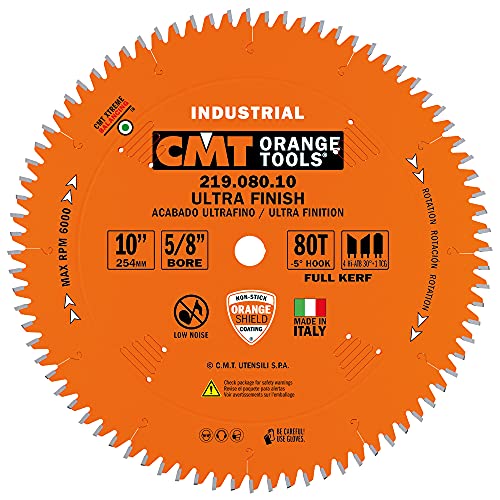
This CMT industrial blade provides 80 teeth on a 10-inch diameter, optimized for ultra-fine finish cuts. It features a -5° negative hook angle to limit splintering and climbing, and a 4 ATB plus one trapezoidal tooth grind for crisp, clean edges on hardwood, softwood, plywood, and laminates. The blade has a thicker kerf at 0.118 inches for added rigidity and uses PTFE coating to reduce friction and heat buildup during long cutting sessions.
Buying Guide: Choosing the Best Compound Miter Saw Blade
Selecting the right blade for your compound miter saw is key to getting optimal results. Here are essential factors to consider:
Blade Diameter
Match the blade diameter to your miter saw’s specifications. Most compound miter saws use 8.5″, 10″, or 12″ blades. Using the correct size ensures safety and performance.
Number of Teeth
Blades with fewer teeth (24-40) are better for faster, rougher cuts, while blades with more teeth (60-80+) provide smoother finishes. For trim work and cabinetry, high-tooth blades reduce tear-out and leave clean edges.
Kerf Thickness
Thin kerf blades remove less material, requiring less power and reducing waste. They are ideal for precision and for use with lower horsepower saws. Thicker kerfs yield more durable blades but can strain less powerful motors.
Tooth Geometry & Hook Angle
The grind profile (ATB, flat top, combination) and hook angle influence cut quality and aggressiveness. Negative hook angles offer smooth cuts with reduced kickback, perfect for finish work. Positive hook angles cut more aggressively but may increase splintering.
Material & Coating
High-density carbide teeth extend blade life and maintain sharpness. Coatings like PTFE reduce heat and friction, improving cut consistency and blade longevity.
Application
Consider what materials you’ll cut most often: hardwood, softwood, plywood, laminates, or melamine. Some blades are optimized for specific materials, ensuring cleaner cuts and longer blade life.
By balancing blade diameter, tooth count, kerf, and tooth design against your cutting needs, you can select a compound miter saw blade that delivers precision, durability, and excellent finish on every project.