
Flat roofs demand coatings that can seal joints, resist ponding water, and move with temperature changes. The following selections are engineered for flat or low-slope surfaces, including metal, concrete, and built-up roofs. This guide highlights five top-rated options, with practical details to help you choose a coating that fits your roof type, climate, and maintenance goals.
| Product | Brand | Suggested Use | Coverage Notes |
|---|---|---|---|
| Liquid Rubber Waterproof Sealant (1 gal) | Liquid Rubber | Flat roofs, low slopes, foundations | About 15 sq ft per gallon per heavy coat; up to 3-4 coats |
| AMES Maximum Stretch Roof Coating (1 gal) | AMES | Low-slope and metal roofs; general maintenance | 650% elongation; 88% reflectivity |
| Countryman Coatings 100% Silicone Roof Coating (4.75 gal) | Countryman Coatings | All roof types; long-term protection | High adhesion; ready-to-use without primer in many cases |
| Liquid Rubber Color Waterproof Sealant (1 gal) | Liquid Rubber | Flat/low-slope roofs and foundations | 5x more flexible than traditional sealants; quick-dry option |
| BEEST RV Roof Coating White (1 gal) | BEEST | RV, trailers, flat roofs; solar reflectivity | Two coats recommended; UV and water resistant |
Choosing a coating involves assessing surface type, climate, and the level of movement your roof experiences. The selections below represent a range of flexibility, reflectivity, and application methods to help you identify a suitable solution for flats, low slopes, and repair work.
Liquid Rubber Waterproof Sealant — 1 Gallon

Liquid Rubber offers an industrial-strength bitumen formula designed to form a seamless waterproof membrane across flat and low-slope roofs, foundations, gutters, and more. This coating emphasizes flexibility with over 950% elongation to maintain adhesion as the building moves or as temperatures shift. It creates a durable, rubberized layer that resists cracking, peeling, and UV damage, making it a robust option for preventive maintenance and leak repair alike. Coverage depends on surface type and coating thickness, with typical guidance of 60-80 mil membranes on flat surfaces when applying multiple coats.
Application is versatile: brush, roll, or spray, optimizing use on large flat areas or tight vertical surfaces like foundations. The product’s compatibility with metal and concrete makes it suitable for mixed-material roofs common on commercial buildings, sheds, or foundations adjacent to the roof line. For best results, plan multiple coats and consider temperature guidelines to ensure proper curing and membrane formation.
AMES Maximum Stretch Roof Coating — 1 Gallon
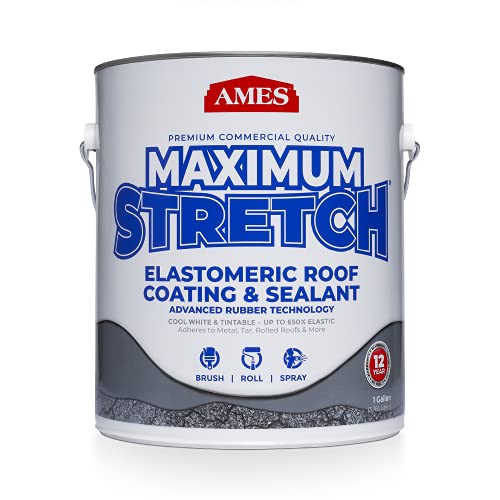
A white, elastomeric acrylic roof coating with 650% elongation to resist cracking and peeling. The product’s high reflectivity (about 88%) helps reduce surface temperatures, contributing to potential cooling cost savings. It adheres to metal roofing, tar, rolled roofs, and more, making it a versatile choice for low-slope roof maintenance and some RV or viewing-structure applications. It applies by brush, roller, or spray and remains flexible to accommodate roof movement, which helps prevent future leaks in aging or slightly compromised roofs.
Ideal for flat and low-slope roofs where white reflectivity is desirable for energy efficiency. While it delivers strong adhesion, ensure surfaces are clean and dry prior to application and follow recommended coating thickness for the best seal. It’s a practical, cost-conscious option for homeowners and facility managers targeting regular maintenance rather than heavy structural repairs.
Countryman Coatings 100% Silicone Roof Coating — 4.75 Gallon

This silicone roof coating is designed to restore, protect, and extend roof life with broad surface compatibility, including metal, modified-bitumen, EPDM, and various built-up surfaces. A prime feature is minimal primer requirement in many situations, which can simplify prep work and save time on larger projects. The 4.75-gallon size is well-suited for medium to large repairs or coating projects on multiple sections of a roof, allowing the creation of a durable, waterproof seal across seams, penetrations, and joints.
The 90%+ reflectivity often associated with silicone coatings helps reduce heat absorption, contributing to energy efficiency in warm climates. Silicone’s robust elasticity helps manage thermal movements and weather exposure, but surface preparation remains key for optimal adhesion. If you’re coating an aging roof with varied substrates, this option provides a strong, long-lasting seal with fewer reapplications over time.
Liquid Rubber Color Waterproof Sealant — 1 Gallon

Colored liquid rubber sealant adds a flexible, seamless waterproof membrane to flat roofs, low-slope roofs, and foundations. The gray shade helps blend with many structures while delivering the same durable, rubberized coating that resists water infiltration and UV exposure. It’s described as 5x more flexible than traditional sealants and can be applied with a brush, roller, or sprayer. Typical guidance suggests multiple heavy coats to form a thorough membrane, with careful attention to surface cleanliness and dryness before application.
Coverage varies by surface type: vertical surfaces may require 2-3 heavy coats, while flat surfaces often benefit from 3-4 heavy coats to build a robust membrane. As with other coatings, cure time and temperature influence final performance, so plan around non-wet conditions to ensure proper curing. The color option adds a practical aesthetic choice without compromising performance.
Liquid Rubber Waterproof Sealant — Rubber Paint (EverBond) — 4.75 Gallon

EverBond’s waterproof coating emphasizes a rubber-like membrane with impressive elongation, claimed above 1000%, providing strong resistance to cracking as roofs expand and contract. The product highlights UV stability, ensuring color and performance endure sunlight exposure. This coating is suitable for flat roofs, metal roofs, foundations, sheds, and even certain interior applications where moisture protection is key. Coverage depends on surface type and desired thickness, with vertical surfaces typically needing multiple heavy coats for a solid 30 mil membrane and flat surfaces achieving a thicker 60-80 mil membrane with additional coats.
For property owners seeking a long-lived, flexible solution that withstands UV exposure, this option offers a robust alternative to traditional tar-based patches and some older elastomeric products. Thorough surface prep and weather-conscious scheduling improve results and longevity.
BEEST RV Roof Coating White — 1 Gallon

BEEST’s RV roof coating is designed for mobile applications, offering UV resistance and waterproof sealing for RVs, trailers, and other flat roof surfaces. The white coating is solar reflective, helping reduce interior temperatures and energy usage in sunny climates. The product is marketed for multi-surface use, including metal, wood, concrete, and other common roof materials, with a recommended two-coat approach to achieve optimal thickness and coverage. It is described as highly flexible, waterproof, and suitable for seasonal movement and exposure.
For owners of travel trailers, campers, and pop-up roofs, BEEST provides a practical option with quick-drying properties and a focus on outdoor durability. When applying to RVs or irregular surfaces, follow mounting and primer guidance provided by the manufacturer to ensure adhesion and longevity.
Buying Guide: Key Purchase Considerations For Flat Roof Coatings
When selecting a coating for flat or low-slope roofs, consider surface material, climate, and maintenance goals. Here are essential factors to compare across products:
- Elongation and flexibility: Higher elongation reduces cracking due to movement and temperature changes. Look for coatings with 650% to 1000%+ elongation for aging roofs.
- UV resistance and reflectivity: White or light-colored coatings reduce heat absorption, lowering cooling costs. Silicone and white acrylic options typically offer high reflectivity.
- Adhesion compatibility: Check substrate compatibility (metal, concrete, bitumen, EPDM, etc.). Some products require primers; others claim primer-free adhesion.
- Application method and coverage: Brush, roller, or spray applications vary by product. Coverage rates depend on desired membrane thickness (mil) and surface type.
- Cure time and weather constraints: Many coatings require dry, above-freezing conditions. Wet conditions or forecasted rain within 24 hours can affect curing.
- Durability and maintenance: Consider UV stability, chemical resistance, and the expected service life. For large roofs, long-term durability reduces maintenance frequency.
- Aesthetic and reflectivity: If a white or light color is preferred, prioritize coatings with high reflectivity to help with energy savings.
Choosing between liquid rubber, silicone, or elastomeric acrylic coatings depends on your roof’s substrate, climate, and desired longevity. For older roofs experiencing movement or minor leaks, elastomeric and high-elongation coatings often perform well. For multi-material roofs or higher exposure to sun, silicone and highly reflective finishes may offer better long-term protection. If you manage an RV or travel trailer, color and reflectivity also play a crucial role in heat management and maintenance cycles.
Always follow manufacturer prep and application instructions. Ensure surfaces are clean, dry, and free of debris before applying coatings, and choose a day with mild temperatures to optimize curing. Store products as directed and monitor the roof after application for signs of wear or new leaks, addressing them promptly to extend roof life.