
Choosing the right chop saw blade can dramatically affect cut quality, speed, and safety when working with metal. This guide highlights five highly regarded blades designed for metal cutting in chop saws and similar setups. Each option emphasizes long life, cooler operation, and burr-free finishes to keep projects moving smoothly. Whether you’re cutting mild steel, angle iron, or tubing, these blades are engineered to maximize performance while reducing heat and sparks.
| Product | Brand | Key Benefit |
|---|---|---|
| Evolution 14BLADEST | EVOLUTION | Low heat, minimal burrs, virtually no sparks |
| Diablo D1472CF | Diablo | Cermet II teeth for long life and cooler cuts |
| DEWALT DW8001 14″ Chop Saw Blade | DEWALT | Durable aluminum oxide grind for fast, aggressive cuts |
| 14″ Metal Cutting Blade (Xmnbl) | Xmnbl | 66 teeth, carbide tip, broad compatibility |
| FOXBC 14″ Metal Cutting Blade | FOXBC | TCG carbide with long life and smooth finishes |
The following sections break down each blade, including design highlights, typical applications, and what makes it stand out for metal cutting with chop saws. Product details are drawn from listed features to help you compare practical performance and durability.
Evolution 14BLADEST 14-Inch Mild Steel Blade
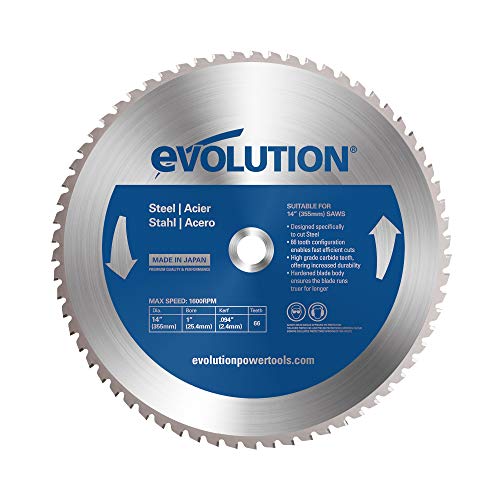
The Evolution 14BLADEST blade is designed specifically for cutting mild steel and ferrous metal in chop saws. With 14 inches of diameter and 66 teeth, it aims to deliver precise cuts with minimal heat, burrs, and sparks. The blade is carbide-tipped with a high-quality Japanese carbide composition and is heat-treated to increase durability. Important usage note: designed for mild steel only; avoid galvanized, hardened, or high-carbon steel to prevent premature wear. This blade emphasizes clean finishes and faster project turnaround when working with standard mild steel sections.
Diablo D1472CF Steel Demon Cermet II Blade

Diablo’s D1472CF uses Cermet II teeth to offer extended life and high heat tolerance, enabling cooler, smoother metal cuts. Reported benefits include up to 25X longer blade life and reduced cutting temperatures compared with standard metal-cutting discs. The triple chip grind promotes precise, burr-free results with fewer sparks, potentially minimizing the need for post-cut deburring and simplifying metalwork projects. This blade suits repeated or heavy-duty metal cutting where longevity matters most.
DEWALT DW8001 14-Inch Chop Saw Blade

DEWALT’s 14-inch metal cut-off blade is built for aggressive performance with high-grain aluminum oxide, delivering long life and fast cutting action. The blade is designed to sustain durability under demanding chop saw usage, with a focus on maintaining a steady cutting pace and smooth operation. The packaging notes a high grain concentration to support aggressive cuts while preserving a relatively smooth running experience, which can be advantageous for repetitive metal cutting tasks or fabrication workflows.
14 Inch Metal Cutting Blade (Xmnbl)

The Xmnbl blade is a 14-inch, 66-tooth carbide-tipped blade designed for metal cutting on low-RPM saws. It specifies compatibility with Evolution S14CPS, S15CPS, S355MCS, S355CPS, S380CPS, and more, including common 14-inch metal cutting saws. The product highlights include a 0.094 inch kerf, a 1-inch arbor, and a maximum speed of 1,600 RPM. The design emphasizes broad applicability across various Evolution and other brand saws, delivering high cutting precision and wear resistance for everyday metal fabrication tasks.
FOXBC 14 Inch Metal Cutting Blade 66 Tooth

FOXBC’s 14-inch metal cutting blade uses a 66-tooth TCG carbide configuration and a 0.095 inch kerf for fine, precise cuts. It offers compatibility with Evolution’s 14-inch chop saws (and similar low RPM metal cutting saws) and is marketed for cleaner finishes on studs, tubing, angle iron, pipes, and other ferrous materials. The blade’s design aims to balance durability with cleaner cut quality, especially when preparing metal framing or structural components in reduced heat conditions.
FOXBC 12 Inch Combination Miter Saw Blade

While not a dedicated metal-cutting blade, the FOXBC 12-inch combination miter saw blade provides versatility for projects that mix wood and metal work in a single setup. With 60 teeth and a 1-inch arbor, it’s designed for wood cutting with clean finishes, and its construction accommodates occasional metal-cutting tasks when a blended tool is needed. For shops that primarily cut metal but occasionally need wood cuts, this blade can be a practical option to minimize tool changes.
Buying Guide: Key Considerations For Choosing A Chop Saw Blade
- Material compatibility: For mild steel and ferrous metals, look for blades labeled for metal cutting. Avoid using steel-on-steel blades on non-metal materials and vice versa to prevent rapid wear or poor cuts.
- Tooth geometry and count: Higher tooth counts (e.g., 66 teeth) provide smoother finishes but may cut more slowly. For faster, rougher cuts in metal, lower tooth counts with robust carbide or cermet teeth can be advantageous.
- Blade material and bonding: Carbide-tipped blades offer longer life in metal cutting; cermet teeth improve heat resistance and wear durability in hot cutting environments. Aluminum oxide is common for cut-off wheels but not the same as carbide-tipped blades.
- Cool-cut performance: Blades designed to produce less heat and fewer sparks reduce warping and post-cut finishing. This is particularly important for thin-walled tubes and structural components.
- Compatibility and RPM rating: Ensure the blade’s maximum RPM aligns with your chop saw. Using a blade at speeds beyond its rating can cause shattering or accelerated wear.
- Arbor size and kerf: Check arbor diameter (commonly 1 inch or 1-1/4 inch) and kerf thickness. A proper fit ensures vibration-free operation and accurate cuts.
- Durability vs. cost: Higher-rated blades often deliver longer life and cleaner cuts, particularly in repetitive fabrication tasks. Consider project frequency and material hardness to determine value.
When selecting a blade, review the manufacturer’s usage instructions and any caveats about compatible materials. For metal fabrication environments, blades that minimize heat and sparks while delivering burr-free finishes generally improve efficiency and safety across multiple projects.