
Choosing the right chemical resistant gloves is essential for safety and performance across industrial, laboratory, and household tasks. This guide highlights five top options that balance chemical protection, durability, and comfort. Each product is evaluated on material strength, thickness, grip, and wrist protection to help you compare effectively.
Summary of Selected Products
| Product | Brand | Material | Key Benefit |
|---|---|---|---|
| SHOWA 727 Nitrile Gloves | SHOWA | Nitrile | Excellent chemical resistance with long 13″ length and 15 mil thickness |
| LANON Nitrile Gloves | LANON Protection | Nitrile | MicroFoam palm for grip; 15 gauge liner for comfort |
| Potchen 20 Pairs Nitrile Gloves | Potchen | Nitrile | Bulk pack with extended cuffs for forearm protection |
| ThxToms 5 Pairs Nitrile Gloves | ThxToms | Nitrile | Flexible 15 mil thickness with non-slip texture |
| ROYAKI Chemical Resistant Gloves | ROYAKI | Rubber | Strong abrasion resistance with good elasticity |
SHOWA 727 Nitrile Chemical Resistant Gloves

These unlined nitrile gloves measure 13 inches in length and 15 mils thick, delivering strong protection against solvents and animal fats. The bisque finish grip enhances wet-work performance, reducing slippage in demanding tasks. Ideal for lab, automotive, and cleaning environments where extended wrist coverage matters.
LANON Nitrile Chemical Resistant Gloves

LANON’s reusable heavy-duty nitrile gloves feature a MicroFoam textured palm for improved grip in wet or greasy conditions. With a 15 gauge seamless cotton liner, they balance protection with comfort for long wear. Extended cuffs add wrist protection, while abrasion resistance testing indicates solid durability in industrial settings.
Potchen 20 Pairs Chemical Resistant Gloves

This bulk kit includes 20 heavy-duty nitrile gloves designed to resist acids, alkalis, and oils. Available in multiple sizes, extended cuffs provide forearm protection, and the nitrile material offers reliable barrier against common chemical splashes. The non-latex composition also helps minimize allergy concerns for wearers.
ThxToms 5 Pairs Nitrile Gloves

These five pairs of nitrile gloves measure 15 mil and 13 inches, offering an excellent balance of flexibility and protection for acids, alkalis, and solvents. The latex-free composition reduces allergy risk, and a textured palm enhances grip when handling wet or oily substances.
ROYAKI Chemical Resistant Gloves
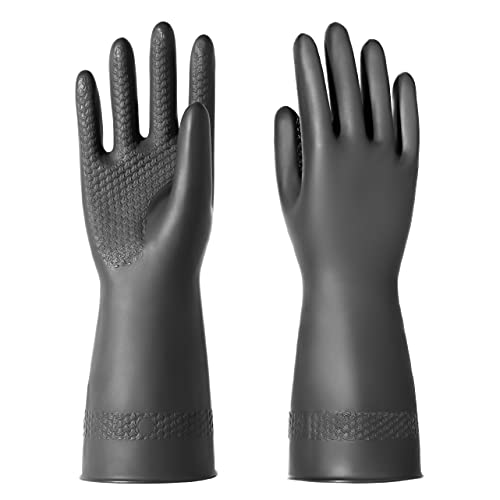
ROYAKI provides heavy-duty rubber gloves with reliable elasticity and wear resistance. The diamond-patterned grip improves friction for precise handling, and the gloves protect against alkalis, alcohols, and acetone. They are well-suited for industrial cleaning and heavy-duty tasks where dexterity is still required.
Buying Guide: Key Considerations For Chemical Resistant Gloves
- Material: Nitrile gloves offer strong chemical resistance and puncture protection, while natural rubber (latex) provides excellent elasticity but can trigger allergies. Rubber blends and micro-textured palms can improve grip in wet conditions.
- Thickness and Length: Thicker gloves (e.g., 15 mil) typically deliver better chemical protection and durability but may reduce flexibility. Longer cuffs (around 13 inches) help protect wrists and forearms from splashes.
- Fit And Comfort: A comfortable liner (like a cotton interior) and a snug fit reduce hand fatigue during extended wear. Consider textured palms for improved grip on wet or oily surfaces.
- Allergies and Sensitivities: Latex-free options prevent allergic reactions. For sensitive users, review lining materials and any flocking that could irritate skin.
- Durability Versus Reusability: Reusable gloves may offer greater value in high-use environments, but ensure they can be safely decontaminated between uses.
- Protection Scope: Check chemical resistance lists to confirm compatibility with specific solvents, acids, alkalis, and oils encountered in your tasks.
- Care And Maintenance: Follow cleaning and drying instructions to extend glove life and prevent material degradation.
When selecting gloves, align the choice with the most frequently encountered chemicals, exposure levels, and task duration. In environments with mixed hazards, a glove with robust chemical resistance, good grip, and wrist protection provides multiple safety benefits.