
If you’re cutting hardwood, you want chains that stay sharp longer, cut smoothly, and minimize kickback. These five chains are selected to help American buyers tackle dense woods with confidence. The list targets common hardwood tasks—from firewood prep to framing lumber—while balancing durability, ease of maintenance, and compatibility with popular saws. Best for professionals and serious DIYers who frequently cut hardwoods, these picks emphasize carbide tips, precise pitch, and robust drive links for reliable performance.
Summary table of selected products:
- Stihl 26RS 81 Rapid Super Chainsaw Chain, 20″ Bar — .325 pitch, .063 gauge
- Husqvarna X-Cut SP33G 18″ Chainsaw Chain — .325 pitch, .050 gauge
- KAKEI 20 Inch Carbide Chainsaw Chain — 3/8″ pitch, .050″ gauge
- KAKEI 18 Inch Chainsaw Chain — .325 pitch, .063 gauge
- MANNIAL 18 Inch Chainsaw Chain — .325 pitch, .063 gauge
Stihl 26RS 81 Rapid Super Chainsaw Chain

Best for professionals needing a robust, long-lasting cutting edge on hardwood. The Stihl 26RS 81 Rapid Super chain is designed for a 20″ bar with a .325″ pitch and .063″ gauge. It features 81 drivers and is specified for high-performance cutting. This chain is well-suited for heavy-duty hardwood tasks where durability and steady performance are essential. A potential limitation is that sharpening frequency may be higher if working with very dense hardwoods, so regular maintenance is advised.
Husqvarna X-Cut SP33G 18 Inch Chain

Better for mid-sized saws where a .325″ pitch with a .050″ gauge helps reduce resistance and deliver precise cuts in hardwood. The SP33G 18″ chain is compatible with multiple Husqvarna models and emphasizes precision, maneuverability, and easy filing with a semi-chisel profile. It’s a solid choice when you want smoother operation and lower kickback tendencies. Caution: verify bar compatibility and ensure the chain matches your guide bar’s drive links and markings before use.
KAKEI 20 Inch Carbide Chainsaw Chain

Best for hardwoods and dense timber where long-lasting sharpness is critical. This KAKEI carbide-tipped chain uses a 20″ length with 3/8″ pitch and .050″ gauge, featuring 70 drive links. Carbide tips deliver extended edge retention in tough wood and under dirty or resin-rich conditions. It’s ideal for users who prioritize longevity and reduced downtime for sharpening. Limitation: carbide chains can be stiffer and may require more careful handling during installation and tensioning to avoid derailment.
KAKEI 18 Inch Chainsaw Chain

Best for compatibility with smaller or mid-range saws that still tackle hardwoods efficiently. This KAKEI chain features 18″ length, .325″ pitch, and .063″ gauge with 68 drive links, marketed as a full-chisel option. It’s well-suited for users who want reliable performance on 18″ bars and resin-laden hardwoods. Consideration: check bar side stamps to confirm pitch, gauge, and drive-link count before purchasing to avoid mismatches.
MANNIAL 18 Inch Chainsaw Chain, 3-Pack
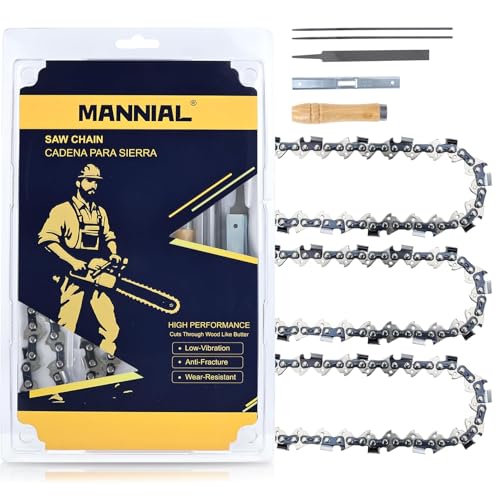
This 3-pack from MANNIAL provides 18″ replacement chains with 0.325″ pitch and .063″ gauge, totaling 74 drive links per chain. It’s best for users who want to stock up and reduce downtime between sharpening sessions. The set typically suits Stihl and similar-sized chainsaws with compatible bars. Best for: frequent hardwood cutting and maintenance efficiency. Limitation: verify model compatibility and drive-link count for your specific saw model to ensure a proper fit.
Buying Guide: Key Factors To Consider
What matters most when choosing a chainsaw chain for hardwood? It starts with compatibility, then sharpness retention, and finally user safety considerations. The following questions help clarify decisions:
- What is the bar length and pitch of my chainsaw? Match the chain pitch (for example, 3/8″ or .325″) and bar length (18″, 20″) to your bar markings and manual.
- What gauge do I need? A thicker gauge (.063″) lasts longer in hardwood but may cut slower; choose based on saw power and cutting style.
- Do I need carbide or standard steel? Carbide tips offer longer edge life in hardwood and dirty wood, but are more expensive and may require careful tensioning.
- Is kickback a concern? Look for low-kickback specs or semi-chisel profiles if you prioritize smoother, safer operation in dense wood.
- How easy is maintenance? Chains with easier filing and better resistance to dulling help in longer hardwood sessions.
Practical Comparison At A Glance
- Best durability in hardwoods: KAKEI Carbide 20 Inch
- Best balance of performance and ease: Husqvarna SP33G 18 Inch
- Best for heavy-duty professional use: Stihl 26RS 81 Rapid Super
- Best option for 18″ bars on mid-range saws: KAKEI 18 Inch
- Best value for multiple replacements: MANNIAL 18 Inch 3-Pack
Notes On Use And Safety
Always verify that your guide bar length, drive-link count, and gauge match the chain you select. Regularly inspect for wear, frayed drive links, and damaged rivets. Maintain proper tension and avoid forcing the chain through wood. Those new to chainsaw work should seek training on kickback management and safe cutting techniques when tackling hardwoods.
FAQ
- What pitch should I choose for hardwood cutting? Choose the pitch that matches your bar and chain compatibility; common hardwood choices include .325 and 3/8″ LP in many consumer saws.
- Are carbide chains worth the extra cost for hardwood? Carbide tips provide longer edge life in tough wood and dirty conditions, reducing downtime for sharpening.
- How do I know if a chain fits my bar? Check the bar’s side markings for pitch, gauge, and drive-link count; verify these against the chain specifications.
- Can I mix brands on the same saw? It’s generally best to use a chain that matches your bar’s pitch and gauge and to keep chains from the same compatibility family for consistency.
- What is the risk of kickback with these chains? Some chains can be kickback-prone if used improperly; select semi-chisel or low-kickback options and follow safety guidelines.
- How often should I sharpen hardwood-cutting chains? Very dense hardwoods can dull chains faster; sharpen as needed with the appropriate file and maintenance routine.